*The American Yawp is an evolving, collaborative text. Click here to help improve this chapter.*
I. Introduction
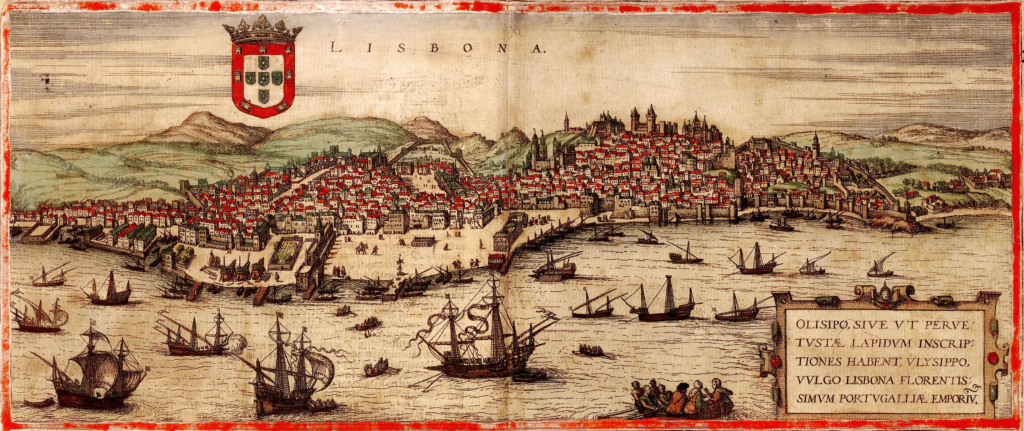
Between the fifteenth and sixteenth centuries, Portugal and Spain developed imperial systems based on the islands and coastlines of the Atlantic Ocean. These systems were rooted in the commercial, cultural, legal, and military traditions of the Mediterranean world, but over time, they gave rise to entirely new societies that connected North and South America with Africa, Europe, and Asia. Beginning with the conquest and colonization of the Canary Islands, the Spanish Atlantic extended westward to the Caribbean, and from there to the mainland. Having usurped the great empires of Mesoamerica and the Andes, Spanish claims to the Philippines, in the heart of the Pacific world, meant that a truly global empire had been established. Meanwhile, having occupied the uninhabited islands off its coast during the 1400s, Portugal focused its efforts in the south Atlantic, especially the territories that became Brazil and Angola, as well as bases throughout the Indian Ocean. Each of these systems expanded gradually, often with substantial lulls between periods of frenzied activity, in ways that created increasingly interdependent commercial zones. One of the enduring consequences of this interdependence was the spread of plants, animals, and microorganisms from one continent to another. Historians call this the Columbian Exchange. As Old World biota spread throughout the Atlantic basin, the massive transfer of human populations, along with their cultures, languages, and religions, followed. The result was “a new world for all,” as one historian has put it, but cultural creativity was the product of survivalism amid pain, loss, and rupture.1
Yet, in the year 1400, few could have predicted that the struggling kingdoms of the Iberian Peninsula (today’s Spain and Portugal) would emerge as global powers over the next two centuries. Indeed, explaining late medieval Europe’s economic and territorial expansion, and the development of capitalism more broadly, have been some of the most challenging questions addressed by modern historians. This chapter qualifies Europe’s post-1400 expansion by framing the varying motives, strategies, and consequences of colonialism, as well as the limits of imperial control. Of special interest are the economic, political, and social arrangements, all of them predicated on hierarchies of one kind or another, that the Iberians used to manage their overseas empires.
II. Europe Enters the Atlantic
The intensity of contact between two old worlds intensified after 1492, but trade and technology had been making the globe a more connected place for centuries. Between 800 and 1400 CE, voyagers from Polynesia discovered and populated the Hawaiian Islands. Sailing across the Pacific Ocean in massive canoes, these well-prepared travelers brought family members, seedlings, animals, and tools. By the time contact between Polynesia and Hawai‘i ceased around 1400, Inuit peoples had completed their settlement of the Arctic, which had taken them from Siberia to Greenland. These migrations were some of the most epic in human history, yet little is known about them outside of their own cultures. Embarking long before Europeans sought a direct route to the “Indies,” Arab traders, bringing with them sailing technology, Islam, and a written language, had been active in the Indian Ocean world from the eleventh century onward. Between 1405 and 1433, China launched seven maritime expeditions led by Zheng He, a Muslim eunuch who became the Ming Dynasty’s greatest admiral. Intended to open trade and announce China’s power in the Pacific and Indian Oceans, Zheng He’s fleets included tens of thousands of sailors and soldiers, carried on ships that dwarfed those sailing in the Mediterranean. The admiral’s fifth and sixth expeditions reached the coast of East Africa, a vibrant commercial region where Swahili city-states met the Islamic world. However, following these voyages, China’s leaders turned inward, seeking a continental empire.2

The people of western Eurasia, whose territories were shaped by several peninsulas and surrounded by hundreds of islands, also developed a strong maritime tradition. At their peak, Scandinavian seafarers sailed as far east as Constantinople and raided settlements as far south as North Africa. Toward the end of the first millennium, they established colonies in Iceland and southern Greenland, where several thousand Norse lived by raising livestock, fishing, and trading with their kin back in Norway. Around the year 1000, Leif Erikson reached Newfoundland in present-day Canada. Unlike Greenland and Iceland, however, the Norse colony of Vinland failed within a decade. Culturally and geographically isolated, the Norse were driven back to the sea by some combination of limited resources, inhospitable weather, food shortages, and Inuit resistance. The Norse ventures were largely unheard of beyond Scandinavia, and over the next few centuries, the north Atlantic was visited only sporadically by Basque, English, and Norman fishers.
For the most part, European merchants were drawn toward Asia. They were led eastward by the enterprising traders of the Mediterranean, especially those from Genoa and Venice, who managed outposts at Constantinople (modern-day Istanbul), the capital of the Byzantine Empire. This gave Italian merchants access to the Black Sea, as well as the Silk Road, a network of routes that connected the Islamic world with China. Between the tenth and thirteenth centuries, a sequence of Christian holy wars, known as the Crusades, failed to conquer the Holy Land from Muslim forces, but they did spark greater commercial interest in Asia. So it was that the Venetian Marco Polo, alongside his father and uncle, spent twenty-five years traveling across central Asia and China. His account of these travels gave European audiences their first introduction to China, sparking further interest. During the 1300s west-east trade was facilitated by the power of the Mongol khans, whose empire was built on war but eventually brought political stability, the so-called Pax Mongolica, that long-distance trade depended upon. With demand increasing, Asian goods, principally porcelain, spices, silks, and tea, flooded European markets. This trade created new wealth, represented by the merchant guilds of cities from Seville to Bruges. Since goods and information moved together, the late medieval era was also a time of intellectual ferment. Emerging from the crisis of the fourteenth century, Europeans rediscovered or adopted Greek, Roman, and Muslim knowledge in what became known as the Renaissance, or rebirth. Universities were founded, and Latin Christendom’s first books were printed. Commercial integration was ultimately brought to a halt by the Black Death, an outbreak of bubonic plague, and the expansion of the Turkish Ottoman Empire, which captured Constantinople in 1453. Led by the Genoese, Mediterranean merchants sought alternative trade routes. Eventually, they looked outward to the Atlantic.3
Prompted by the intensifying competition for resources and markets, fractious European polities consolidated under the authority of the most powerful warlords. Looking to the legacy of ancient Rome for inspiration, these rulers styled themselves as dukes, kings, and even emperors. By negotiating compromises with the bishops of Rome and selling offices to the nobility, they managed to centralize authority under a single sovereign. Furthermore, almost constant warfare between rival kingdoms led to deepening ties between monarchs and merchants. Unlike the privileged church and nobility, merchants had ready access to cash and were not exempt from most taxes. Over the course of the early modern period (1400–1800), the centralization of military and taxation powers created Europe’s nation-states, and the conditions for further expansion.
In what became Spain, the 1469 marriage of Fernando of Aragon and Isabel of Castile joined two of the most powerful kingdoms of the Iberian Peninsula. In this region, the Crusades were just winding down. With the surrender of Granada, Europe’s last independent Muslim city-state, the combined forces of Castile, Aragon, Portugal, and their allies concluded eight centuries of intermittent warfare. Mythologized as the Reconquista (reconquest), this protracted conflict involved plenty of diplomacy, trade, and cultural exchange between Christians, Jews, and Muslims. But in the aftermath of their victory, the Catholic monarchs compelled the remaining Muslims, known as the Moors, as well as Sephardic Jews to either convert to Christianity or leave. Similarly, beginning in 1496 Portugal attempted to forcibly convert or expel its Jewish population. Those who converted became known as New Christians, and to police the authenticity of their faith, the Catholic Church established the office of the Inquisition. This long history of begrudging toleration and repressive violence had a strong influence on Iberian encounters with the peoples of Asia, Africa, and the Americas.

Having consolidated their control over both the military and merchant classes, Iberian monarchs sought to bypass the Islamic world and gain more direct access to the goods and markets of Africa and Asia. The rulers of Portugal invested heavily and acted aggressively in securing access to trade. From his estate on the coast of southern Portugal, Infante Dom Henrique (known in English as Prince Henry the Navigator) had long coveted access to the African gold and spice supply blocked by the Moors of Morocco. In 1415, he sponsored an amphibious attack on the Moroccan port city of Ceuta, which gave Portugal a foothold on mainland North Africa, and, it was hoped, a link to the trans-Saharan caravans that brought gold from the south. In the meantime, more ports were seized and a string of forts established from which to launch slave and livestock raids.
The prince also sponsored developments in research and technology. In the fifteenth century, Portuguese sailors perfected the astrolabe, a tool to calculate latitude, and the caravel, a ship well suited for exploration. Both were technological breakthroughs. Complimenting the magnetic compass, which had been adopted from the Chinese, the astrolabe allowed for more precise navigation. Combining maneuverability, thanks to the triangular lateen sails invented by Arab sailors, with a deep draft for carrying larger cargoes, the caravel could handle the Atlantic’s rough seas. Improving technologies went hand in hand with the dissemination of cartographic and oceanic knowledge. The Atlantic is an enormous ocean, with distinct wind patterns and currents acting as conduits for those who learned how to use them. Otherwise, voyages were largely restricted by the impossibility of a return trip. Italian and Iberian mariners eventually realized they had to sail further west, into the open ocean, before catching the currents to West Africa (known to Europeans as Guinea), or using the Gulf Stream to cruise home from the coast of North America. It should be remembered that these successes built upon a series of intimidating failures. In 1291, for example, Venice’s Vivaldi brothers sailed into the Atlantic in search of India and were never seen again.4
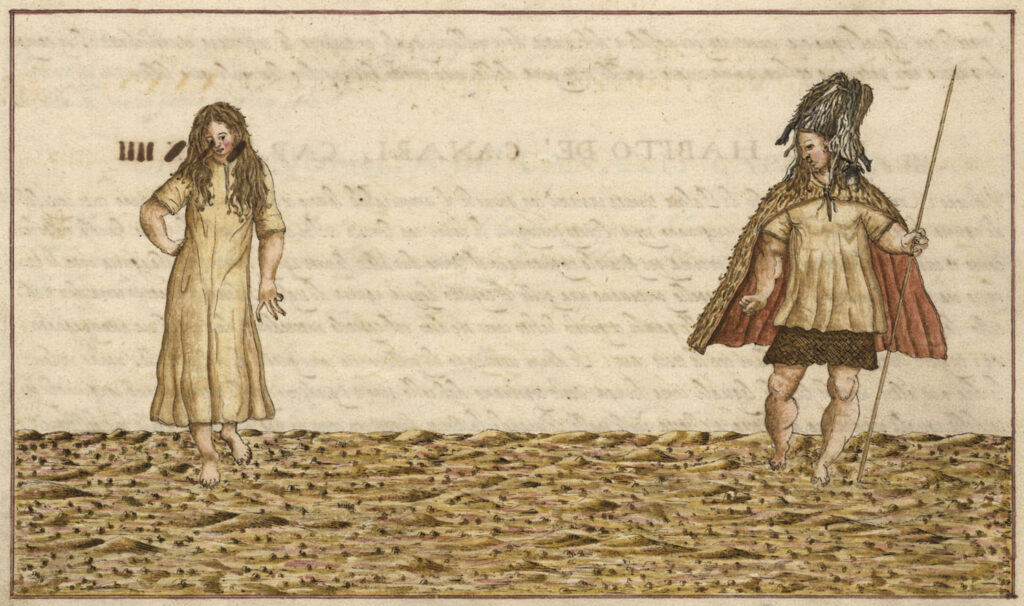
The archipelagos of the eastern Atlantic, including the Azores, the Madeiras, the Canary Islands, and the Cape Verde Islands, were Spain and Portugal’s first overseas colonies. They proved to be important models for later settlements, as well as staging grounds for contacting the coasts of sub-Saharan Africa, and eventually for crossing the Atlantic. Although Roman geographers knew them as the Fortunate Isles, Europeans had lost awareness of the Canaries for centuries. Beginning in the early fifteenth century, Norman knights, backed by the kings of Castile and Portugal, launched invasions that relied on divide-and-rule politics to gain a foothold. New patterns of human and ecological destruction followed. Isolated from the mainlands of Europe and Africa for millennia, the native peoples of the Canary Islands—distantly related to the Berbers and known as the Guanches—were hunted as slaves, ravaged by diseases, and assimilated into Iberian society. This protracted demographic disaster presaged the one experienced by many Native American populations upon the arrival of the Spanish. Yet the successes of Guanche resistance, which relied mostly on stone-age weapons, also hinted at the limits of European power. In 1494, a Guanche force routed a Spanish army on Tenerife, inflicting nearly a thousand casualties, and the final campaign to conquer the islands only concluded in 1497.
Amid the wars of conquest, these islands became the first in the Atlantic World where sugar was cultivated by enslaved workers on large-scale plantations. Southern European trading empires like those managed by the Genoese, Catalans, Aragonese, and Venetians entered the Levantine commerce in sugar and slaves in the fourteenth and fifteenth centuries. The Portuguese learned the sugar-growing process from Italian merchants, who acted as middlemen between them and the Muslim Mediterranean, where plantations were worked mainly by enslaved Africans and Slavic-speaking Eastern Europeans. Transplanted to the rich volcanic soils of the Madeiras and São Tomé, sugar and its byproducts became widely popular and wildly profitable. It was a difficult crop to grow, but on the Atlantic islands the Portuguese had found fertile and defensible sites to support production. From São Tomé, the technology, techniques, and brutal labor regime of the plantation system was transported to the Caribbean and Brazil.5
III. North and West Africa to 1500
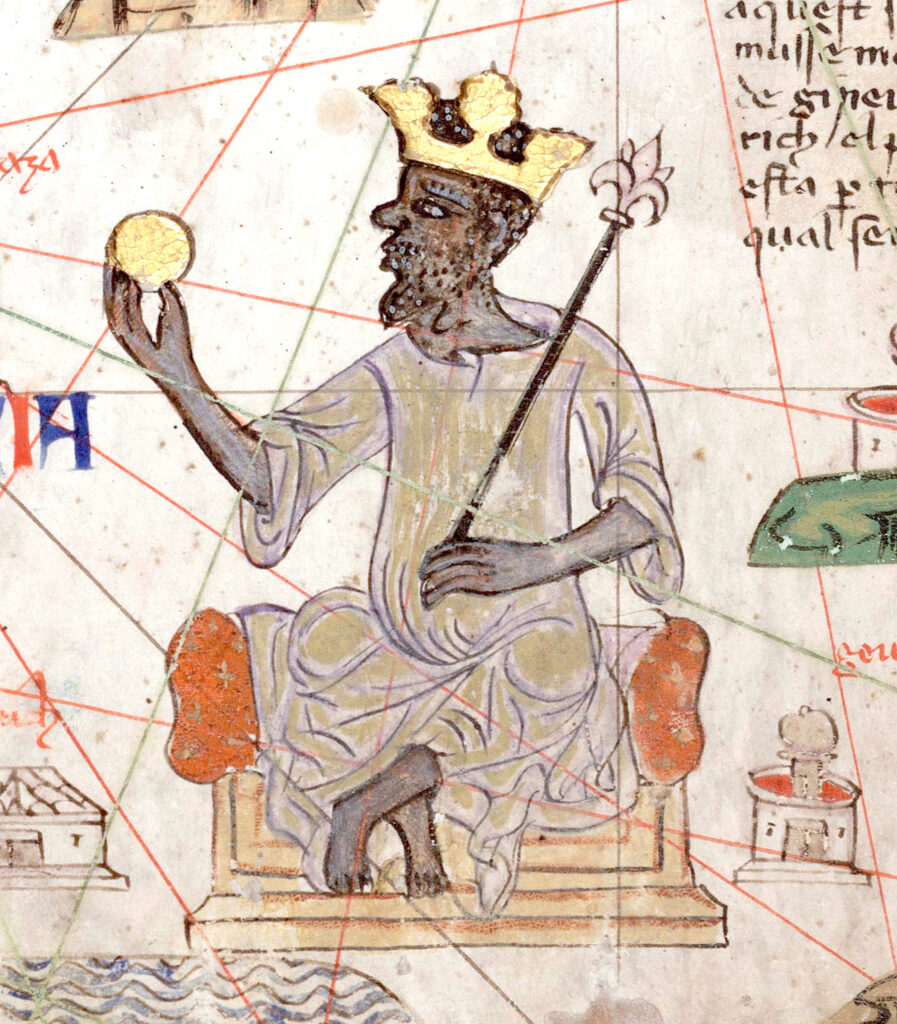
While Portuguese crews reconnoitered the coast of Africa, the continent’s peoples, regions, and goods had long intrigued European travelers but for the most part were known to them mainly through Muslim or Italian intermediaries such as Ibn Battuta, Alvise Cadamosto, or Leo Africanus. The Catalan Atlas, a map of the known world as understood by the Jewish cartographers who produced it around 1375, vividly illustrates the European association of West Africa with powerful rulers who controlled an immense supply of gold. Depicted on the map is Mansa Musa, ruler of the Mali Empire, who wears a gilded crown while holding a scepter in one hand and a golden orb in the other. During Musa’s 1324 pilgrimage to Mecca, an essential duty for every devout Muslim, his spending during a layover in Egypt allegedly caused the price of gold to drop for several years. Besides gold, sub-Saharan Africa beckoned Europeans with rumors that a lost crusader had founded a Christian kingdom near what is today Ethiopia. For their part, Africa’s sub-Saharan societies from Mali to Tanzania had long been in contact with the wider world through the Islamic trade networks that connected them to the Mediterranean Sea and Indian Ocean.
Like the Americas, Africa was shaped by the great diversity of its political and religious systems. The continent’s peoples lived in stateless band societies, small towns, and great empires, while practicing Judaism, Christianity, Islam, and thousands of animistic faiths. Like people everywhere, their identities were primarily local and mediated by extended family ties. The expansion of Islam in Africa began with the eighth-century conquests that carried Arab armies from Egypt to Morocco. From there, the faith was spread across the Sahara Desert by merchants and clerics to a region Arabs called the Sahel, meaning “shore,” where the savanna and desert meet. Once a barrier, the Sahara became a highway to the Sahel thanks to the camel caravans and oases that sustained them during the two-month crossing. This region was watered by the Niger River, whose valley supported the rise of Gao and Timbuktu, the great trading cities whose market in gold, slaves, and salt drew travelers across the sands. From the 1100s to the 1500s, the western Sahel was the core of several empires, including that of Mali and Songhay. Their rulers were mostly Muslim, and until the nineteenth century Islam in sub-Saharan Africa remained a mostly elite and urban religion. Many of the first converts were kings who sought otherworldly alternatives after traditional rituals failed to alleviate droughts or similar problems. Paired with a written language (Arabic), as a universal law code Islam also appealed to Sahel kings who wished to tax, trade, and extract tribute. In converting to Islam, African kings like Mansa Musa announced their readiness to reach across the Sahara and do business with the Muslim-dominated Mediterranean. By the 1300s, Timbuktu’s skyline included several mosques, and the city had become renowned as a center of Islamic learning as well as trade.6
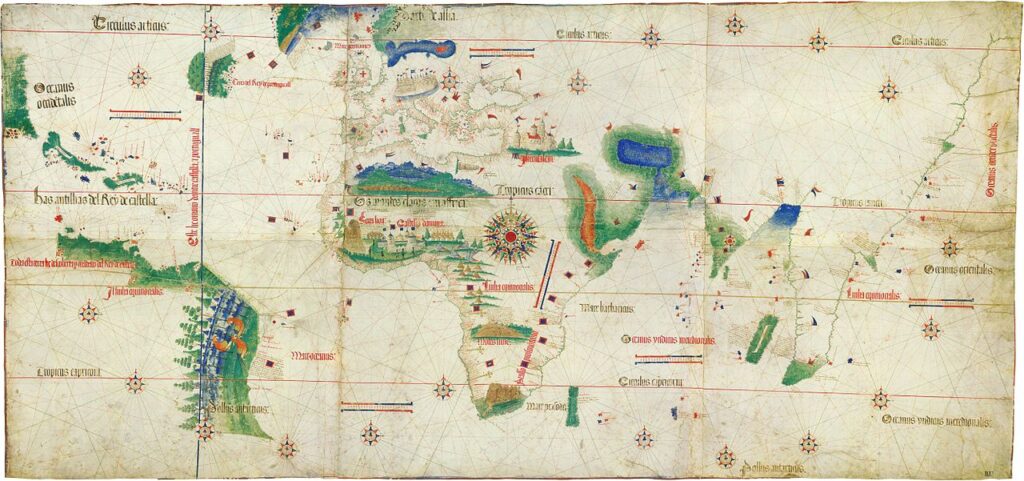
Blending economic and religious motivations, the Portuguese were the first Europeans to make sustained contact with African societies when they established small bases, usually not more than a few dozen men, along the Atlantic coast during the fifteenth century. Portuguese trading posts, called feitorias (“factories”), dealt in gold, slaves, and spices, and the profits funded further trade and exploration of the coast in a stop-and-start pattern. Embarking in 1497, Vasco da Gama sailed around the Cape of Good Hope to reach East Africa and India before making the return journey two years later. In 1500, the crown dispatched Pedro Álvares Cabral to follow up on da Gama’s voyage, but his ships were blown too far west and made landfall in Brazil. Falling on Portugal’s side of the imaginary line created by the 1494 Treaty of Tordesillas, which divided the Atlantic between Spanish and Portuguese spheres, Brazil was initially a marginal colony. During the early 1500s, Portuguese and later French ships arrived to reprovision and trade with the Natives for valuable dyewoods. Beginning in the 1530s, the Portuguese crown became more involved in backing colonization, and its forces succeeded in driving off the French. Small but permanent settlements were built along the coast, where merchants and soldiers began experimenting with sugar production and raiding the local Indigenous peoples for slaves. Following a series of slave uprisings and droughts, most of São Tomé’s merchant community migrated to Brazil, bringing with them capital, enslaved Africans, and sugar-making technology. In what became a recurring pattern, it was Portugal’s policies in Kongo (present-day Angola) that determined the course of Brazil’s colonial history.
The relationship between the kingdoms of Kongo and Portugal had auspicious beginnings. In 1491, King Nzinga a Nkuwu was baptized and took the name João I in honor of his new ally, João II of Portugal. An embassy was sent to Lisbon, and the king’s successor, Afonso I, continued to foster good relations. One Kongolese prince was schooled in Rome and ordained as a bishop. Like the conversions to Islam in the Sahel, Christianization in the Kongo was largely an elite practice involving the royal family, nobility, and courtiers. Most central Africans continued to practice a variety of animistic religions, and in any case, Kongolese Catholicism incorporated aspects of local traditions, such as the veneration of ancestors. Kinship also strengthened ties between the Portuguese and the Kongolese. A small, overwhelmingly male population remained along the coast to trade with their African counterparts, and Portuguese merchants soon married elite women, creating a bicultural Luso-African merchant community centered at São Tomé, Cape Verde, and Luanda. Gold, ivory, and malagueta pepper were highly sought after, but the most lucrative traffic was increasingly the trade in enslaved human beings.
IV. Origins of the Slave Trade
Scholars continue to debate the structures of the Atlantic slave trade, which began during the fifteenth century and continued until the late nineteenth century. Across some four hundred years, it is estimated that over 12 million Black people were enslaved and deported to the Americas. Belonging to hundreds of different languages and cultures, most of the victims were sent to Brazil or the Caribbean. From a present-day North American perspective, it may be all too easy to forget that between 1500 and 1800, three Africans arrived in the Americas for every European. An unknown number of people were killed in Africa during the wars and raids caused by slaving. What is certain is that the Atlantic slave trade had a devastating impact on the peoples of Africa and the African diaspora in the Americas. The scale and scope of the Atlantic slave trade also varied considerably over time. Some African states refused to participate in the trade, while others, like Benin, did so for only a few decades. Ultimately, by commodifying human bodies, institutionalizing racism, and generating enormous fortunes, slavery utterly transformed the societies, cultures, and environments of the Atlantic World. Furthermore, the Atlantic traffic was, along with networks in the Indian Ocean, one of several long-distance slave trades that persisted across the early modern and modern eras.
More recently, historians have looked at medieval prejudices, the price of sugar, and the demand for labor in the Mediterranean and eastern Atlantic to locate the slave trade’s origins. Having destroyed or assimilated the Guanche peoples of the Canaries, Portugal’s would-be planters needed a new supply of workers to cultivate sugar, a labor-intensive crop. They first turned to the trade relationships that merchants had established with African city-states at the mouth of the Senegal and Gambia rivers. Since the 1440s, Portuguese sailors operating along the Senegambian coast in search of gold or a route to Asia had also kidnapped people to sell in southern Europe. Peasants provided the primary agricultural labor force in mainland Europe, so these African captives were valued primarily as domestic servants owned by elite families in Seville and Lisbon, which soon had a substantial African community, including free Black Christians. With the development of sugar plantations on the archipelagos of the eastern Atlantic, enslaved Africans soon became the primary work force on these valuable islands.7
Because Africans both controlled the trade and were its victims, the relationship between anti-Black racism and the slave trade has proved even more vexing. It is important to recognize that sixteenth-century Africans, like their European contemporaries, did not act according to the ethnic, national, or racial identities that exist today. At the beginning of this slave-trading system, African leaders sold war captives—who by custom forfeited their freedom if captured during battle—for Portuguese guns, iron, and manufactured goods. In these early exchanges, slavery was a byproduct of war, but slave-taking eventually became the reason for most conflicts. As the slave trade became increasingly lucrative, it ensnared more and more victims, including people who had fallen into debt or been accused of witchcraft. Observing the Senegambia slave trade during the 1500s, a Portuguese Jesuit remarked that “as long as witches are sold, they will be uncovered daily.”8 Europeans justified their actions by claiming that the people they enslaved would be rescued from paganism and converted to Christianity, a hypocrisy that was eventually normalized by the denial of Black people’s humanity and the entrenchment of racism. Profit was the driving force behind Atlantic slavery, and justifications were constantly contrived in the pursuit of wealth.

In West-Central Africa, the destructive relationship between war and slavery intensified during the 1560s when bands of nomadic warriors, known as the Jagas, invaded Kongo from the east. Portuguese forces helped King Álvaro I fight off the invaders, but the price of their support was greater meddling in Kongo’s affairs. While Kongolese kings had become increasingly wary of enmeshing themselves in the slave trade, the merchants of São Tomé insisted on a steady supply of war captives. With the crown’s support, in 1575 Paulo Dias de Novais began the first European attempt to conquer a region of mainland Africa in what became the colony of Angola. Proceeding from his base at Luanda, over the next decade Novais’s forces marched up the Kwanza River, taking captives, making alliances, and building forts. When Novais died in 1589, Portugal took control of the colony by sending royal governors and more troops. Serving short, three-year terms in a deadly disease environment, Angola’s governors wanted to get rich quickly, so they aligned themselves with the slavers of Brazil and São Tomé. After Portuguese forces sent from Brazil recaptured Angola from the Dutch, who seized much of Portugal’s empire between the 1620s and 1640s, the two colonies strengthened their commercial and political ties, often beyond Lisbon’s supervision. Having allied with the Dutch against their common enemy, Kongo’s rulers continued their efforts to oust the Portuguese, but in 1665, at the Battle of Mwbila, the Portuguese and their Jaga allies defeated the royal army and killed King Antonio I. For the next century, Angola, Kongo, and neighboring states descended into a series of civil wars that generated hundreds of thousands of captives for the sugar plantations of Brazil.9
V. Spanish Exploration and Conquests
As Portugal consolidated its access to Africa and Asia, Spain yearned for its own path to empire. Christopher Columbus, a Genoese captain who had studied under Portuguese navigators, promised that opportunity. Born in 1451, just a few years before Constantinople fell to the Ottomans and blocked the land route to China, Columbus was a typical member of Genoa’s far-flung merchant cohort—he was married to the daughter of a Madeira planter and had worked in West Africa’s gold and slave trade. An experienced mariner and avid reader, when he died in 1506, Columbus still believed that the Caribbean islands were part of an archipelago off the coast of Japan. Modern-day recognition of Columbus as the leading figure of a so-called Age of Discovery belies the very gradual, episodic, and fundamentally uncertain nature of European expansion between the fifteenth and sixteenth centuries.
Columbus, like other educated Asians and Europeans of the fifteenth century, knew the world was round. So, while it was technically possible to reach Asia by sailing west from Europe—thereby avoiding Italian or Arab middlemen—the earth’s vast size would doom even the greatest caravels to starvation and thirst long before they reached their destination. In a critical but fortuitous miscalculation, Columbus underestimated the size of the globe by a full two-thirds and therefore believed it was possible. After unsuccessfully seeking support for his proposed expedition in several European courts, he convinced Isabel and Fernando of Spain to provide him with three ships, which set sail from the Canaries in 1492. Columbus was both confoundingly wrong about the size of the Earth and spectacularly lucky that a massive continent lurked in his path. After two months at sea, the three ships and their ninety men landed in the modern-day Bahamas.
The Taínos, speakers of an Arawakan language, populated the largest Caribbean islands, what came to be called Hispaniola (today’s Dominican Republic and Haiti), Cuba, Puerto Rico, Jamaica, and the Bahamas. At their bustling towns, they traded, fished, and grew corn, yams, and cassava. The Taínos’ rivals were the Kalinagos, also known as the Caribs, who inhabited the smaller islands of the eastern Caribbean. Over the preceding centuries the Kalinagos had used their canoes and military prowess to create a trading and raiding zone that stretched from northern South America to the Lesser Antilles. Despite their impressive settlements and commercial networks, Columbus described the Taínos as childlike innocents: “These people are . . . very gentle, not knowing what is evil, nor the sins of murder or theft,” he reported to the Spanish crown. “I assure your Highenesses that there is no better land nor people. They love their neighbors as themselves, and their speech is the sweetest and gentlest in the world, and always with a smile.”10 By contrast, the Caribs (from which the word “cannibal” derives) were cast as ferocious savages—and thus legitimate targets for the Spanish invaders to kill or enslave.
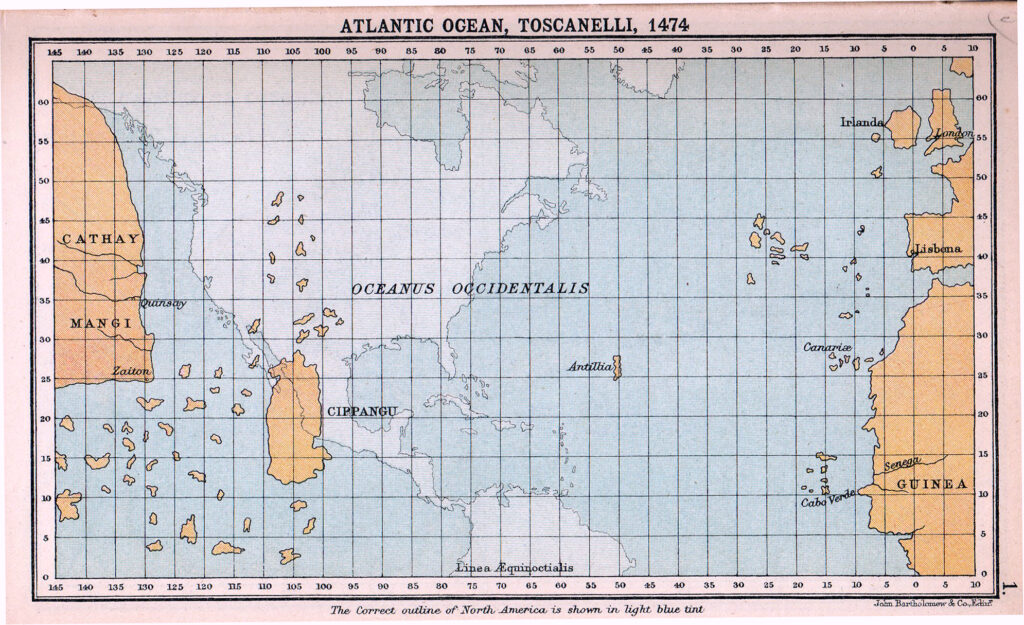
Despite his initial praise for Taíno culture, Columbus had come for wealth, and at first, he found little. However, he noticed that some Native elites wore small gold ornaments. This changed everything. When Columbus returned to Spain, he left a few dozen men on Hispaniola and ordered them to find and secure the source of the gold. He arrived at the Spanish court to great acclaim and quickly worked to outfit a return voyage. Building upon precedents established in the Canaries, Spain’s strategies and motives were clear from the beginning. If outfitted for a return voyage, Columbus promised to procure gold and enslaved laborers, claiming that “with fifty men [the Indians] can all be subjugated and made to do what is required of them.”11 He was outfitted with seventeen ships and over one thousand men in what turned out to be the second of four voyages that he made to the Caribbean. As the gold supply ran out and previously friendly Taíno leaders refused demands for tribute, the invaders embarked on a vicious campaign to extract every possible ounce of wealth from the Caribbean by enslaving its inhabitants. These captives were put to work in the gold fields or on the sugar plantations that eventually replaced them. Returning from his second voyage in 1496, Columbus’ cargo included over three hundred enslaved and branded Taínos, many of whom died on the way. The combination of new diseases and Spanish violence destroyed the Taínos within a few decades of contact.
As news of Columbus’s conquest spread back to Europe, ambitious Spaniards poured into the Americas seeking wealth and fame. Among them were members of the next generation of conquistadors, including Francisco Pizarro and Hernán Cortés, whose expeditions spread outward from bases in the Caribbean. Bernal Díaz del Castillo, who fought alongside Cortés, described their motives succinctly: “We came here to serve God and the king, and also to get rich.”12
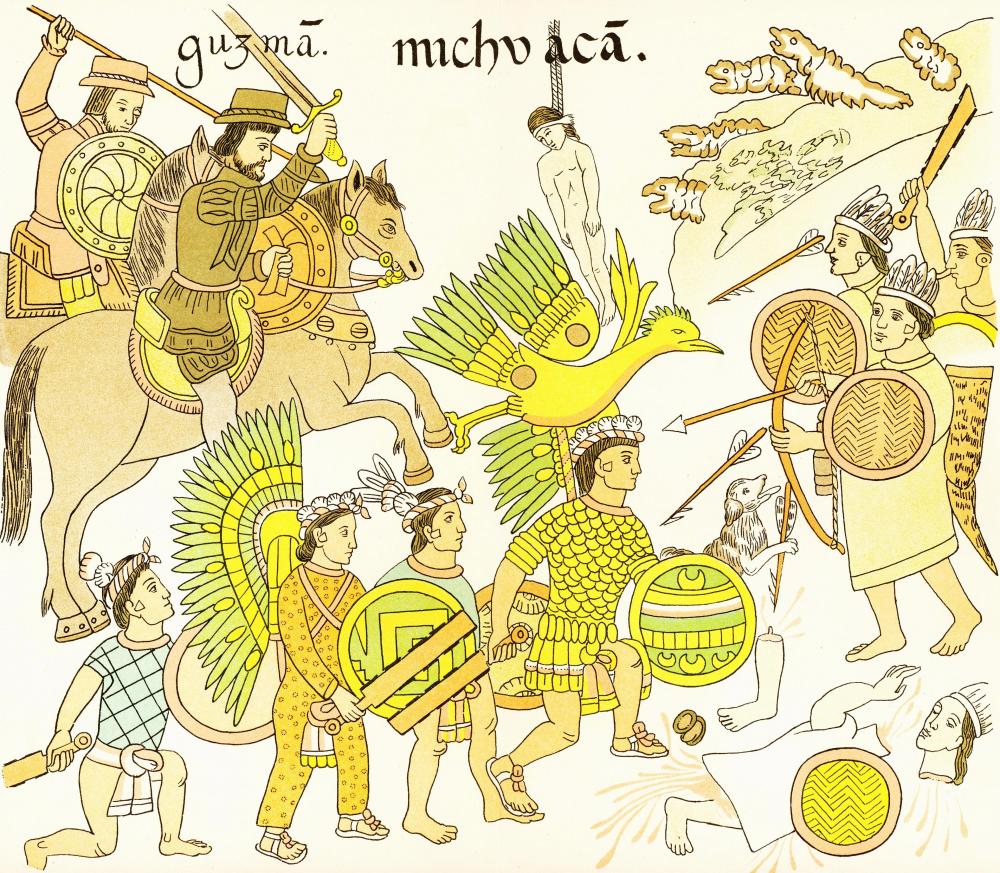
As Spain’s overseas empire expanded, the next generation of conquistadors encountered the empires of Central and South America, which dwarfed the city-states of North America. The most powerful Maya city-states had collapsed before European arrival, likely because of droughts and unsustainable agricultural practices, but this decline was concurrent with the rise of another Native American empire: the Aztecs.
Opportunistic migrants from distant lands to the north, the Mexicas (as the Aztecs called themselves) moved south into the Valley of Mexico and parlayed a series of alliances into control of an empire centered at Tenochtitlán. Founded in 1325, Tenochtitlán was an awe-inspiring city built on a series of natural and human-made islands in the middle of Lake Texcoco. Much of the city was fed by crops grown on large artificial islands called chinampas, which the Aztecs constructed by dredging rich sediment from the bottom of the lake and depositing it over time to form new landscapes. Tenochtitlán was also a holy city: a massive pyramid temple was located at the center and complemented by smaller temples and palaces.
From their island city, the Aztecs controlled or influenced much of central and southern Mesoamerica. Allied with two other city-states, Aztec rulers governed through a decentralized network of subject peoples that paid regular tribute—including everything from the most basic items, such as corn, beans, and other foodstuffs, to luxury goods such as jade, cacao, and gold—and provided troops for the empire. Meanwhile, nearby kingdoms, including the Tarascans to the northwest and the remains of Maya city-states on the Yucatán peninsula, chafed at Aztec power. Mesoamerica’s political rivalries would play a decisive role in shaping events after Hernán Cortés, an ambitious notary who had won riches in the conquest of Cuba, organized an invasion of Mexico. Defying Cuba’s governor, who hoped to lead the expedition himself, in 1519, Cortés landed six hundred men on the coast and founded the town of Veracruz.

Diplomacy, treachery, and alliance politics, not firearms or horses, were the real tools of the ensuing conquest. Relying on a Native translator, whom he called Doña Marina and whom Mexican folklore denounces as La Malinche, Cortés gathered information and allies. Through intrigue, brutality, and the exploitation of political divisions, he enlisted Native allies, defeated Spanish rivals, and marched on Tenochtitlán. Through persuasion, the Spaniards entered the capital peacefully. Cortés then took Emperor Montezuma hostage and used him to gain control of the empire’s gold and silver reserves. Eventually, the Aztecs revolted, and Montezuma was killed. In a desperate retreat, mythologized by the survivors as la noche triste (“the night of sorrows”), the Spanish fought through thousands of Indigenous soldiers and across canals to flee the city. Cortés and his lieutenants regrouped, recruited more Native troops, captured Spanish reinforcements, and, in 1521, besieged Tenochtitlán. The eighty-five-day siege cut off food and fresh water. As starvation set in, smallpox ravaged the inhabitants. One Spanish observer said it “spread over the people as great destruction. Some it covered on all parts—their faces, their heads, their breasts, and so on. There was great havoc. Very many died of it. . . . They could not move; they could not stir.”13 The Spaniards and their allies then sacked the city. The temples were plundered and fifteen thousand died. After two years of war and sickness, the combined forces of Habsburg Spain and its Mesoamerican allies had toppled the Aztecs and acquired great fortunes. Greater crimes would follow.
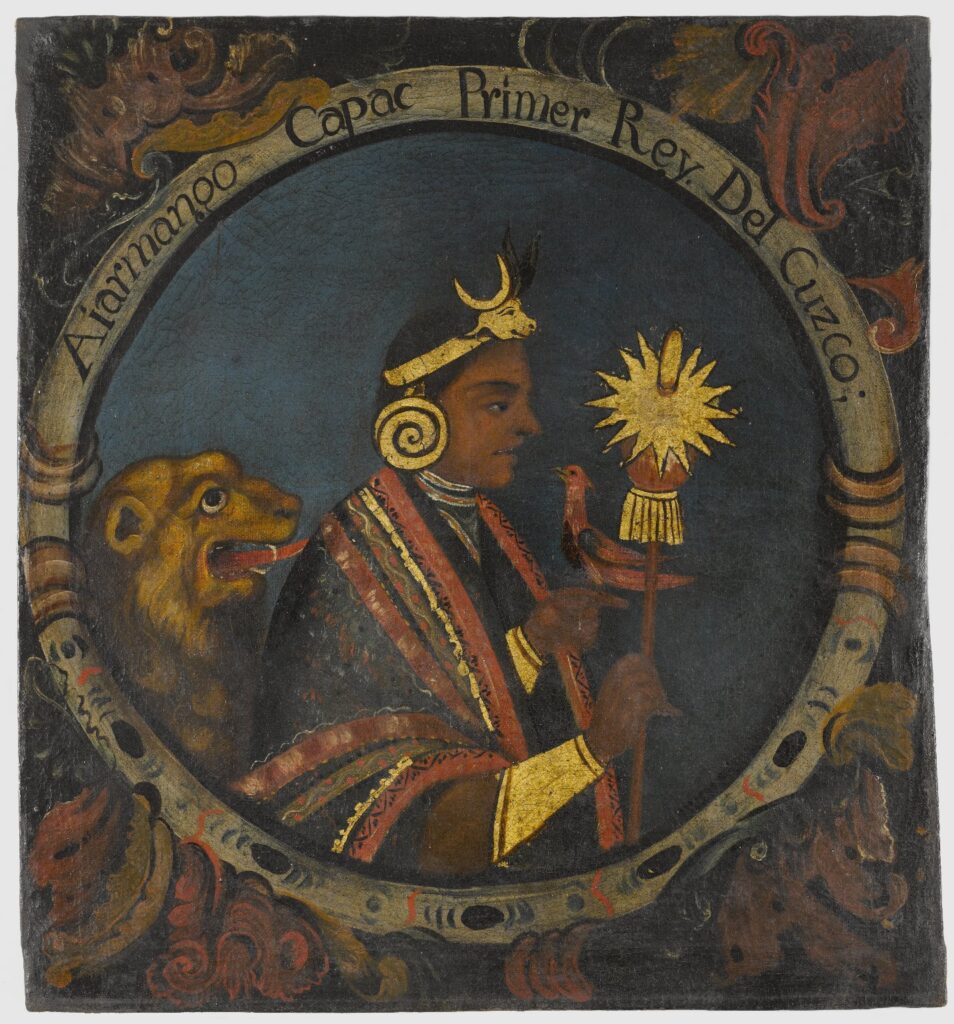
Farther south, along the Andes Mountains, the Quechuas managed a vast empire, far larger and more powerful than that of the Aztecs. From their capital of Cuzco in the Andean highlands, the Incas, as the Quechuan kings were called, used conquest and colonization to build an empire that stretched through the western half of South America, from present-day Ecuador to central Chile and Argentina. Generals, bureaucrats, and engineers were important functionaries in this far-flung domain with multiple provinces and active military frontiers. Terraces were cut into the sides of mountains to farm fertile soil, and by the 1400s, a thousand miles of roads and bridges tied together perhaps twelve million people. Similar to the situation in Mesoamerica, unrest between the Incas and conquered groups created tensions and left the empire vulnerable to invaders. Carried along trade networks by human hosts, plagues spread in advance of the Spanish and hit the Inca Empire in 1525. Epidemics ravaged the population, cutting the empire’s population in half and killing Emperor Huayna Capac and many members of his family. A bloody war of succession ensued between two half-brothers, Huascar and Atahualpa.
It was into this dynastic chaos that Francisco Pizarro intervened after he landed a small force on the Pacific coast and marched inland. Pizarro drew from the same playbook as Cortés, for he relied heavily on deceit and Native allies to seize power. Yet after executing Atahualpa and occupying Cuzco in 1533, the conquest of the Inca Empire became a drawn-out affair that involved defeating armies led by Atahualpa’s generals and a civil war between Spanish factions, each of which relied on mostly Native troops. Pizarro was assassinated by his rivals in 1541, and a year later, his brother Gonzalo led a revolt that threatened to create an American kingdom separate from Spain. Gonzalo and the other leading rebels were eventually captured and executed, but it was only in 1572 that the last Inca, who ruled an independent state in the jungles east of Peru, was defeated.14
VII. Spanish America
After the conquests of Mexico and Peru, Habsburg Spain began restructuring its overseas possessions, which now belonged to an empire of global proportions. Already the king of Spain, when Charles V became the Holy Roman Emperor in 1519 his domains included lands from Austria to Castile, and the wealth generated by the conquests of Cortés and Pizarro allowed him to dream of a universal monarchy—power unseen since the glory days of Rome. Yet like its ancient predecessors, the Spanish Empire was a patchwork of regions and cultures that strained managerial capacities, even as it generated enormous wealth for the metropole.
Building upon the infrastructure of the great Native American empires, the new imperial cores of highland Peru and central Mexico were marked by cities, highways, and mines. From the Spanish perspective, urbanization was an important part of imposing law and order on a new environment and its peoples. The great metropolis of Mexico City was built directly upon the ruins of Tenochtitlán, with the stones of the Templo Mayor used to construct a cathedral and the viceroy’s palace. In 1573, Philip II codified directives for founding new cities, which were supposed to have a grid of wide streets surrounding a central plaza, itself lined by a church, armory, and other administrative buildings.15 The reality on the ground often proved quite different. Usually constructed near Indigenous towns or trade routes, many colonial settlements sprang up haphazardly as mineral strikes were made from the mid-sixteenth century onward. The outstanding example is Potosí, in modern-day Bolivia, where silver was found in the 1540s. Within a few years, shanties, shops, and mining camps, home to over two hundred thousand people, choked the lowlands around the mountain. Complemented by the 1546 discovery of silver at Zacatecas, in northern Mexico, the new mining centers powered the Habsburg ambitions. The importance of American silver to funding Spain’s armies and fleets only became greater once the Protestant Reformation solidified anti-Spanish resistance by the English and Dutch.
The emerging empire managed labor relations through a system known as the encomienda. In this feudal arrangement, the crown awarded Indigenous laborers, generally the adult population of multiple villages, to elite colonists (called encomenderos). Encomiendas granted workers and tribute as well. Furthermore, these vast estates could be subdivided and inherited, creating the basis of wealth for the conquistadors and their descendants. The system was rife with the abuse of Native workers, and it also threatened to create a colonial nobility that was independent of royal control. In response, Charles V and his successors asserted greater authority over their overseas possessions.
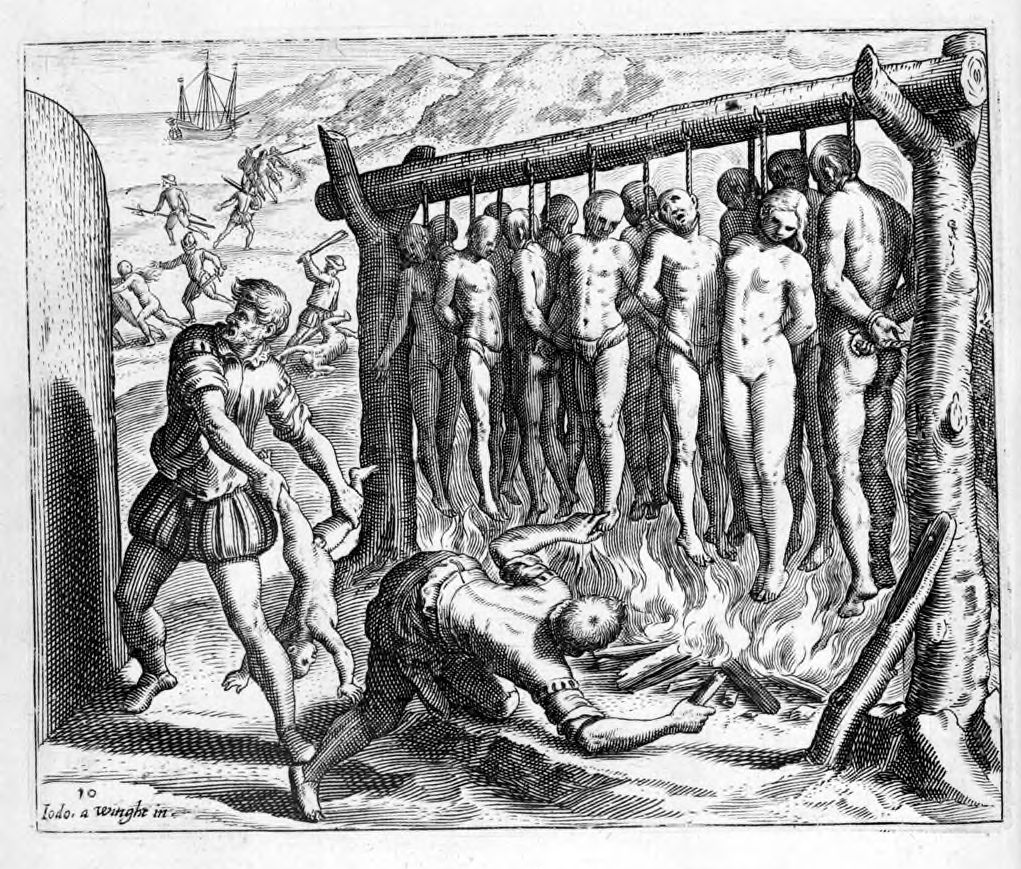
Not all Spaniards supported these injustices. In fact, a planter-turned-friar, Bartolomé de Las Casas, traveled to the New World in 1502 and later wrote an exposé of the atrocities being committed. Appealing to the sensibilities of the king and queen, who had instructed Columbus to convert the Natives to Christianity, Las Casas described Spanish brutalities in gory detail. Along with witnessing victims torn apart by war dogs, Las Casas “saw with these Eyes of mine the Spaniards for no other reason, but only to gratify their bloody mindedness, cut off the Hands, Noses, and Ears, both of Indians and Indianesses.”16 The writing of Las Casas and other reports of the conquest were later used by Dutch and English propagandists to craft a narrative known as the Black Legend in which Spaniards, and Catholics more broadly, were depicted as uniquely vicious and greedy. In fact, none of Europe’s colonial powers had a monopoly on hypocrisy. Nevertheless, the scale of this initial destruction was remarkable. By the 1520s, the Indigenous population of Hispaniola had collapsed, and many of the surrounding islands had been emptied by Spanish slave raiders, who left behind herds of feral pigs and cattle. Historians’ estimates of the island’s precontact population range from fewer than one million to as many as eight million (Las Casas estimated it at three million). In a few short years, they were practically gone. “Who in future generations will believe this?” Las Casas wondered. “I myself writing it as a knowledgeable eyewitness can hardly believe it.”17
In 1542, due in part to Las Casas’s efforts, the crown promulgated the New Laws of the Indies for the Good Treatment and Preservation of the Indians, which revoked many of the conquistadors’ privileges and prohibited new grants of encomiendas. In Peru, the encomenderos’ resentment of the new policies erupted into an armed rebellion against the crown led by Gonzalo Pizarro. After crushing this revolt, the crown replaced the encomienda system with the repartimiento. Intended as a milder tribute system, the repartimiento facilitated many of the previous abuses, and the rapacious exploitation of the Native population continued. On the other hand, important lessons were learned and precedents established. Through a combination of exemplary punishment and compromise, the crown had withstood a major challenge and learned to govern in partnership with local elites.
The administration of the Aztec and Inca Empires was taken over by the crown through the establishment of two viceroyalties, New Spain in 1535 and Peru in 1544. Reporting to the Council of the Indies, based in Seville, the viceroys were always high-ranking noblemen born in Spain, and only the archbishops sent to the Americas rivaled them in prestige and authority. Simultaneously imposing imperial governance and checking the viceroys’ power were the judicial councils composed of leading urban colonists, called audiencias. Crown-appointed governors were the legal and military executives who headed individual provinces, in turn supported by the municipal councils (cabildos) of chartered towns (villas). Meanwhile, Spanish migrants poured into the New World, with some 225,000 arriving during the sixteenth century. Often single, young, and male, these people emigrated for the promises of land, wealth, and social advancement. Laborers, craftsmen, soldiers, clerks, and priests all came in large numbers, but Indigenous people always constituted a majority and were therefore incorporated into colonial life by necessity. In theory, Native peoples constituted a social sphere outside of the Spanish world, the so-called república de indios, in which they were managed by traditional leaders. Drawn by employment opportunities and desperate to escape the drudgery of encomiendas, thousands of Indians flocked to cities like Cuzco, Lima, or Mexico City. However, Native incorporation into urban spaces and the related process of acculturation did not mean equality.18
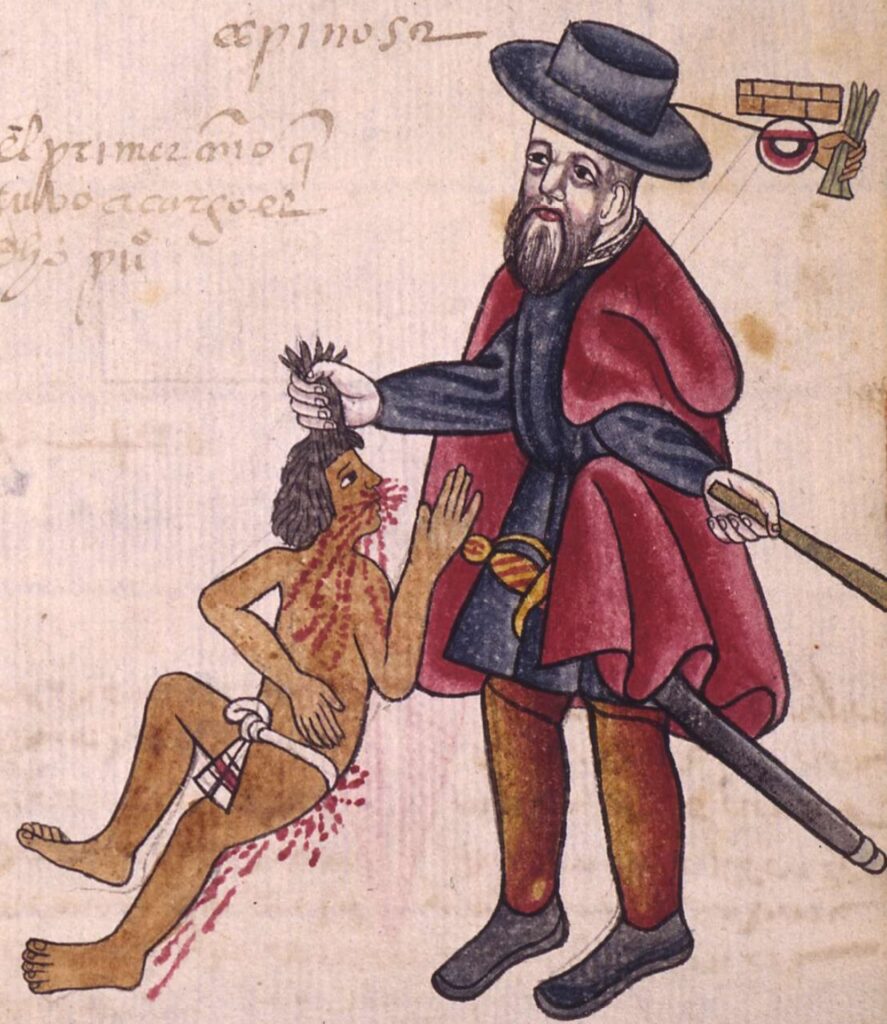
Intersecting ideas about class, gender, and race structured social hierarchy in Spanish America. The Iberian society transplanted to the Americas was fundamentally patriarchal—guided by the ideal of a senior man who protected subservient members of his household (wife, children, and employees) in exchange for their labor and obedience. Intended to be a microcosm of the monarchical state, for noblemen, patriarchy achieved its full expression in the great estates that encompassed an urban residence and rural lands worked by servants and slaves. Yet there were simply too few Spanish women in the Americas to support the natural growth of a purely European-descended population. Legal precedents already existed in Iberia for managing the consequences of extramarital affairs, practices that were then applied to the relationships between Spanish men and Black and Native women. Building upon histories of intercultural encounter in the Mediterranean world, where Muslims and Christians had been capturing and converting each other for centuries, the Spanish tolerated and sometimes even supported interracial marriages. Beginning with baptism, illegitimate mixed-race children were thus formally recognized while remaining subordinate; indeed, the line between servant and relative was often blurred.
The frequency of cross-cultural sex, often coerced, manifested new, racialized systems of social control. Regularized in the mid-1600s but rooted in older practices for excluding Moors and Jews, the sistema de castas (caste system) organized individuals into various ethno-racial groups based on their supposed “purity of blood.” Not surprisingly, Spaniards (españoles) were at the top of this hierarchy. Although the first generation of conquistadors and encomenderos dominated colonial society, they soon had to make room for other European migrants and the rising population of American-born colonists, called criollos. Mestizos, an elastic term used to describe those of mixed European, Black, and Indigenous heritage, ranked below españoles in the emerging racial order. Nevertheless, this idealized system of social control and the reality of life in the colonies were two different things. Spanish fathers of sufficient status might shield their mestizo children from racial prejudice, and wealthy mestizos married Europeans to “whiten” their family lines. In frontier areas where there were fewer colonists, it was often easier for mestizo families to emphasize their European heritage and thereby construct differences between themselves and Native groups. Such was the case on the frontiers of Portuguese Brazil, or Spanish Texas.

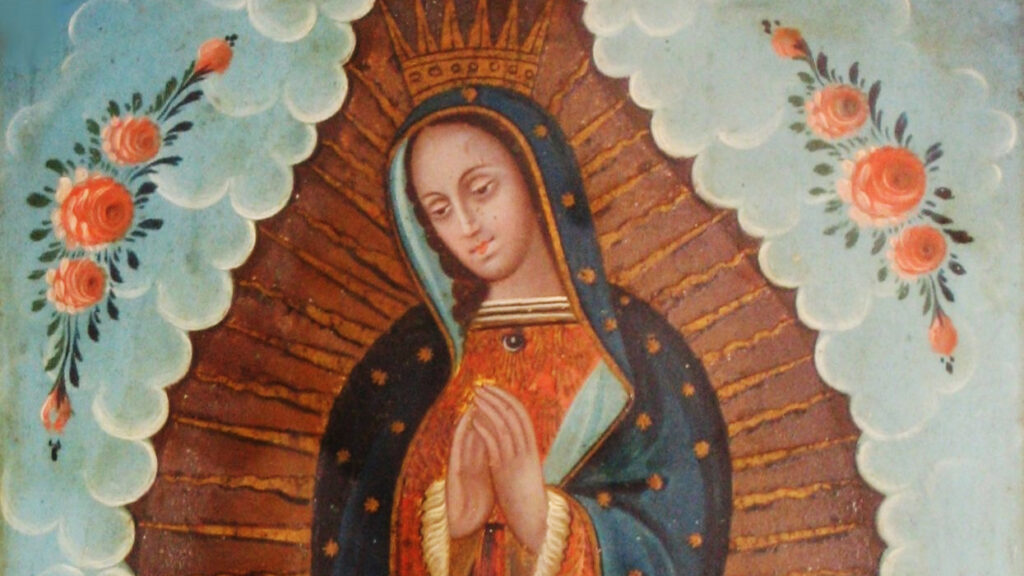
Mestizos soon made up a large portion of the colonial population, and by the early 1700s, more than one-third of all marriages bridged the Spanish-Indigenous divide. The result was a level of mixture (mestizaje) that distinguished Spanish America’s hybrid culture, one where African, Iberian, and Indigenous languages, religions, fashions, and cuisines commingled. In 1531, a poor Indigenous man named Juan Diego reported that he was visited by the Virgin Mary, who appeared as a dark-skinned, Nahuatl-speaking Indigenous woman. Reports of miracles spread across Mexico, and the Virgen de Guadalupe became a national icon for a new mestizo society.19
Finally, in 1546, a group of Basque prospectors located silver deposits near what became the city of Zacatecas. The Mexican counterpart to the mines of Potosí, the silver of Zacatecas fueled the ambitions of the Habsburg dynasty. The extraction of precious metals came at a steep environmental cost. Forests were cut and burned to fire the smelters that refined the ore, leaving behind slag, cinders, and mercury. Hundreds of thousands of sheep were unleashed on Mexico’s grasslands, followed by droughts and erosion. Pulled by the silver rush, colonists and their livestock provoked one of the longest conflicts in American history, the Chichimeca War of 1550–1600. Used to describe the seminomadic peoples of the mountainous and arid region north of Mesoamerica, chichimeca was a Nahuatl word equivalent to the European term “barbarian. ” More accurately, the Chichimecas were an alliance of several nations who organized to defend their homelands in the face of miners, ranchers, and slavers. The effectiveness of the Chichimecas’ guerilla tactics led to the deployment of royal troops, the construction of fortified bases, and armed escorts to guard the silver-laden convoys. After military and church officials debated the issue, the king sanctioned a total war of fuego y sangre (fire and blood) that permitted the enslavement of Chichimeca prisoners. The intertwining of war and slaving only hardened Chichimeca resistance, and by 1585 the war had become a bloody stalemate.20
Biology magnified the devastating impact of the European invasion. Separated from the Old World, its domesticated animals, and its immunological history, Native Americans lived free from the terrible diseases that ravaged populations in Asia, Europe, and Africa. Because of this relative isolation, Native Americans lacked the acquired immunities that Europeans and Africans had developed over centuries of exposure to deadly epidemics, like malaria and various poxes. So, when the newcomers arrived in the Americas they unleashed a host of new plagues—smallpox, typhus, influenza, diphtheria, measles, and hepatitis, to name a few—that devastated Native communities. Rape was used as a weapon of war by European armies, and sexual violence on a massive scale produced a more virulent strain of syphilis, leading to more deaths. The ability of the survivors to remain healthy and reproduce was also compromised by trauma, malnutrition, and other social determinants of health. In short, war, slaving, and epidemics worked together to scythe Indigenous populations. Some scholars estimate that as much as 90 percent of the population of the Americas perished within the first century and a half of European contact, a demographic cataclysm known as the Great Dying.21
VIII. Spanish North America
The great wealth from Spanish America was centered in Central and South America, but Spain ventured north as well. As mestizo societies developed in the mining and urban centers, privately financed military expeditions, called entradas, were organized to find other Indigenous empires to plunder. Led by veteran conquistadors, these expeditions included hundreds of soldiers, priests, guides, and enslaved people, supported by enormous numbers of livestock.
Juan Ponce de León, the conqueror of Puerto Rico, landed in Florida in 1513 in search of gold and enslaved laborers. The reality of staunch Indigenous resistance and a swampy coastline never aligned with Ponce de León’s imagination, and in Florida, he found only an early grave, courtesy of a poisoned arrow by the Calusa peoples. With the exploration of the Gulf of Mexico and the coast of California between the 1520s and 1540s, as the contours of the North American mainland came into focus, others tried where Ponce de León had failed.
In 1528, Álvar Núñez Cabeza de Vaca joined Pánfilo de Nárvaez’s expedition from Cuba to find the Río de las Palmas, 125 miles south of the Rio Grande, but due to consecutive storms and the powerful Gulf Stream, they erroneously landed on the west coast of Florida. After being separated from their supply ships, they built rafts in hopes of sailing again to their destination. Unfortunately, the crew shipwrecked on the coast of present-day Texas and embarked on a remarkable multiyear odyssey that took them from the Texas coast all the way to Sonora.
This epic trek further spread diseases and led to a host of disasters due to language barriers and the Spaniards’ insistence on their superiority. For example, when the explorers encountered the Tocobaga in the Tampa Bay area, they found shipwrecked European crates, each containing a dead body. The Tocobaga had treated the deceased Europeans with respect by carefully wrapping them in valuable painted skins, but Fray Juan Suarez, the accompanying bishop, misinterpreted the act as “devilish idolatry” and had the crates and bodies burned, despite being on sacred ground. Afterward, relations between the Spaniards and Tocobaga quickly deteriorated, and the explorers were expelled.
As the group traversed the coast, they glimpsed corn fields and gold pieces among the local Uzita. After laborious questioning, they learned of the Apalachee people who were said to have more of each. The crew left to find the Apalachee where they hoped to seize riches to rival Tenochtitlán. Along the way, the group found marshes, canopies of pine trees, and several rivers, which served as borders between Indigenous groups. When the expeditioners crossed rivers, they encountered different territories where they were treated as trespassers, especially when they devoured local corn fields.
One day, the Timucua, led by Chief Dulchanchellin, approached the camp and communicated using signs and exchanged gifts. After painstaking deliberation, the Spaniards understood these were enemies of the Apalachee who were willing to lead them in the right direction. Finally, in mid-June of 1528, the men came within sight of the Apalachee, the largest and most complex chiefdom occupying the Florida Peninsula, and one of the few powerful chiefdoms from the Great Lakes to the Gulf of Mexico.22

The Apalachee had extensive agricultural practices, organized hierarchical societies, and long-distance trade routes. Their capital city, Anhaica, was at its center, where a paramount chief lived, projecting influence over several outlying capitals, and where subordinate village chiefs ruled over their surrounding small lands. Early seventeenth-century witnesses estimate populations from 30,000 to 34,000 in the Apalachee region.23
Captain Nárvaez ordered Cabeza de Vaca to attack an outlying Apalachee village, using women and children as hostages to trade for the village chief. To the Spaniards’ surprise, they were met with an organized militant resistance and were forced to retreat. The captured chief convinced the expeditioners to go back to the coast and toward the Aute. In doing so, he protected his people by driving the Spaniards away from the capital and toward an enemy. The Apalachee would continue to maintain a stronghold in the area until the eighteenth century.
Desperate for survival, the expedition turned for the Gulf Coast near present-day St. Marks to build rafts and sail toward the coast of Mexico. Unfortunately, the rafts were again shipwrecked on the coast of modern-day Texas with fewer than eighty survivors, and Nárvaez perished en route.24
Near present-day Galveston, de Vaca and his men encountered a band of Karankawa who provided the expeditioners with food and wept for their fallen men before carrying the Spaniards to their village for refuge. Soon, the castaways would overstay their welcome by failing to pull their own weight, and a relationship between guest and host deteriorated into master and slave. For the next six years, the castaways endured harsh, trivial work, including carrying wood, digging for roots, and fetching water, while facing violence for minor infractions. Because the Karankawa did not engage in the slave trade generally, de Vaca and his men found opportunities to leave one clan for another.25
By 1529, the remaining Spaniards left for New Spain and abandoned Cabeza de Vaca before he became a neutral broker for the Charrucos. He traded “sea beads,” shells, and fruit for hides, glue, and flint before finding three other Spaniards and eventually making their escape together.26 In September 1534, de Vaca and the three men ventured through south Texas to present-day Mexico, where they were considered respectable healers. In their captivity, they had occasionally joined healing ceremonies and made signs of the cross on the sick and injured. Thus, they were refashioned as medicine men.27 In 1535, near west Texas, de Vaca completed the first recorded surgical procedure in the American Southwest. An Avavares man was struck by an arrowhead below the shoulder. De Vaca cut open the wound, extracted the weapon, and stitched the wound closed. The arrowhead and the story were passed around Indigenous communities. As a result, they were met with celebration festivals and considered holy men. The Spaniards’ growing reputation ultimately led to their safe return to Mexico City, as from then on, the foursome were accompanied by thousands of natives who willingly followed de Vaca’s orders throughout his travels.28 Women traveled ahead as guides to ensure safe passage since the men might have been mistaken for a war party.
De Vaca’s experience was unusual for a European. Along the journey, he learned to speak six different Indigenous languages and navigate a host of Indigenous customs. He also found New World maize (corn), the American buffalo, and signs of copper.29 To survive, he adapted to Indigenous life, embracing herbal cures and encouraging a softer approach to Native relations. Upon his return to Mexico City, he attempted to continue ritual gift giving, a practice he learned on his travels; however, the concept did not align with Spanish ideas of tribute and subjugation.30 De Vaca’s stories of the Indigenous interior, including tantalizing stories of great cities, prompted another round of attempted conquests.
Meanwhile, sponsored by the wealth of his wife’s family and the viceroy’s favoritism, between 1540 and 1542, Francisco Vázquez de Coronado led an entrada that rampaged across the Southwest and Great Plains. Like all Habsburg armies, Coronado’s was a truly international and multiethnic force, including Tlaxcalan guides, African porters, Flemish mercenaries, and even a Scottish bugler. On July 7, 1540, having reached the upper Rio Grande, Coronado’s army found Hawikuh, a small town of Zuni (Pueblo people), so named because their clustered, multistory adobe buildings resembled Spanish villages.31
Pueblo Indians are believed to be descendants of the Anasazi, Mogollon, or Hohokam cultures. Acoma, Zuni, Hopi, and Tewa are among the most recognizable tribal names. Pueblos are a diverse people with some shared cultural practices. For example, western Pueblos are matrilineal (women owned homes and fields) while eastern tribes such as the Acoma and Laguna are organized by moieties (dual organization). They also have as many as seven different languages.32
Native to the Southwest, Pueblo culture was shaped by its harsh environment. All practiced some form of farming, but the nature of it changed based on geography. For instance, the Zuni and Hopi practiced dry farming, while others near the Rio Grande dug irrigation ditches. As the population swelled, housing structures shifted from pit houses to surface dwelling rooms with storage rooms.33 In the 1300s, due to the Great Drought and overpopulation, the Pueblo people migrated south to northeast Arizona, Texas, and northwestern New Mexico. The move led to another change in housing to adobe brick, multistoried, attached homes or limestone cliff dwellings with attached adobe structures like those at Mesa Verde, Chaco Canyon, and Pueblo Bonita, developed around the thirteenth and fourteenth centuries.34
Upon Coronado’s arrival, Zuni and Spaniards alike eyed one another suspiciously. Coronado promptly had the Requerimiento read—a 1513 royal decree that Spain had the divine right to possess New World territories and subjugate Native peoples—demanding that the Zuni accept Spanish rule and embrace Christianity, despite their incomprehension of the words. He also informed them that resistance would be met with a loss of land, their lives, or enslavement. The Zuni reacted first by drawing a line of sacred corn not to be crossed by the Spaniards. When that did not work, they fired arrows at the Spanish party, resulting in the destruction of the village.35 The explorers ventured deeper into the interior of current-day New Mexico, where they met Tiwa-speaking people near current-day Albuquerque.36

After besieging and occupying a dozen towns over the winter of 1540–1541, Coronado’s army was led westward onto the grasslands in search of the fabled city of Quivira (central Kansas). His guide was an Indigenous man, known as the Turk, whose real mission was to get the Spaniards so hopelessly lost that they could never return to terrorize the Pueblos. Along the way, the Coronado expedition came across Tiguex, scattered villages of the Tigua people. Pedro de Castaneda described the encounter, noting their clothing and labor division. While initially very hospitable, the Tigua became hostile when the adventurers continued to exhaust their food stores and one soldier raped a woman. The ensuing violence led to many fatalities.37 Although Coronado and some of his men made it back, his failure made clear the limits of conquest. Coronado’s visit is still remembered today by the Pueblo, who depict him on a dancing horse holding a sword.38 Without the sugar-friendly climate of the Caribbean or large Indigenous empires to coopt and extort, the vast North American interior offered little incentive for renewed invasions. Still, smaller expeditions combed northern Mexico all the way to the Rio Grande, looking for people to enslave if no other resources could be found.39
Even as Spaniards were exploring the North American interior, they were simultaneously looking for strategic locations along the Pacific Coast. Tales of Amazonian women in a land of paradise stoked people’s imagination. For example, a Spanish writer wrote, “Know that to the right hand of the Indies was an island called California, very near the region of the Terrestrial Paradise, which was populated by black women, without there being any men among them. . . . They were of vigorous bodies and strong and ardent hearts of great strength . . . Their arms were all of gold. . . . In all the island there was no . . . other metal whatsoever.”40
In reality, the Native people of California were fishermen, farmers, and hunters in much the same way as other parts of North America. There were six cultural areas and roughly one hundred dialects before Spanish contact. In Southern and Central California (Serrano and Cahuilla), acorns were the primary food source, while Northern California Indians (Ipai and Tipai) were hunter/gatherer societies. Coastal Indians (Chumash and Tongva) relied on seafood and built canoes of driftwood.41
Indians of the Monterey region on the Central Coast, the Children of the Coyote, were aware of various Spaniard’s expeditions in North America from interior Natives and those in Baja California. After his victory in Tenochtitlán, Cortés dispatched explorations along the Pacific Coast that met with little success. In 1533, Fortún Jiménez sailed into the southeastern part of the Baja peninsula and was met by Guaycura warriors. He and most of his men perished. Those who returned spoke of pearls and gold. Still, it was not until 1542 that veteran conquistador Juan Rodríguez Cabrillo arrived at the bay of San Diego. Upon landing, he was met with fear and hostility, which he assuaged with gifts. The Ipai retold stories of other men killing many Native people. Upon Cabrillo’s death, his second in command, Bartolomé Ferrer, explored 1,200 miles up the Pacific Coast and claimed it for Spain. Permanent occupation would not come until 1789 when an expedition led by Franciscan Father Junípero Serra established a mission and presidio at current-day San Diego.42

Burdened by the mounting costs of war in America and Europe, Spain shifted its colonizing strategies toward the end of the sixteenth century. The popes provided religious sanction for the Iberian conquests from the start, but in his 1573 reforms, Philip II emphasized alternative methods for subjugating Indigenous peoples. With the rhetoric of conquest giving way to that of pacification, converting Native peoples became a greater priority. This ideological imperative was only heightened by the Reformation as Native American converts were seen as a way of compensating for the loss of rebellious Protestant subjects in the Netherlands and elsewhere. Indeed, religious institutions like the Inquisition were always understood as mechanisms for enforcing orthodoxy. Colonists and most sedentary Natives were already being ministered to by the secular clergy, which included officials from parish priests all the way to the bishops who ran the viceregal dioceses. However, along the frontier between Spanish colonies and Indigenous homelands, a different set of ecclesiastical institutions led the way. Organized by mendicant orders, most prominently the Franciscans and Jesuits, missions and missionaries became the vehicles for subjugating North America’s largely nonsedentary Indigenous peoples. Taking vows of poverty in emulation of the apostles, most missionaries were highly educated men who combined a medieval Christian mysticism with a fervent desire to bring “heathen” peoples to the “true faith.” Embedding themselves in Native communities, they learned local languages, challenged the authority of Indigenous shamans, and encouraged people to live in more nucleated settlements where they could take up European-style agriculture. Seeing themselves as Christian soldiers fighting to redeem the New World from Satan’s grasp, the aggressive attitude of many missionaries led them to martyrdom.

One of the first, and most promising, mission fields was the Franciscan experiment in the remote northern province of New Mexico. Juan de Oñate, a Zacatecas silver baron who was related by marriage to both Montezuma and Cortés, was determined to revive Coronado’s efforts to conquer the Pueblo villagers of the Rio Grande. After years of preparation, in 1598 he led four hundred settlers, soldiers, and Franciscan missionaries from north of the Río Conchos, crossed the Rio Grande at El Paso and established headquarters at San Juan, New Mexico. This trip was different from earlier military ones: Oñate was determined to establish a permanent colony. Like other seventeenth-century colonies, New Mexico had violent beginnings. After Oñate sacked the mesa-top village of Acoma for resisting his invasion, his troops slaughtered nearly half of its roughly 1,500 inhabitants, including women and children. Oñate ordered one foot cut off every surviving male over age fifteen, and he enslaved the remaining women and children. This theatrical brutality reflected the Spaniards’ siege mentality as they attempted to rule through force and terror. As Oñate put it in a letter, “The greatest force we possess is the prestige of the Spanish nation, by fear of which the Indians have been kept in check.”43 Carried along Indigenous trade networks, impressions of the Spaniards as cruel and treacherous strangers became widespread among Apaches, Pueblos, Navajos, and other nations. Although Oñate’s colonizing efforts ultimately failed, Franciscans stayed to save the “field of souls the Church could not ignore.”44
Franciscan priests compelled Indigenous people to build churches, plow the fields, and perform other rigorous tasks. However, Pueblos accepted new town governments alongside their own existing ones. Priests forbade traditional Native ceremonies and practices, but the Pueblo persisted by combining new and old traditions. Kachina dolls and prayer sticks were forbidden and destroyed. Meanwhile, they sought to change other key elements of native society as well.

One significant cultural difference between European and Indigenous cultures was their concepts of women’s power and sexuality. Traditionally, Pueblo women wielded significant authority due to their control of agriculture and their fertility. In the Native world, sexuality is associated with fertility and regeneration, reproduction (of offspring and their labor), and the incorporation of husbands and their labor. According to historian Ramón A. Gutiérrez, Pueblo women “were empowered through their sexuality.” Although they experienced full sexual freedom and premarital sex was common, in most cases, women were faithful upon marriage. Sexuality was not constrained by the heteronormative model, nor was it viewed as shameful or something to be hidden. Rather, it was natural, and some might say spiritual.45 The church sought to lessen women’s power and influence, fearing that it might emasculate men. Missionaries attempted to reform Native sexual behavior (especially premarital sex and polygamy) as part of the attempt to Christianize and Hispanicize them. They kept men and women in separate living quarters to ostensibly protect the women, even those who were married. Lustful thoughts were met with lashes and actions, public punishment, and humiliation.
Violence, poverty, and isolation marked New Mexico’s early history. Santa Fe, the first permanent European settlement in the Southwest, was established in 1610, but few Spaniards relocated to the struggling colony because of the distance from Mexico City and the rugged environment. Without mines, extracting tribute from the Pueblos and enslaving the Apaches became the main source of wealth for New Mexico’s governors. For their part, some fifty Franciscan friars had established dozens of missions and secured a few hundred converts by the 1630s. Yet beneath the veneer of control and conversion lurked seething discontents.46
IX. Conclusion
European expansion into the Americas introduced both settlers and European authorities to a new situation—an abundance of land and a scarcity of labor. Portuguese, Dutch, and English ships became the conduits for Africans forced to America. The western coast of Africa, the Gulf of Guinea, and the west-central coast were the sources of African captives. Wars of expansion and raiding parties produced captives who could be sold in coastal factories. African slave traders bartered for European finished goods such as beads, cloth, rum, firearms, and metal wares.
Though ravaged by disease and warfare, Native Americans forged middle grounds, resisted with violence, and accommodated and adapted to the challenges of colonialism. Some adaptations were met with little resistance, such as the adoption of the Spanish language, while others, like priests’ attempts to eliminate elements of Indigenous religions, caused conflict. Contact with Europeans continued to shape the patterns of life throughout the New World for hundreds of years. But the Europeans kept coming.
X. Primary Sources
1. Journal of Christopher Columbus, 1492
2. Nzinga Mbemba calls for an end to the slave trade, 1526
3. An Aztec account of the Spanish attack
4. Bartolomé de las Casas describes the exploitation of Indigenous people, 1542
5. The Tigua resist the Spanish in New Mexico, 1542
6. The story of the Virgin of Guadalupe
7. Alvar Nuñez Cabeza de Vaca travels through North America, 1542
8. Map of the Atlantic World, 1502
XI. Reference Material
This chapter was edited by Max Flomen, with content contributions by L. D. Burnett, Max Flomen, Kathryn Green, D. Andrew Johnson, Brenda Lakhani, Joseph Locke, Cameron Shriver, Ben Wright, Caroline Wright, and Miller Shores Wright.
Recommended Reading
• Bruhns, Karen Olsen. Ancient South America. Cambridge University Press, 1994.
• Benjamin, Thomas. The Atlantic World: Europeans, Africans, Indians and Their Shared History, 1400–1900. Cambridge University Press, 2009.
• Bost, Suzanne. Mulattas and Mestizas: Representing Mixed Identities in the Americas, 1850–2000. University of Georgia Press, 2003.
• Calloway, Colin G. New Worlds for All: Indians, Europeans, and the Remaking of Early America. Johns Hopkins University Press, 1997.
• Cook, Noble David. Born to Die: Disease and New World Conquest, 1492–1650. Cambridge University Press, 1998.
• Covey, R. Alan. Inca Apocalypse: The Spanish Conquest and the Transformation of the Andean World. Oxford University Press, 2020.
• Crosby, Alfred W. The Columbian Exchange: Biological and Cultural Consequences of 1492. Praeger, 2003.
• Davis, David Brion. Inhuman Bondage: The Rise and Fall of Slavery in the New World. Oxford University Press, 2006.
• Gutiérrez, Ramón A. When Jesus Came, the Corn Mothers Went Away: Marriage, Sexuality, and Power in New Mexico, 1500–1846. Stanford University Press, 1991.
• Hurtado, Albert L. Intimate Frontiers: Sex, Gender, and Culture in Old California. University of New Mexico Press, 1999.
• John, Elizabeth A. H. Storms Brewed in Other Men’s Worlds: The Confrontation of Indians, Spanish, and French in the Southwest, 1540–1795. University of Oklahoma Press, 1996.
• Kinsbruner, Jay. The Colonial Spanish-American City: Urban Life in the Age of Atlantic Capitalism. University of Texas Press, 2005.
• Knaut, Andrew L. The Pueblo Revolt of 1680: Conquest and Resistance in Seventeenth Century New Mexico. University of Oklahoma Press, 2015.
• Leon-Portilla, Miguel. The Broken Spears: The Aztec Account of the Conquest of Mexico. Beacon Books, 1992.
• Lockhart, James, and Stuart B. Schwartz. Early Latin America: A History of Colonial Spanish America and Brazil. Cambridge University Press, 1983.
• Lovejoy, Paul E. Transformations in Slavery: A History of Slavery in Africa. Cambridge University Press, 1983.
• Oswalt, Wendell H. This Land Was Theirs: A Study of Native North Americans. Oxford University Press, 2009.
• Reséndez, Andrés. A Land So Strange: The Epic Journey of Cabeza de Vaca. Basic Books, 2009.
• Restall, Matthew. Seven Myths of the Spanish Conquest. Oxford University Press, 2004.
• Schwartz, Stuart B. Victors and Vanquished: Spanish and Nahua Views of the Conquest of Mexico. Bedford St. Martin’s, 2000.
• Seed, Patricia. Ceremonies of Possession: Europe’s Conquest of the New World, 1492–1640. Cambridge University Press, 1995.
• Thornton, John K. A Cultural History of the Atlantic World, 1250–1820. Cambridge University Press, 2012.
• Townsend, Camilla. Malintzin’s Choices: An Indian Woman in the Conquest of Mexico. University of New Mexico Press, 2006.
• Ware, John A. A Pueblo Social History: Kinship, Sodality, and Community in the Northern Southwest. University of New Mexico Press, 2014.
• Weber, David. The Spanish Frontier in North America. Yale University Press, 2009.
Notes
- Colin G. Calloway, New Worlds for All: Indians, Europeans, and the Remaking of Early America (Johns Hopkins University Press, 1997).[↩]
- Patrick Vinton Kirch, How Chiefs Became Kings: Divine Kingship and the Rise of Archaic States in Ancient Hawai‘i (University of California Press, 2019); Robert McGhee, Ancient People of the Arctic (University of British Columbia Press, 1996); Robert Finlay, “The Voyages of Zheng He: Ideology, State Power, and Maritime Trade in Ming China,” Journal of the Historical Society 9 (2008): 327–47, https://doi.org/10.1111/j.1540-5923.2008.00250.x.[↩]
- Valerie Hansen, The Silk Road: A New History (Oxford University Press, 2012).[↩]
- Thomas Benjamin, The Atlantic World: Europeans, Africans, Indians and Their Shared History, 1400–1900 (Cambridge University Press, 2009), 52–104.[↩]
- John K. Thornton, A Cultural History of the Atlantic World, 1250–1820 (Cambridge University Press, 2012) 159–64; Gerhard Seibert, “São Tomé’s Greatest Slave Revolt of 1595: Background, Consequences and Misperceptions of One of the Greatest Slave Uprisings in Atlantic History,” Portuguese Studies Review 18, no. 2 (2011): 29–50, https://www.google.com/books/edition/Portuguese_Studies_Review_Vol_18_No_2/yyWaBAAAQBAJ.[↩]
- Fred M. Donner, “Expansion,” in Encyclopedia of Islam and the Muslim World, vol. 1, ed. Richard C. Martin (Gale, 2004), 239–45; François-Xavier Fauvelle, The Golden Rhinoceros: Histories of the African Middle Ages (Princeton University Press, 2018).[↩]
- Walter Rodney, How Europe Underdeveloped Africa (Bogle-L’Ouverture, 1972); Paul E. Lovejoy, Transformations in Slavery: A History of Slavery in Africa (Cambridge University Press, 1983); David Brion Davis, Inhuman Bondage: The Rise and Fall of Slavery in the New World (Oxford University Press, 2006); Linda Heywood, “Slavery and Its Transformation in the Kingdom of Kongo: 1491–1800,” Journal of African History 50 (2009): 1–22, https://doi.org/10.1017/S0021853709004228; Joseph C. Miller, The Problem of Slavery as History: A Global Approach (Yale University Press, 2012).[↩]
- Fray Manuel Álvares quoted in Malyn Newitt, ed., The Portuguese in West Africa, 1415–1670: A Documentary History (Cambridge University Press, 2012), 88.[↩]
- John K. Thornton, “The Portuguese in Africa,” in Portuguese Oceanic Expansion, 1400–1800, ed. Francisco Bethencourt and Diogo Ramada Curto (Cambridge University Press, 2007), 138–60.[↩]
- Clements R. Markham, ed. and trans., The Journal of Christopher Columbus (During His First Voyage), and Documents Relating to the Voyages of John Cabot and Gaspar Corte Real (Hakluyt Society, 1893), 73, 135.[↩]
- Markham, Journal of Christopher Columbus, 41.[↩]
- J. H. Elliott, Imperial Spain 1469–1716 (Edward Arnold, 1963), 53.[↩]
- Bernardino de Sahagún, Florentine Codex: General History of the Things of New Spain (University of Utah Press, 1970).[↩]
- R. Alan Covey, Inca Apocalypse: The Spanish Conquest and the Transformation of the Andean World (Oxford University Press, 2020).[↩]
- Jay Kinsbruner, The Colonial Spanish-American City: Urban Life in the Age of Atlantic Capitalism (University of Texas Press, 2005).[↩]
- Bartolomé de Las Casas, A Brief Account of the Destruction of the Indies (1552; Project Gutenberg, 2007), http://www.gutenberg.org/ebooks/20321, accessed June 11, 2018.[↩]
- Bartolomé de Las Casas, History of the Indies, ed. and trans. Andre Collard (1552; Harper & Row, 1971), 154.[↩]
- James Lockhart and Stuart B. Schwartz, Early Latin America: A History of Colonial Spanish America and Brazil (Cambridge University Press, 1983), 3–13.[↩]
- Suzanne Bost, Mulattas and Mestizas: Representing Mixed Identities in the Americas, 1850–2000 (University of Georgia Press, 2003); Stafford Poole, Our Lady of Guadalupe: The Origins and Sources of a Mexican National Symbol, 1531–1797 (University of Arizona Press, 1995).[↩]
- Philip Wayne Powell, Soldiers, Indians, and Silver: The Northward Advance of New Spain, 1550–1600 (University of California Press, 1952).[↩]
- Alfred W. Crosby, The Columbian Exchange: Biological and Cultural Consequences of 1492 (Greenwood, 1972).[↩]
- Andrés Reséndez, A Land so Strange: The Epic Journey of Cabeza de Vaca (Basic Books, 2009), 95.[↩]
- Reséndez, A Land So Strange, 102.[↩]
- Reséndez, A Land So Strange, 121.[↩]
- Reséndez, A Land So Strange, 146.[↩]
- Reséndez, A Land So Strange, 150.[↩]
- Reséndez, A Land So Strange, 167.[↩]
- Jesse E. Thompson, “Cabeza de Vaca: The First Texas Surgeon,” Baylor University Medical Center Proceedings 8, no. 4 (2018): 4, https://doi.org/10.1080/08998280.1995.11929937.[↩]
- Thompson, “Cabeza de Vaca,” 4.[↩]
- Colin G. Calloway, One Vast Winter Count: The Native American West Before Lewis and Clark (University of Nebraska Press, 2003), 122–25.[↩]
- Calloway, One Vast Winter Count, 134.[↩]
- John A. Ware, A Pueblo Social History: Kinship, Sodality, and Community in the Northern Southwest (University of New Mexico Press, 2014), xxi and 43.[↩]
- Ware, A Pueblo Social History, 84.[↩]
- Ware, A Pueblo Social History, 134; Joe S. Sandos, Pueblo Nations: Eight Centuries of Pueblo Indian History (Clear Light, 1992), 25; David Weber, The Spanish Frontier in North America (Yale University Press, 2009), 17–18.[↩]
- Weber, The Spanish Frontier in North America, 14–16.[↩]
- Bill Wright, The Tiguas: Pueblo Indians of Texas (Texas Western Press, 1993).[↩]
- Wright, The Tiguas, 6.[↩]
- Sandos, Pueblo Nations, 54.[↩]
- Weber, The Spanish Frontier in North America, 30–91.[↩]
- Albert L. Hurtado, Intimate Frontiers: Sex, Gender, and Culture in Old California (University of New Mexico Press, 1999), xxi.[↩]
- Bureau of Indian Affairs, Indians of California (US Government Printing Office, 1968).[↩]
- Weber, The Spanish Frontier in North America, 39–41; Steven W. Hackel, Children of Coyote, Missionaries of Saint Francis: Indian-Spanish Relations in Colonial California, 1769–1850 (Omohundro Institute of Early American History and Culture and the University of North Carolina Press, 2005).[↩]
- Oñate quoted in George P. Hammond and Agapito Rey, eds. and trans., Don Juan de Oñate: Colonizer of New Mexico, 1595–1628 (University of New Mexico Press, 1953), 1:456.[↩]
- Calloway, One Vast Winter Count, 150.[↩]
- Ramón A. Gutiérrez, When Jesus Came, the Corn Mothers Went Away: Marriage, Sexuality, and Power in New Mexico, 1500–1846 (Stanford University Press, 1991), 17–18, 90; Hurtado, Intimate Frontiers, 2, 46.[↩]
- Andrew L. Knaut, The Pueblo Revolt of 1680: Conquest and Resistance in Seventeenth Century New Mexico (University of Oklahoma Press, 2015).[↩]