*The American Yawp is an evolving, collaborative text. Click here to help improve this chapter.*
I. Introduction
While the Spanish solidified control over Mexico, Peru, and the Caribbean, other European powers challenged Spanish colonial ventures in the Americas. During the sixteenth century, the Portuguese began to establish permanent settlements on the coasts of Brazil. The French made headways in Canada and the Caribbean. The Dutch established colonies in North America, the Caribbean, and Brazil. The English captured Jamaica from the Spanish and established settlements in the Caribbean and extensively on the Atlantic seaboard of North America. By the end of the seventeenth century, Spain, Portugal, France, England, the Dutch, Sweden, and Denmark all established permanent settlements in the Americas. Colonial competition over the exploitation of the resources of the Americas had begun.
All the while, the vast majority of people inhabiting the Americas were Indigenous peoples. Native Americans lived in thousands of different polities and nations spanning both continents from pole to pole. Outside of Spanish conquests in Mexico, Peru, and the Caribbean, Native peoples overwhelmingly controlled most of the Americas, and their power was unrivaled in the interior. But in the sixteenth century, Native American and Indigenous peoples underwent immense changes in response to climate change, the introduction of European and African diseases, mass migrations, and trade with Europeans. In many ways, by the end of the seventeenth century, the Americas had become a New World for peoples of African, Asian, European, and Native American descent.
II. New Worlds: Native and Atlantic
The seventeenth century was a time of drastic change for Native American and Indigenous peoples. In North America, changes began with the abandonment of large settlements like Cahokia and Chaco Canyon in the thirteenth and fourteenth centuries at the beginning of the Little Ice Age (fourteenth–nineteenth centuries). Agricultural productivity declined in North America as the Earth’s axis tilted slightly. This cooled the Northern Hemisphere a few degrees annually, shortening the average growing seasons and thus leading to political instability in the paramount chiefdoms of the Mississippian civilization. Mass migrations across the continent intensified as Native people sought better opportunities. Some Native polities moved away from large, centralized chiefdoms toward more egalitarian, decentralized communities.1
But numerous Native paramount chiefdoms persisted into the seventeenth century: the Apalachee in Florida, Cofitachequi in the Carolinas, Coosa and Tascaluza in Alabama and Georgia, the Powhatan in Virginia, the Caddo in Texas and Louisiana, and the Casqui, Anlico, and Quigualtam along the Mississippi River. A chiefdom consisted of a centralized political and religious center with outlying towns of about one thousand to five thousand people. Paramount chiefdoms were made up of a few or dozens of those centralized chiefdoms led by a single ruler or ruling family. In the Southwest, Native communities were organized into farming communities that the Spanish called pueblos that could have thousands of inhabitants, such as in the Zuni, Hopi, Tiguex, Pecos, Jemez, Taos, and Acoma communities.2
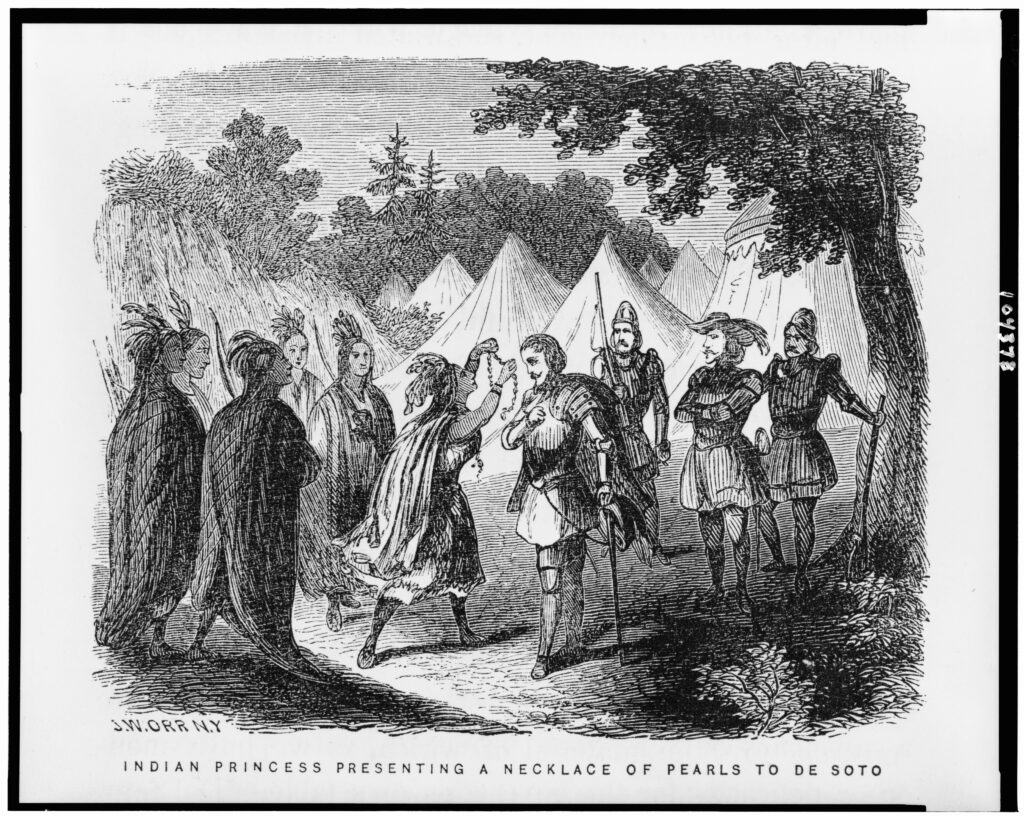
The introduction of Eastern Hemisphere diseases also had devastating effects on Native American and Indigenous populations, who lacked prior exposure and immunity. Estimates of death due to foreign pathogens, subsequent infections, and famine range between 30 percent and 90 percent of the populations of the Americas. Certain Native populations who had sustained contact with Europeans and Africans experienced catastrophic depopulation. For example, in the Caribbean, European colonialism and the enslavement of Native peoples exacerbated the spread of disease. Working enslaved people to exhaustion made them more susceptible to infections, and the capture of new slaves for the replacement of deceased enslaved people further spread disease in a vicious cycle that had severe consequences.3 However, away from sustained contact with Europeans and Africans, epidemics had dire local effects but did not spread across the continent in one catastrophic wave of disease. Various microbes and pathogens spread locally through Native and colonial networks as a series of epidemics that repeated every seven to ten years for over two centuries. Instead of a single mass epidemic, Native peoples from 1550 to 1750 experienced waves of new pathogens, leading over time to catastrophic population losses and fundamental social changes.
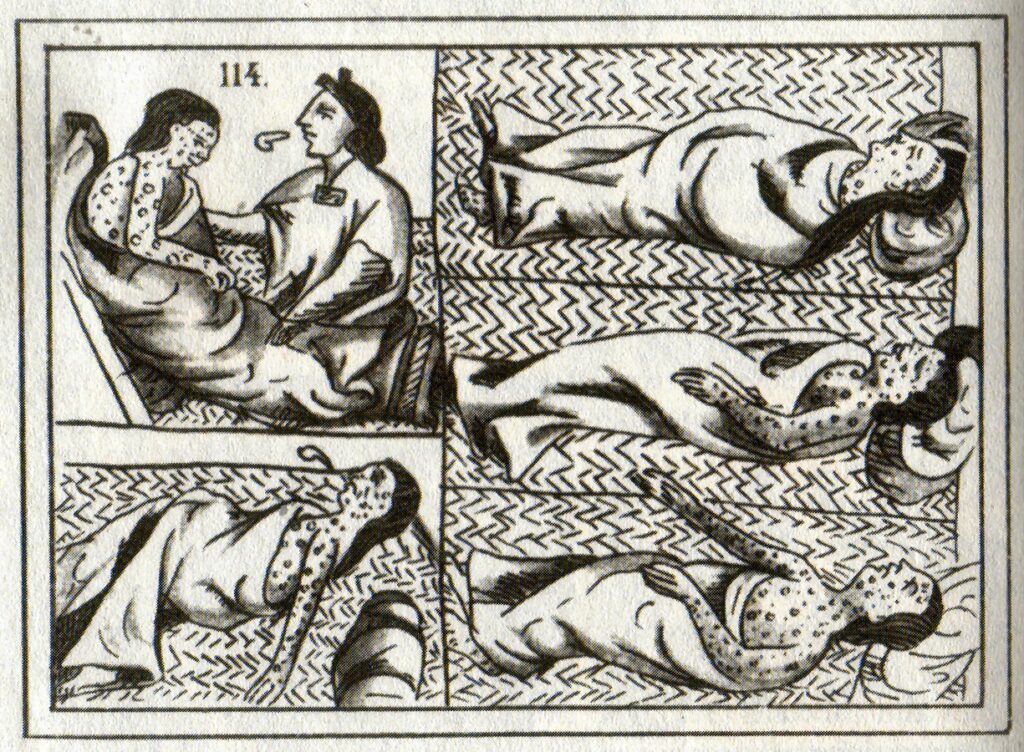
Scholars have recently begun to call these social changes among Native American and Indigenous peoples the Seventeenth-Century Transformation or a Native New World. Native peoples responded to climate change and epidemic diseases with social, religious, and political change. Native communities were also transformed by the introduction of European goods, particularly metal wares, firearms, and linens. New flora and fauna were also introduced, like horses, pigs, and peaches. Trade between Native groups and with Europeans for access to those goods became increasingly important over the seventeenth century. Native people traded food, animal furs and skins, luxury items, clothing, and Native captives with Europeans. Competition among Native peoples over resources for trade intensified conflict and led to diplomatic alliances during this period, leading to the formation of many of the present-day Native nations. Native peoples were not static. The Americas were undergoing transformational changes that predated the arrival of Europeans and Africans. Yet many of those changes would only intensify over the next century as Native peoples adapted to an increasingly changing world.4
The world changed for Europeans and Africans as well. Through cultural, economic, and social collisions including exchanges of materials, biology, DNA, and ideas, Europeans, Africans, and Indigenous Americans changed through contact with one another and with new social and physical environments. New communities were created, destroyed, and recreated in processes of transformation and exchange that altered the history of Africa, Europe, North America, and South America. The Atlantic that connects these four continents serves as the stage where human beings prompted these changes. For this reason, historians have begun to refer to the period of first contact between these peoples (fourteenth–fifteenth centuries) until the nineteenth century as the Atlantic World.5
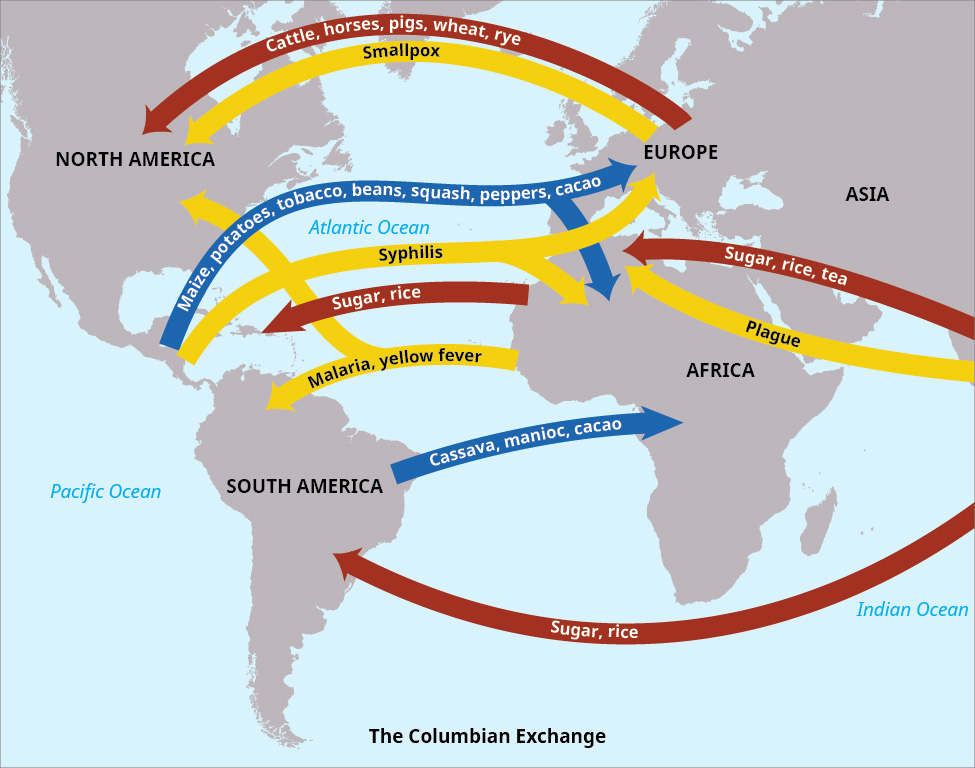
The movement of goods and biology (plants, animals, people, and pathogens) across the Atlantic has often been described as the Columbian Exchange. This interchange across the Atlantic had profound effects on people and environments across the globe as new industrial goods, food items, animals, textiles, plants, and diseases spread—or went extinct or out of use—alongside human migrations.6 But Atlantic history moves beyond just the exchange of goods to understand how communities reacted and adapted to those changes. Indigenous Americans, Africans, and Europeans all went through processes of creation and destruction in the Atlantic. They created new societies, transformed their politics and religions, and adapted to new problems and opportunities that arose. Atlantic history is more than the exchange of goods and living beings. It is as much about the exchange of ideas: the meaning of slavery and freedom, owning and occupying land and territory, which religion offered salvation, the roles of women in society, and many more.7
For example, free and enslaved Africans were forced to create new societies in the Americas and Europe, while communities in Africa changed drastically through trade and interaction with Europeans. As discussed earlier, Native Americans adapted to a changing New World due to the introduction of new goods, slavery, disease, migration, and climate change. Europeans adapted their societies, economies, politics, and religions to new environments and through interactions with each other, Native peoples, and Africans. The connection of people from four continents transformed the Atlantic World in both creative and destructive ways. This chapter highlights some of those transformations between the 1560s and 1660s.
III. Challenging Spain
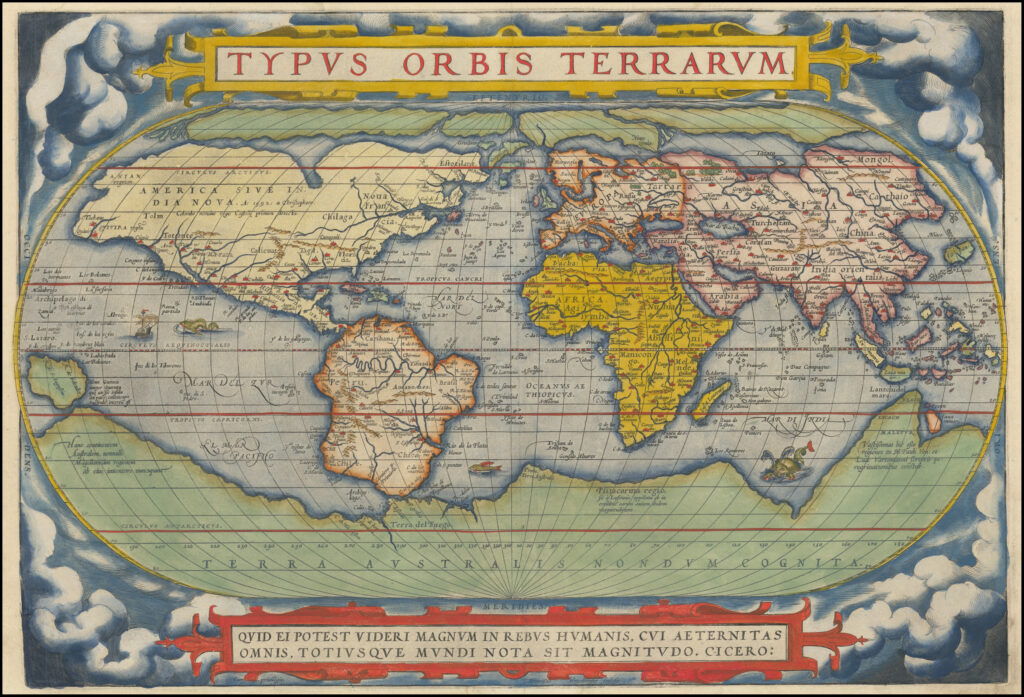
In the first half of the sixteenth century, Spanish colonists fought frequently with Florida’s Native peoples as well as with other Europeans. The Spanish launched expeditions into the interior of southeastern North America in attempts to find large metropolitan Native communities with precious metals similar to the Aztecs in Mexico and the Inca in Peru. Native peoples opposed, avoided, misled, and cooperated with these expeditions to get Spanish soldiers to move beyond their own communities. In 1526, Lucas Vázquez de Ayllón established a colony near Sapelo Sound on the coast of Georgia that collapsed within months of Ayllón’s death due to illness. In 1539, Hernando de Soto, a veteran of Pizarro’s expedition to Peru, landed an army near Tampa Bay and began to move up the Florida coast. De Soto and his men traversed the Southeast for four years until De Soto’s death in 1542. The Spanish survivors abandoned the expedition, built boats, and sailed down the Mississippi River to Mexico. De Soto’s invasion depended upon ransacking Native communities and taking Native captives in a futile search for material wealth. The expedition came into direct conflict with dozens of Native polities and led directly to the destruction of the Tascaluza paramount chiefdom in Central Alabama after the battle of Mabila in 1540. De Soto’s invasion disrupted Native communities in the region, who found their leaders could not protect their people or crops from Spanish invasions. This often led to a reordering of Native political and social organizations. Native communities adapted in the face of the Spanish invasion while limiting the advance of Spanish colonialism in North America.8
But Spain made inroads in Florida. In the 1560s, Spain expelled French Protestants, called Huguenots, from the area near modern-day Jacksonville in northeast Florida. In 1586, English privateer Sir Francis Drake burned the wooden settlement of St. Augustine, but Spain quickly rebuilt it. At the dawn of the seventeenth century, Spain’s reach in Florida extended from the mouth of the St. Johns River south to the environs of St. Augustine—an area of roughly a thousand square miles. The Spaniards attempted to duplicate methods for establishing control used previously in Mexico, the Caribbean, and the Andes. The Crown granted missionaries the right to live among Timucua and Guale villagers in the late 1500s and early 1600s and encouraged settlement through the encomienda system (grants of Native labor).9
In the 1630s, the mission system extended into the Apalachee district in the Florida panhandle. The Apalachee, one of the most powerful nations in Florida at the time of contact, claimed the territory from the modern Florida–Georgia border to the Gulf of Mexico. Apalachee farmers grew an abundance of corn and other crops. Native American traders carried surplus products east along the Camino Real (the royal road) that connected the western anchor of the mission system with St. Augustine. Spanish settlers drove cattle eastward across the St. Johns River and established ranches as far west as Apalachee. Still, Spain held Florida tenuously.

Native peoples challenged Spanish control in Florida, particularly over the expanding mission system. Missions were violent, exploitative endeavors that depended upon Native headmen and headwomen providing laborers and resources on behalf of missionaries and Spanish troops in return for Spanish gifts and support for Native leaders. The Timucuan peoples in central Florida began to reject the missionaries in their communities for their abusive labor demands and prohibitions of Native religious and social practices. Timucuans also blamed friars for the devastating effects of disease on their communities. In 1656, Timucuans rallied together an alliance of towns and began attacking the few Spaniards and enslaved Africans in their communities. Timucuans appealed to the Apalachee for support, who rejected their overtures in favor of the Spanish. The Apalachee attacked Timucuan towns and helped the Spanish apprehend the leaders of the rebellion. The Spanish executed eleven Timucuan leaders, displaying their bodies across Timucua as a warning against further rebellion. The Timucuan rebellion made clear that Spanish power and the mission system in Florida depended upon alliances with Native peoples.10
While Spain plundered the New World, unrest plagued Europe. The Reformation threw England and France, the two European powers capable of contesting Spain, into turmoil. Long and expensive conflicts drained time, resources, and lives. Millions died from religious violence in France alone. As the violence diminished in Europe, however, religious and political rivalries continued in the New World.
The Spanish exploitation of New Spain’s riches inspired European monarchs to invest in exploration and conquest. Reports of Spanish atrocities spread throughout Europe and provided a humanitarian justification for European colonization. An English reprint of the writings of Bartolomé de Las Casas bore the sensational title “Popery Truly Display’d in its Bloody Colours: Or, a Faithful Narrative of the Horrid and Unexampled Massacres, Butcheries, and all manners of Cruelties that Hell and Malice could invent, committed by the Popish Spanish.” An English writer explained that Native Americans “were simple and plain men, and lived without great labour,” but in their lust for gold the Spaniards “forced the people (that were not used to labour) to stand all the daie in the hot sun gathering gold in the sand of the rivers. By this means a great number of them (not used to such pains) died, and a great number of them (seeing themselves brought from so quiet a life to such misery and slavery) of desperation killed themselves. And many would not marry, because they would not have their children slaves to the Spaniards.”11 The Spanish accused their critics of fostering a “Black Legend.” The Black Legend drew on religious differences and political rivalries. Spain had successful conquests in France, Italy, Germany, and the Netherlands and left many in those nations yearning to break free from Spanish influence. English writers argued that Spanish barbarities were foiling a tremendous opportunity for the expansion of Christianity across the globe and that a benevolent conquest of the New World by non-Spanish monarchies offered the surest salvation of the New World’s pagan masses. With these religious justifications and with obvious economic motives, Spain’s rivals arrived in the New World.

The French
The French crown subsidized exploration in the early sixteenth century. Early French explorers sought a fabled Northwest Passage, a mythical waterway passing through the North American continent to Asia. Despite the wealth of the New World, Asia’s riches still beckoned to Europeans. Canada’s St. Lawrence River appeared to be such a passage, stretching deep into the continent and into the Great Lakes. French colonial possessions centered on these bodies of water (and, later, down the Mississippi River to the port of New Orleans).
French expeditions to North America began in 1534 when Jacques Cartier explored Newfoundland and the Gulf of St. Lawrence in present-day Canada. In 1535, Cartier returned and sailed up the St. Lawrence River, where he encountered Iroquoian peoples at the towns of Stadacona and Hochelaga, capturing the headman of Stadacona, Donnacona, and returning to France with him, where Donnacona later died. Cartier returned in 1541 to Stadacona and established a colony near there at Cap Rouge, Quebec, that was abandoned due to disease and starvation in 1543. The French did not attempt to establish a colony again in Canada for over fifty years.
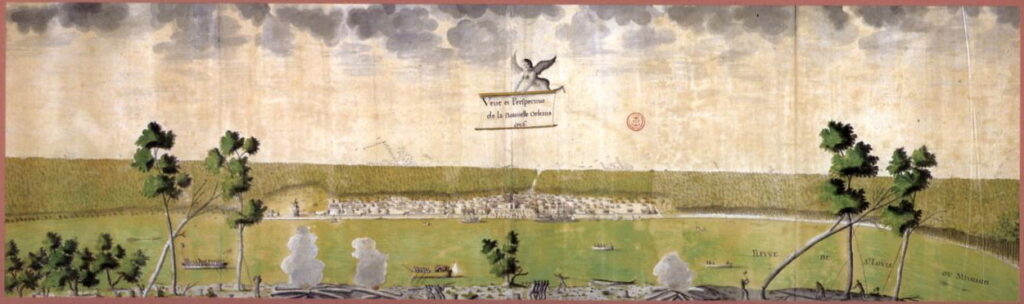
In 1603, the French returned to Canada to establish Port Royal in Acadia (Nova Scotia) and launched trading expeditions that stretched down the Atlantic coast as far as Cape Cod. French colonization developed through investment from private trading companies. The needs of the fur trade set the future pattern of French colonization. Founded in 1608 under the leadership of Samuel de Champlain, Quebec provided the foothold for what would become New France. Established among Montagnais and Algonquian communities, French fur traders placed a higher value on cooperating with Indigenous people than on establishing a successful French colonial footprint. Asserting dominance in the region could have been to their own detriment, as it might have compromised their access to skilled Native American trappers who provided the furs and therefore wealth. Few Frenchmen traveled to the New World to settle permanently. By the 1660s, around 3,200 French colonists lived in small communities on the St. Lawrence River in Quebec (1608), Trois-Rivières (1634), and Montreal (1642). Many persecuted French Protestants (Huguenots) sought to emigrate after France criminalized Protestantism in 1685, but all non-Catholics were forbidden in New France.12
The French preference for trade over permanent settlement fostered more cooperative and mutually beneficial relationships with Native Americans than was typical among the Spanish and English. Perhaps eager to debunk the anti-Catholic elements of the Black Legend, the French worked to cultivate cooperation with Native Americans. Jesuit missionaries, for instance, adopted different conversion strategies than the Spanish Franciscans. Spanish missionaries brought Natives into enclosed missions, whereas Jesuits more often lived with or alongside Indigenous people. Many French fur traders married Native American women.13 The offspring of Native American women and French men were so common in New France that the French developed a word for these children, Métis (meaning “mixed,” similar to Spanish mestizos). The Wendat people developed a particularly close relationship with the French, and many converted to Christianity and engaged in the fur trade. But close relationships with the French would come at a high cost. The Wendat were decimated by the ravages of European disease, and entanglements in French and Dutch conflicts proved disastrous.14 Despite this, some Native peoples maintained alliances with the French.
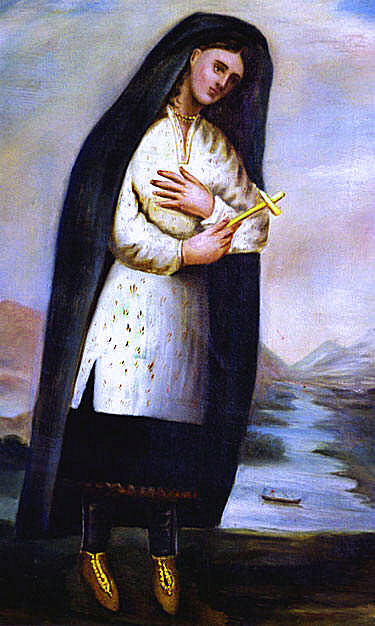
The French sent missionaries into Native communities and established missions, like Kahnawake, on the St. Lawrence River south of Montreal. Missions attracted Native converts like Kateri (Catherine) Tekakwitha, a woman born in Gandaouagué in the 1650s to a Mohawk man and an Algonquian captive. Kateri was afflicted at a young age with smallpox and lost most of her family to the disease. She converted to Catholicism, moved to Kahnawake, and took vows of chastity. Through abstention, fasting, and flagellation, Kateri suffered for her new faith and died slowly of disease at the age of twenty-four. She was canonized as a Catholic saint in 2012. Her story demonstrates the changing world for Native peoples in the seventeenth century alongside the suffering and religious fervor that epidemic disease could bring about.15
Pressure from the powerful Haudenosaunee in the east pushed many Algonquian-speaking peoples, like Kateri’s mother, toward French territory in the mid-seventeenth century, and together they crafted what historians have called a “middle ground,” a kind of cross-cultural space that allowed for Native and European interaction, negotiation, and accommodation. This was particularly true for the region upriver from Montreal to the western Great Lakes that became known as the pays d’en haut, the “upper country,” in New France. In the upper country, French traders created trade and kinship connections with Algonquian-speakers (Odawa, Ojibwe, Potawatomi, Sauk, Meskwaki, Kickapoo, Illini, Miami, Mascouten, and others), Iroquoian-speakers (Wendat and Petuns), and Siouan-speakers (Winnebago). French traders adopted—sometimes clumsily—the gift-giving and mediation strategies expected of Native leaders. Natives similarly engaged in the impersonal European market and adapted—often haphazardly—to European laws. Familial and trading alliances with Native communities provided the backbone of French authority in New France.
The Great Lakes “middle ground” experienced tumultuous success throughout the late seventeenth and early eighteenth centuries until English colonial officials and American settlers swarmed the region. The pressures of European expansion strained even the closest bonds.16
The Dutch
The Netherlands, a small maritime nation with great wealth, achieved considerable colonial success. In 1581, the Netherlands had officially broken away from the Habsburgs and won a reputation as the freest of the new European nations. Dutch women maintained separate legal identities from their husbands and could therefore hold property and inherit full estates.
Ravaged by the turmoil of the Reformation, the Dutch embraced greater religious tolerance and freedom of the press than other European nations.17 Radical Protestants, Catholics, and Jews flocked to the Netherlands. The English Pilgrims, for instance, fled first to the Netherlands before sailing to the New World years later. The Netherlands built its colonial empire through the work of experienced merchants and skilled sailors. The Dutch were the most advanced capitalists in the modern world and marshaled extensive financial resources by creating innovative financial organizations such as the Amsterdam Stock Exchange and the Dutch East India Company. Although the Dutch offered liberties, they offered very little democracy—power remained in the hands of only a few. And Dutch liberties certainly had their limits. The Dutch advanced the slave trade and brought enslaved Africans with them to the New World. Slavery was an essential part of Dutch capitalist triumphs.
Sharing the European hunger for access to Asia, in 1609 the Dutch commissioned Englishman Henry Hudson to discover the fabled Northwest Passage through North America. He failed, of course, but found the Hudson River, claiming modern-day New York for the Dutch, where later Dutch merchants returned to trade European goods for furs with local Munsee, Mahican, Lenape, and other Algonquian groups. There, they established New Netherland in 1614, an essential part of the Dutch New World empire. The Netherlands chartered the Dutch West India Company in 1621 and established colonies in Africa, the Caribbean, and North America. The island of Manhattan provided a launching pad to support its Caribbean colonies and attack Spanish trade.

Spiteful of the Spanish and mindful of the Black Legend, the Dutch were determined not to repeat Spanish atrocities. They fashioned guidelines for New Netherland that conformed to the ideas of Hugo Grotius, a legal philosopher who believed that Native peoples possessed the same natural rights as Europeans. Colony leaders insisted that land be purchased; in 1626, Peter Minuit therefore “bought” Manhattan from the Munsee people.18 Despite the seemingly honorable intentions, it is likely the Dutch paid the wrong people for the land (either intentionally or unintentionally) or that the Munsee and the Dutch understood the transaction in very different terms. Transactions like these illustrated both the Dutch attempt to find a more peaceful process of colonization and the inconsistency between European and Native American understandings of property.
Like the French, the Dutch sought to profit, not to conquer. Trade with Native peoples became New Netherland’s central economic activity. Dutch traders carried wampum along Native trade routes and exchanged it for beaver pelts. Wampum (otgóä in Iroquoian) consisted of shell beads from the southern New England and Chesapeake coasts, fashioned by Algonquian and Iroquoian women to create a valued ceremonial and diplomatic commodity. Native women labored to string the white and purple beads together into bands or belts for specific diplomatic or ceremonial purposes, speaking the words of the agreement into the beads, imbuing wampum with communal and spiritual power. In colonial exchanges, wampum became a currency that could buy anything from a loaf of bread to a plot of land.19
In addition to developing these trading networks, the Dutch also established farms, settlements, and lumber camps. The West India Company directors implemented the patroon system to encourage colonization. The patroon system granted large estates to wealthy landlords, who subsequently paid passage for tenant farmers to work their land. Expanding Dutch settlements correlated with deteriorating relations with local Native Americans. In the interior of the continent, the Dutch retained valuable alliances with the Iroquois to maintain Beverwijck, modern-day Albany, as a hub for the fur trade.20 In the places where the Dutch built permanent settlements, the ideals of peaceful colonization succumbed to the settlers’ increasing demand for land. Armed conflicts erupted as colonial settlements encroached on Native villages and hunting lands while trade exacerbated conflict between Native peoples over access to Dutch goods. Profit and peace, it seemed, could not coexist.

Labor shortages, meanwhile, crippled Dutch colonization. The patroon system failed to bring enough tenants, and the colony could not attract a sufficient number of indentured servants to satisfy the colony’s backers. In response, the colony imported eleven enslaved people owned by the company in 1626, the same year that Minuit purchased Manhattan. Enslaved laborers were tasked with building New Amsterdam (modern-day New York City), including a defensive wall along the northern edge of the colony (the site of modern-day Wall Street). They created its roads and maintained its all-important port. Fears of racial mixing led the Dutch to import enslaved women, enabling the formation of African Dutch families. The colony’s first African marriage occurred in 1641, and by 1650, there were at least five hundred enslaved Africans in the colony. By 1660, New Amsterdam had the largest urban enslaved population on the continent.21
As was typical of the practice of African slavery in much of the early seventeenth century, Dutch slavery in New Amsterdam was less comprehensively exploitative than later systems of American slavery. Some enslaved Africans, for instance, successfully sued for back wages. When several enslaved people owned by the company fought for the colony against the Munsee, they petitioned for their freedom and won a kind of “half freedom” that allowed them to work their own land in return for paying a large tithe, or tax, to their enslavers. The children of these “half-free” laborers remained held in bondage by the West India Company, however. The Dutch, who so proudly touted their liberties, grappled with the reality of African slavery, and some New Netherlanders protested the enslavement of Christianized Africans. The economic goals of the colony slowly crowded out these cultural and religious objections, and the much-boasted-of liberties of the Dutch came to exist alongside increasingly brutal systems of slavery.
The Haudenosaunee
Beginning in the sixteenth century, Five Iroquoian nations that occupied territories south and east of Lake Ontario formed the Great League of Peace, better known as the Haudenosaunee (“people of the longhouse”) or the Five Nations Iroquois. The Seneca, Cayuga, Onondaga, Oneida, and Mohawk formed a new religious and political coalition centered on the spiritual message of Deganawidah, who used words of condolence to remove grief from the Iroquoian leader Hiawatha. These words of condolence and diplomatic alliances between Iroquoian sachems (headmen) were created to establish nonviolent means of conflict resolution within the Great League, to end the cycle of mourning wars between the Five Nations. Mourning wars were raids to take enemies captive, intended to ease the suffering of the matrilineal (female descent) households who had lost loved ones. By ending the cycle of violent reprisals between league members, the Haudenosaunee were able to establish themselves as the dominant power in the eastern Great Lakes until the American Revolution.22

But peace within the League did not mean peace outside of the League. Over the first decades of the sixteenth century, the Haudenosaunee found themselves cut off from access to new European settlements and the trade they provided from the French on the St. Lawrence River, the English in New England and the Chesapeake, and the Dutch in the Hudson River Valley. The Haudenosaunee sought access to whelk and quahog clam shells from the Atlantic coasts that, when sewn together, made wampum, and furs for trade with Europeans from the fertile forests of the Ohio River Valley and Canada. With the establishment of Fort Orange (present-day Albany) by the Dutch in 1614 in the heart of the Hudson Valley, the Mohawks sought to monopolize trade with the Dutch by cutting off Mahican and other Algonquian traders to the north and west from access to the fort. The Haudenosaunee began raiding Algonquian and other Iroquoian-speaking people’s trade caravans to use stolen furs as trade goods with the Dutch. These raids set off a series of conflicts with neighboring peoples over the next decades, including against Mahicans (1624), St. Lawrence Iroquois (1630s), Wenros (1638), Wendat (1640s), Petuns (1650), Algonquians (1650), Neutrals (1651), Eries (1657), and Susquehannocks (1663).23
As the scale and pace of conflicts intensified, the Haudenosaunee looked to replace lost loved ones by incorporating captives taken from their enemies and adopting them into their matrilineal households. This drive to replace population losses fueled further conflict. Due to their expanding trade, raids, and adoption of outsiders, the Haudenosaunee became exposed to epidemic diseases brought by Europeans and Africans. The first recorded instances of smallpox among the Five Nations date to 1633 and again in 1640–1641. The subsequent population losses due to disease fueled further mourning wars to take captives to replace lost loved ones. Through this strategy of maintaining peace within the Iroquoian League and subjecting outside nations to violence, the Haudenosaunee scattered dozens of Native nations across the Great Lakes, the Ohio River Valley, the St. Lawrence River Valley, western New England, and the northern Chesapeake. In 1675, the Haudenosaunee allied themselves with the English and attacked the alliance of Algonquian Native peoples led by Metacom, ensuring the survival of the New England colonies and the defeat of Metacom in King Philip’s War. The alliance formed between the English and Haudenosaunee in 1676 became known as the Covenant Chain, a series of alliances between the two nations that lasted until the Seven Years’ War. By 1675, the Haudenosaunee established themselves as the major power on the Great Lakes.24
The Portuguese
The Portuguese had been leaders in Atlantic navigation, well ahead of Columbus’s voyage. But the incredible wealth flowing from New Spain piqued the rivalry between the two Iberian countries and accelerated Portuguese colonization efforts. This rivalry created a crisis within the Catholic world as Spain and Portugal squared off in a battle for colonial supremacy. The pope had earlier intervened and divided the New World with the Treaty of Tordesillas in 1494. Land east of the Tordesillas Meridian, an imaginary line dividing the North Atlantic and South America, would be given to Portugal, whereas land west of the line was reserved for Spanish conquest. In return for the license to conquer, both Portugal and Spain were instructed to treat the natives with Christian compassion and to bring them under the protection of the church.
Lucrative colonies in Africa and India initially preoccupied Portugal, but by 1530, the Portuguese turned their attention to the land that would become Brazil, driving out French traders and establishing permanent settlements at São Vicente (São Paulo), Salvador, and Rio de Janeiro. Two industries powered early colonial Brazil: sugar and the slave trade. In fact, over the entire history of the Atlantic slave trade, more Africans were enslaved in Brazil than in any other colony in the Atlantic World. By the eighteenth century, gold and diamond mines were discovered in the interior of São Paulo and Bahia, leading to expansion westward and the further colonization of Brazil.
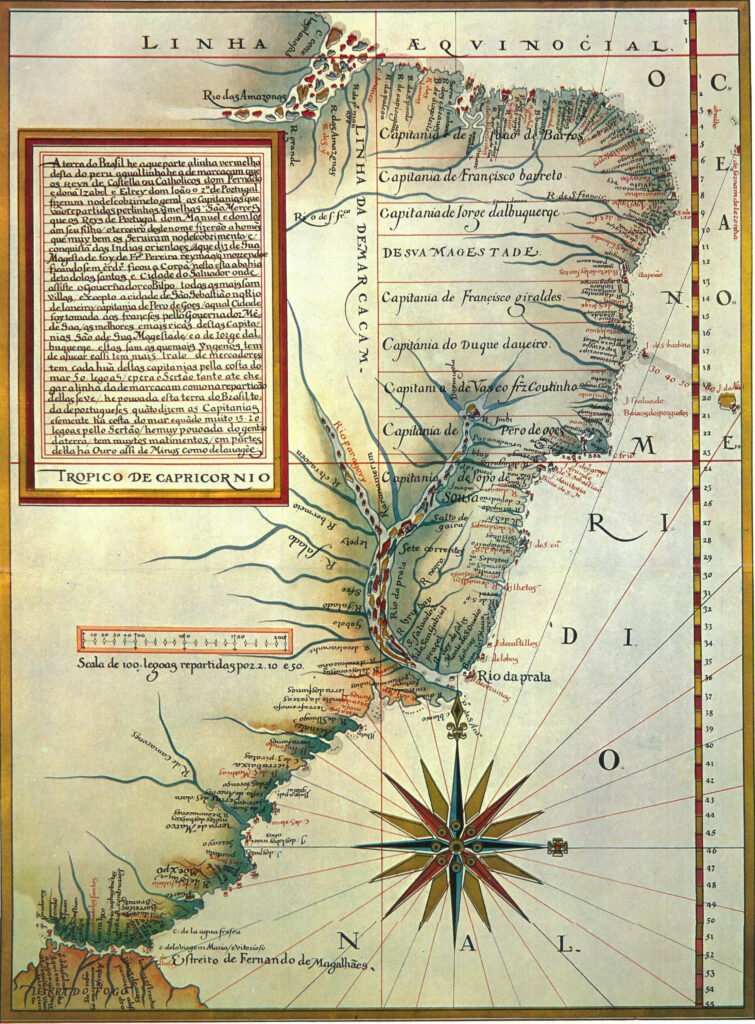
Jesuit missionaries brought Christianity to Brazil, but strong elements of African and Native spirituality mixed with orthodox Catholicism to create a unique religious culture. This culture resulted from the demographics of Brazilian slavery. High mortality rates on sugar plantations required a steady influx of new enslaved laborers, thus perpetuating the cultural connection between Brazil and Africa. The reliance on new imports of enslaved laborers increased the likelihood of resistance, however, and those who escaped slavery managed to create several free settlements, called quilombos. These settlements drew from both enslaved Africans and Natives, and despite frequent attacks, several endured throughout the long history of Brazilian slavery.25
From 1580 to 1640, the Portuguese Crown was held by Philip II of Spain, leading to the period known as Iberian Unification—although, under the same monarch, Spanish and Portuguese imperial possessions were ruled separately. Conflict between Portuguese and Spanish colonists, and especially with Native communities, continued in the Río de la Plata, particularly over São Paulo colonists enslaving Native Guaraní peoples in the region.26 In Brazil these conflicts intensified when the Dutch invaded, looking to expand their own colonial possessions and profit from the sugar and slave trades. The Dutch attacked Salvador and were repulsed in 1624, but conquered the northeastern portion of Brazil in 1630 when the Dutch West India Company established its capital at Maurisstad (Recife). Brazilian colonists, including many free and formerly enslaved people of African descent like Henrique Dias, opposed Dutch occupation and Spanish overlordship.27
The Dutch invasion was about more than seizing the profitable sugar plantations of northeastern Brazil; they also sought to dominate the Atlantic slave trade by seizing Elmina in present-day Ghana in 1637. Once Portuguese independence from Spain was restored in 1640, the Dutch used the dissolution of the Iberian monarchy to expand in Africa by seizing Portuguese colonies in Luanda in Angola, São Tomé, and Ano Bom (in present-day Equatorial Guinea) in 1641.28 The Portuguese ousted the Dutch from Brazil in 1654, with peace between the two nations resolved in 1661.29 Colonial competition over territory and the slave trade led to almost constant levels of warfare between European powers who sought to exploit the human and nonhuman resources of the Americas, Africa, and Asia.
New Sweden
Sweden joined the effort to colonize North America in 1638 when the Swedish South Company settled Swedes, Finns, and Dutch colonists at Fort Christina in what is now Wilmington, Delaware. The colony was plagued by slow communication and divided loyalties between Dutch investors who wanted immediate return on their investments and Swedish colonists and investors who wanted to expand the Swedish imperial project. Indigenous Lenape and Susquehannock communities initially welcomed New Swedish traders into Delaware Bay as new sources of European goods from small European communities that did not threaten Native towns. New Sweden was conquered by the Dutch in 1655, who subsequently were overtaken by the English, who renamed the New Netherland colony New York in 1664. As colonies changed territorial hands in the mid-seventeenth century, Swedes, Dutch, Finns, Germans, and other Europeans who colonized the Delaware Valley maintained their communal identity at a local level by being loyal subjects to whichever imperial power ruled their communities. They serve as a prime example of the diversity and persistence of colonial identity through maintaining local sovereignty by pledging allegiance to new imperial regimes.30
IV. English Colonization
New World colonization won support in England amid a time of rising English fortunes among the wealthy, a tense Spanish rivalry, and mounting internal social unrest. The island’s population increased from fewer than three million in 1500 to over five million by the middle of the seventeenth century.31 The skyrocketing cost of land coincided with plummeting farming income. Rents and prices rose, but wages stagnated. Moreover, movements to enclose public land—sparked by the transition of English landholders from agriculture to livestock raising—evicted tenants from the land and created hordes of landless, jobless peasants who haunted the cities and countryside.32 But supporters of English colonization always touted more than economic gains and mere national self-interest. They claimed to be doing God’s work. Many claimed that colonization would glorify God, England, and Protestantism by Christianizing the New World’s pagan peoples. The English—and other European Protestant colonizers—imagined themselves superior to the Spanish, who still bore the Black Legend stereotype of inhuman cruelty. English colonization, supporters argued, would prove that superiority.
In his 1584 “Discourse on Western Planting,” Richard Hakluyt amassed the supposed religious, moral, and exceptional economic benefits of colonization. He repeated the Black Legend of Spanish New World terrorism and attacked the sins of Catholic Spain. He promised that English colonization could strike a blow against Spanish heresy and bring the Protestant religion to the New World. English interference, Hakluyt suggested, might provide the only salvation from Catholic rule in the New World. The New World, too, he said, offered obvious economic advantages. Expanded trade, he argued, would not only bring profit but also provide work for England’s jobless poor. A Christian enterprise, a blow against Spain, an economic stimulus, and a social safety valve all beckoned the English toward a commitment to colonization.33
This noble rhetoric veiled the coarse economic motives that brought England to the New World. England’s merchants lacked estates, but they had new plans to build wealth. By collaborating with new government-sponsored trading monopolies and employing financial innovations such as joint-stock companies, England’s merchants sought to improve on the Dutch economic system. Spain was extracting enormous material wealth from the New World—why shouldn’t England? Joint-stock companies, the ancestors of modern corporations, became the initial instruments of colonization. With government monopolies, shared profits, and managed risks, these money-making ventures could attract and manage the vast capital needed for colonization. In 1606, James I approved the formation of the Virginia Company (named after Elizabeth, the Virgin Queen).
Rather than formal colonization, however, the most successful early English ventures in the New World were a form of state-sponsored piracy known as privateering. Queen Elizabeth sponsored sailors, or “Sea Dogges,” such as John Hawkins and Francis Drake, to plunder Spanish ships and towns in the Americas. Privateers earned a substantial profit both for themselves and for the English crown. England practiced piracy on a scale, one historian wrote, “that transforms crime into politics.”34 Francis Drake harried Spanish ships throughout the Western Hemisphere and raided Spanish caravans as far away as the coast of Peru on the Pacific Ocean. With Protestant-Catholic tensions already running high, English privateering provoked Spain. Tensions worsened after the execution of Mary, Queen of Scots, a Catholic. In 1588, King Philip II of Spain unleashed the fabled Armada. With 130 ships, 8,000 sailors, and 18,000 soldiers, Spain launched the largest invasion in history to destroy the British Navy and depose Elizabeth. The smaller and swifter English ships successfully harassed the armada, forcing it to retreat to the Netherlands for reinforcements. But then a fluke storm, celebrated in England as the “Protestant wind,” annihilated the remainder of the fleet.35 The destruction of the armada changed the course of world history. It not only saved England and secured English Protestantism, but it also opened the seas to English expansion and paved the way for England’s colonial future.

English colonization would look very different from Spanish or French colonization. England had long been trying to conquer Catholic Ireland. Rather than integrating with the Irish and trying to convert them to Protestantism, England more often simply seized land through violence and pushed out the former inhabitants, leaving them to move elsewhere or to die. These same tactics would later be deployed in North American invasions against Native peoples.
English colonization, however, began haltingly. Sir Humphrey Gilbert labored throughout the late sixteenth century to establish a colony in Newfoundland but failed. In 1587, with a predominantly male cohort of 150 English colonizers, John White reestablished an abandoned settlement on North Carolina’s Roanoke Island. Supply shortages prompted White to return to England for additional support, but the Spanish Armada and the mobilization of British naval efforts stranded him in Britain for several years. When he finally returned to Roanoke, he found the colony abandoned. What befell the failed colony? White found the word Croatoan carved into a tree or a post in the abandoned colony. Historians presume the colonists, short of food, may have fled for a nearby island of that name and encountered its settled Native population. Others offer violence as an explanation. Regardless, the English colonists were never heard from again. When Queen Elizabeth died in 1603, no Englishmen had yet established a permanent North American colony.
V. Jamestown
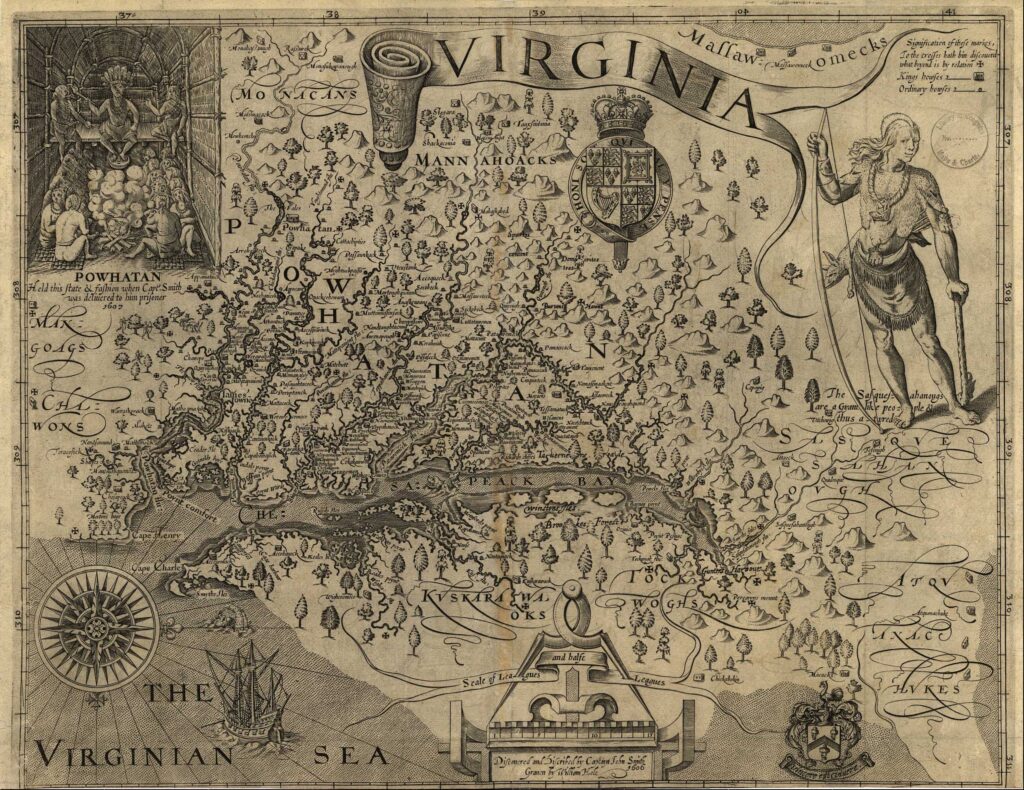
After King James made peace with the Spanish in 1604, colonization took on a new appeal. The Virginia Company, established in 1606, hoped to find gold and silver as well as other valuable trading commodities in the New World: glass, iron, furs, pitch, tar, and anything else the country could supply. In April 1607, Englishmen aboard three ships—the Susan Constant, the Godspeed, and the Discovery—sailed forty miles up the James River (named for the English king) in present-day Virginia (named for Elizabeth I, the Virgin Queen) and settled on just such a place. But the location was a disaster. Indigenous people had ignored the peninsula for two reasons: terrible soil hampered agriculture, and brackish tidal water led to debilitating disease. Despite these setbacks, the English built Jamestown, the first permanent English colony in the present-day United States.
The English had not entered a wilderness but had arrived in what Algonquian-speakers called Tsennacommacah. Wahunsenacawh, the mamanatowick (paramount chief) whom the English called Powhatan, led over ten thousand Algonquian-speaking people in the Chesapeake living in over thirty separate polities known collectively as the Powhatan.36 They burned vast acreage to clear brush and create sprawling artificial, parklike grasslands so they could easily hunt deer, elk, and bison. The Powhatan raised corn, beans, squash, and possibly sunflowers, rotating acreage throughout the Chesapeake. Without plows, manure, or draft animals, the Powhatan produced a remarkable number of calories cheaply and efficiently.

Jamestown was a profit-seeking venture backed by investors. The colonists were mostly gentlemen and proved entirely unprepared for the challenges ahead. They hoped for easy riches but found none. As John Smith later complained, they “would rather starve than work.”37 And so they did. Disease and starvation ravaged the colonists, thanks in part to the peninsula’s unhealthy location and the fact that supplies from England arrived sporadically or spoiled. Fewer than half of the original colonists survived the first nine months.
John Smith, a yeoman’s son and capable leader, took command of the crippled colony and promised, “He that will not work shall not eat.” He navigated Native American diplomacy, claiming that he was captured and sentenced to death, but that Powhatan’s daughter, Pocahontas, intervened to save his life. She would later marry another colonist, John Rolfe, and die in England.

Powhatan kept the English alive that first winter. The Powhatan had welcomed the English and placed a high value on metal ax-heads, kettles, tools, and guns, and eagerly traded furs and other abundant goods for them. With ten thousand confederated natives and with food in abundance, Indigenous people had little to fear and much to gain from the isolated outpost of sick and dying Englishmen. But as the English settlements expanded, they began to demand control over the movement of people and goods in areas of English control. This led to the first Anglo-Powhatan War (1609–1614) where the Powhatans attempted to preserve their control over trade and tribute in the Tidewater by cutting off food supplies to the English and besieging the newly constructed James Fort. The English successfully created relationships with other Native communities outside of Powhatan control, like the Patawomecks and Chickahominies, ensuring the colony’s survival. By 1614, tensions eased with the marriage of Pocahontas to John Rolfe, but the boundaries of English-controlled territories remained.38
Despite reinforcements, the English continued to die. Four hundred settlers arrived in 1609, but the overwhelmed colony entered a desperate “starving time” in the winter of 1609–1610. Supplies were lost at sea. Relations with Native Americans deteriorated, and the colonists fought a kind of slow-burning guerrilla war with the Powhatan. Disaster loomed for the colony. The settlers ate everything they could, roaming the woods for nuts and berries. They boiled leather. They dug up graves to eat the corpses of their former neighbors. One man was executed for killing and eating his wife. Some years later, George Percy recalled the colonists’ desperation during these years, when he served as the colony’s president: “Having fed upon our horses and other beasts as long as they lasted, we were glad to make shift with vermin as dogs, cats, rats and mice . . . as to eat boots shoes or any other leather. . . . And now famine beginning to look ghastly and pale in every face, that nothing was spared to maintain life and to doe those things which seam incredible, as to dig up dead corpses out of graves and to eat them.”39 Archaeological excavations in 2012 exhumed the bones of a fourteen-year-old girl that exhibited signs of cannibalism.40 All but sixty settlers would die by the summer of 1610.
Little improved over the next several years. By 1616, 80 percent of all English immigrants who had arrived in Jamestown had perished. England’s first American colony was a catastrophe. The colony was reorganized, though the colony still limped along as a starving, commercially disastrous tragedy. The colonists were unable to find any profitable commodities and remained dependent on Native Americans and sporadic shipments from England for food. But then, tobacco saved Jamestown.
By the time King James I described tobacco as a “noxious weed, . . . loathsome to the eye, hateful to the nose, harmful to the brain, and dangerous to the lungs,” it had already taken Europe by storm. In 1616, John Rolfe crossed tobacco strains from Trinidad and Guiana and planted Virginia’s first tobacco crop. In 1617, the colony sent its first cargo of tobacco back to England. The “noxious weed,” a native of the New World, fetched a high price in Europe, and the tobacco boom began in Virginia and then later spread to Maryland. Within fifteen years, American colonists were exporting over 500,000 pounds of tobacco per year. Within forty years, they were exporting 15 million.41
Tobacco changed everything. It saved Virginia from ruin, incentivized further colonization, and laid the groundwork for what would become the United States. With a new market open, Virginia drew not only merchants and traders but also settlers. Colonists came in droves. They were mostly young, mostly male, and mostly indentured servants who signed contracts called indentures that bonded them to employers for a period of years in return for passage across the ocean. But even the rough terms of servitude were no match for the promise of land and potential profits that beckoned English farmers. Despite these lures, there were not enough colonists. Tobacco was a labor-intensive crop, and ambitious planters, with seemingly limitless land before them, lacked only laborers to escalate their wealth and status. The colony’s great labor vacuum inspired the creation of the “headright policy” in 1618: any person who migrated to Virginia would automatically receive fifty acres of land, and any immigrant whose passage they paid would entitle them to fifty acres more.
In 1619, the Virginia Company established the House of Burgesses, a limited representative body composed of white landowners that first met in Jamestown. That same year, a Dutch slave ship sold twenty Africans to the Virginia colonists. Southern slavery was born.
Soon the tobacco-growing colonists expanded beyond the bounds of Jamestown’s deadly peninsula. When it became clear that the English were not merely intent on maintaining a small trading post but sought a permanent, ever-expanding colony, conflict with the Powhatan Confederacy became almost inevitable. Powhatan died in 1622 and was succeeded by his brother, Opechancanough, who promised to drive the land-hungry colonists back into the sea. He launched a surprise attack, and in a single day (March 22, 1622) killed over 350 colonists, or one-third of all the colonists in Virginia, marking the beginning of the Second Anglo-Powhatan War (1622–1632).42 The colonists retaliated and perpetuated massacres on Indigenous settlements many times over. The surprise attack freed the colonists to drive Native Americans off their land. The governor of Virginia declared it colonial policy to achieve the “expulsion of the savages to gain the free range of the country.”43 War and disease tilted the balance of power decisively toward the English colonizers as they drove Powhatan communities inland to the fall-line on the James River.
In the midst of the Second-Anglo Powhatan War, English colonist William Claiborne established a trading post in 1629 on present-day Kent Island, Maryland, trading European goods and firearms to the Susquehannock communities living along the Northern Chesapeake and Delaware Bays. The Susquehannocks had recently migrated southward from the Susquehanna Valley due to pressure from the Haudenosaunee and the potential for trade with coastal Algonquian peoples and Europeans. After initial conflicts, the Susquehannocks established kinship connections with the Lenape peoples of Delaware Bay who were frequently trading with the Dutch in New Netherlands and Swedes in New Sweden. But in 1638, English agents of the recently established colony of Maryland (1632) declared Claiborne a pirate and seized his trading post, demanding that the Susquehannocks trade with Maryland instead. The Susquehannocks refused. Maryland colonists quickly established trading relationships with the Piscataways, enemies of the Susquehannocks, which fueled conflict between the two Indigenous nations until the Susquehannocks signed a peace treaty with Maryland in 1652. For Maryland, like Virginia, competition over trade with Native peoples and expanding settlements exacerbated conflict between Native nations and with English colonists.44
To sustain expansion in Virginia, the Virginia Company invested in the importation of English indentured servants and particularly unmarried women. Colonial administrators worried about unmarried men refusing to settle on lands without marriage prospects. Therefore, the Virginia Company encouraged the importation of 147 women between 1620 and 1622, placing a per-head price of 120 pounds of tobacco on the purchase of these women for marriage. While more women arrived, the plan was a failure, as the disparity of unmarried men to women only increased over the seventeenth century. This unbalanced sex ratio led to violent competition over women, premarital sex, cohabitation between male and female servants, and interracial sex and marriages.45
As the territory and population of the Virginia colony expanded, English colonists brought to the New World particular visions of racial, cultural, and religious supremacy. Despite starving in the shadow of the Powhatan Confederacy, English colonists nevertheless judged themselves physically, spiritually, and technologically superior to Native peoples in North America. Christianity, metallurgy, intensive agriculture, transatlantic navigation, and even wheat farming all magnified English self-regard. This sense of superiority, when coupled with outbreaks of violence, left the English feeling entitled to Indigenous lands and resources.
Spanish conquerors established the framework for the Atlantic slave trade over a century before the first chained Africans arrived at Jamestown. Even Bartolomé de Las Casas, celebrated for his pleas to save Native Americans from colonial butchery, for a time recommended that Indigenous labor be replaced by importing Africans. Early English settlers from the Caribbean and Atlantic coast of North America mostly imitated European ideas of African inferiority. “Race” followed the expansion of slavery across the Atlantic World. Skin color and race suddenly seemed fixed. Englishmen equated Africans with categorical blackness and blackness with sin, “the handmaid and symbol of baseness.”46 An English essayist in 1695 wrote that “a negro will always be a negro, carry him to Greenland, feed him chalk, feed and manage him never so many ways.”47 More and more Europeans embraced the notion that Europeans and Africans were of distinct races. Others now preached that the Old Testament God cursed Ham, the son of Noah, and doomed Black people to perpetual enslavement.
And yet in the early years of American slavery, ideas about race were not yet fixed, and the practice of slavery was not yet codified. The first generations of Africans in English North America faced miserable conditions, but, in contrast to later American history, their initial servitude was not necessarily permanent, heritable, or even particularly disgraceful. Africans were definitively set apart as fundamentally different from their white counterparts and faced longer terms of service and harsher punishments, but, like the indentured white servants whisked away from English slums, some of the first Africans in North America also worked for only a set number of years before becoming free landowners themselves. The Angolan Anthony Johnson, for instance, was sold into servitude but fulfilled his indenture and became a prosperous tobacco planter and enslaver himself.48 Compulsory labor in Virginia was hard labor, particularly on tobacco plantations. The shared work—often side by side—between white servants and enslaved Black and Native people of both sexes created what one scholar has called a “peculiar brand of equality.”49 But this egalitarianism was based on harsh treatment of laborers and would increasingly become racialized over time. Slavery in seventeenth-century America had yet to be legally tied to Blackness.
In 1622, at the dawn of the tobacco boom, Jamestown still seemed a failure. By the end of the Second Anglo-Powhatan War in 1632, the rise of tobacco and the displacement of the Powhatan turned the tide. Colonists escaped the deadly peninsula, and immigrants poured into the colony to grow tobacco and turn a profit for the Crown. But in 1644, Opechancanough launched another devastating attack on the Virginia colony, killing over four hundred colonists, starting the Third Anglo-Powhatan War. Like in 1622, the Powhatan sought to reassert their own boundaries in the face of expanding English settlement on their territories. The English responded by invading Powhatan lands, and sacking and burning towns, corn fields, and religious structures. In 1646, Opechancanough was captured during peace talks and taken prisoner. He was murdered in Jamestown later that year by an English colonist. The peace treaty of 1646, negotiated with Opechancanough’s successor, Necotowance, declared the Powhatans and their Pamunkey allies tributaries of the Virginia Colony and subjects of the Crown in return for the protection of their lands. The English used the sale of captive Natives and lands to pay for the conflict. The English colony restricted the mobility of Native peoples and confined the Pamunkey to a locale they still inhabit today. The Third Anglo-Powhatan War marked the destruction of the Powhatan as a paramount chiefdom and scattered Native communities into the interior or allocated them to small towns as tributary subjects of the Crown.50
As the Virginia colony expanded and defined its boundaries and power over Native peoples, the reliance on the enslavement of Native and African laborers increased. By the end of the seventeenth century, enslaved Africans largely replaced indentured servants as the main source of colonial labor. In 1662, the Virginia Assembly tied enslaved status for children to the status of the mother, enslaving the children of enslaved women, and imposed stricter fines for interracial sex.51 Conflict with Native peoples continued as planters and former indentured servants sought new lands and Indigenous captives, culminating in the Susquehannock War of 1676. As the seventeenth century progressed, Virginia’s success as a colony increasingly depended on the importation of enslaved Africans, a trend that only amplified in the eighteenth century.
VI. New England
English colonists arrived in New England to establish the Plymouth Colony in 1620, in what local Abenaki-speakers call Wôpanâak (Dawnland) or Ndakinna (Our Land). Colonists were stunned to initially be greeted by Indigenous men who spoke English: Samoset of the Wabanaki and Squanto of Patuxet warmly welcomed the colonists by bartering goods. Samoset and Squanto had experience trading with English vessels in the region, and Squanto, like other Indigenous men and women, had previously endured English captivity before being returned by English seamen. By 1621, the Plymouth Colony established a treaty of friendship and alliance with the Wampanoag people under the leader Ousamequin, who was known by his title of great sachem (Massasoit). This treaty of reciprocity with the Wampanoags allowed the English to establish settlements in a peaceful environment, ironically encouraging further colonization.52
The English colonies in New England established from 1620 onward were founded with loftier goals than those in Virginia. Although migrants to New England expected economic profit, religious motives directed the rhetoric and much of the reality of these colonies. Not every English person who moved to New England during the seventeenth century was a Puritan, but Puritans dominated the politics, religion, and culture of New England. Even after 1700, the region’s Puritan inheritance shaped many aspects of its history.
The term Puritan began as an insult, and its recipients usually referred to each other as “the godly” if they used a specific term at all. Puritans believed that the Church of England had not distanced itself far enough from Catholicism since Henry VIII broke with Rome in the 1530s. They largely agreed with European Calvinists—followers of theologian John Calvin—on matters of religious doctrine. Calvinists (and Puritans) believed that humankind was redeemed by God’s grace alone, and that the fate of an individual’s immortal soul was predestined. The happy minority that God had already chosen to save were known among English Puritans as the Elect. Calvinists also argued that the decoration of churches, reliance on ornate ceremony, and corrupt priesthood obscured God’s message. They believed that reading the Bible was the best way to understand God.
Puritans were stereotyped by their enemies as dour killjoys, and the exaggeration has endured. It is certainly true that the Puritans’ disdain for excess and opposition to many holidays popular in Europe (including Christmas, which, as Puritans never tired of reminding everyone, the Bible never told anyone to celebrate) lent themselves to caricature. But Puritans understood themselves as advocating a reasonable middle path in a corrupt world. It would never occur to a Puritan, for example, to abstain from alcohol or sex.

During the first century after the English Reformation (ca. 1530–1630) Puritans sought to “purify” the Church of England of all practices that smacked of Catholicism, advocating a simpler worship service, the abolition of ornate churches, and other reforms. They had some success in pushing the Church of England in a more Calvinist direction, but with the coronation of King Charles I (r. 1625–1649), the Puritans gained an implacable foe that cast English Puritans as excessive and dangerous. Facing growing persecution, the Puritans began the Great Migration, during which about twenty thousand people traveled to New England between 1630 and 1640. The Puritans (unlike the small band of separatist “Pilgrims” who founded Plymouth Colony in 1620) remained committed to reforming the Church of England but temporarily decamped to North America to accomplish this task. Leaders like John Winthrop insisted they were not separating from, or abandoning, England but were rather forming a godly community in America that would be a “City on a Hill” and an example for reformers back home.53 The Puritans did not seek to create a haven of religious toleration, a notion that they—along with nearly all European Christians—regarded as ridiculous at best and dangerous at worst.
While the Puritans did not succeed in building a godly utopia in New England, a combination of Puritan traits with several external factors created colonies wildly different from any other region settled by English people. Unlike those heading to Virginia, colonists in New England—Plymouth (1620), Massachusetts Bay (1630), Connecticut (1636), and Rhode Island (1636)—generally arrived in family groups. Most New England immigrants were small landholders in England, a class that the contemporary English called the “middling sort.” When they arrived in New England, they tended to replicate their home environments, founding towns composed of independent landholders. The New England climate and soil made large-scale plantation agriculture impractical, so the system of large landholders using masses of enslaved laborers or indentured servants to grow labor-intensive crops largely failed. But small numbers of enslaved Africans did arrive in the Massachusetts Bay Colony in 1638 aboard the Salem-based vessel Desire.54 Evidence exists of an enslaved woman being sexually assaulted by another enslaved man at the order of their Anglican enslaver, Samuel Maverick, in 1638. By the seventeenth century, over a thousand enslaved and free Africans lived in New England. Other Puritans made their fortunes as enslavers on Caribbean sugar islands, and New England merchants profited as suppliers of provisions and enslaved laborers to those colonies.
Although New England colonies could boast wealthy landholding elites, the disparity of wealth in the region remained narrow compared to the Chesapeake, Carolina, or the Caribbean. Instead, seventeenth-century New England was characterized by a broadly shared, modest prosperity based on a mixed economy dependent on small farms, shops, fishing, lumber, shipbuilding, and trade with Native peoples and the Atlantic World.
A combination of environmental factors and the Puritan social ethos produced a region of remarkable health and stability during the seventeenth century. New England immigrants avoided most of the deadly outbreaks of tropical disease that turned the Chesapeake colonies into graveyards. Disease, in fact, only aided English settlement and relations to Native Americans. In contrast to other English colonists who had to contend with powerful Native American neighbors, the Puritans confronted the stunned survivors of a biological catastrophe. A lethal pandemic of smallpox during the 1610s and subsequent epidemics killed as much as 90 percent of the region’s Native American population over the next two hundred years. Many survivors welcomed the English as potential allies against rival nations who had escaped the catastrophe. The relatively healthy environment, coupled with political stability and the predominance of family groups among early immigrants, allowed the New England population to grow to 91,000 people by 1700 from only 21,000 immigrants. In contrast, 120,000 English went to the Chesapeake, and only 85,000 white colonists remained in 1700.55
The New England Puritans set out to build their utopia by creating communities of the godly. Groups of men, often from the same region of England, applied to the colony’s General Court for land grants.56 They generally divided part of the land for immediate use while keeping much of the rest as “commons” or undivided land for future generations. The town’s inhabitants collectively decided the size of each settler’s home lot based on their current wealth and status. Besides oversight of property, the town restricted membership, and new arrivals needed to apply for admission. Those who gained admittance could participate in town governments that, while not democratic by modern standards, nevertheless had broadly popular involvement. All male property holders could vote in town meetings and choose the selectmen, assessors, constables, and other officials from among themselves to conduct the daily affairs of government. Upon their founding, towns wrote covenants, reflecting the Puritan belief in God’s covenant with his people. Towns sought to arbitrate disputes and contain strife, as did the church. Wayward or divergent individuals were persuaded, corrected, or coerced. Popular conceptions of Puritans as hardened authoritarians are exaggerated, but if persuasion and arbitration failed, people who did not conform to community norms were punished or removed. Massachusetts banished Anne Hutchinson, Roger Williams, and other religious dissenters like the Quakers.
New England colonists’ relationships with Native peoples deteriorated within the first generation of settlement. In the 1630s, Pequot communities in present-day Connecticut began to have conflict with the Dutch, English, and Narragansetts over trade in the prized clam shells from the coasts used to make wampum. Pequots regularly exacted tribute payments from neighboring Narragansetts and Montauk communities. When the Pequots killed two English traders, Narragansetts and Mohegans decided to create an alliance with the English and attacked the Pequots.57
In May 1637, an armed contingent of English Puritans from Massachusetts Bay, Plymouth, and Connecticut colonies trekked into Pequot territory that was claimed by New England. Referring to themselves as the “Sword of the Lord,” this military force intended to attack “that insolent and barbarous Nation, called the Pequots.” In the resulting violence, Puritans put the Mystic community to the torch, beginning with the north and south ends of the town. As Pequot men, women, and children tried to escape the blaze, other soldiers waited with swords and guns. One commander estimated that of the “four hundred souls in this Fort . . . not above five of them escaped out of our hands,” although another counted near “six or seven hundred” dead. In a span of less than two months, the English Puritans boasted that the Pequot “were drove out of their country, and slain by the sword, to the number of fifteen hundred.”58 Those Pequots who did not flee were enslaved and either distributed among New England households or sold to the Caribbean.59
The Pequot War began out of competition over access to natural resources and disputes over tribute payments between Native communities. Once the English committed, the conflict had devastating outcomes for the Pequots. The devastation of the Pequots provided safety and stability for the fledgling New England colonies to expand settlements further. Narragansetts and Mohegans also benefitted for a time from the victory over the Pequots but would join the Wampanoags in their conflict with the English in King Philip’s War in 1675.

Although by many measures colonization in New England succeeded, its Puritan leaders failed in their own mission to create a utopian community that would inspire their fellows back in England. They tended to focus their disappointment on the younger generation. “But alas!” Increase Mather lamented, “That so many of the younger Generation have so early corrupted their [the founders’] doings!”60 The jeremiad, a sermon lamenting the fallen state of New England due to its straying from its early virtuous path, became a staple of late-seventeenth-century Puritan literature.
Yet the jeremiad could not stop the effects of prosperity. The population spread and grew more diverse. Many, if not most, New Englanders retained strong ties to their Calvinist roots into the eighteenth century, but the Puritans (who became Congregationalists) struggled against a rising tide of religious pluralism. On December 25, 1727, Judge Samuel Sewell noted in his diary that a new Anglican minister “keeps the day in his new Church at Braintrey: people flock thither.”61 Previously forbidden holidays like Christmas were celebrated publicly in church and privately in homes. Puritan minister Cotton Mather discovered on Christmas 1711 that “a number of young people of both sexes, belonging, many of them, to my flock, had . . . a Frolick, a reveling Feast, and a Ball, which discovers their Corruption.”62 Despite the lamentations of the Mathers and other Puritan leaders of their failure, they left an enduring mark on New England culture and society that endured long after the region’s residents ceased to be called “Puritan.”
VII. Conclusion
The fledgling settlements in Virginia and Massachusetts paled in importance when compared to the sugar colonies of the Caribbean. Valued more as marginal investments and social safety valves where the poor could be released, these colonies nonetheless created a foothold for Britain on a vast North American continent. And although the seventeenth century would be fraught for Britain—religious, social, and political upheavals would behead one king and force another to flee his throne—settlers in Massachusetts and Virginia were nonetheless tied together by the emerging Atlantic economy. While commodities such as tobacco and sugar fueled new markets in Europe, the economy grew increasingly dependent on enslaved labor. Enslaved Africans transported across the Atlantic would further complicate the collision of cultures in the Americas. The Native slave trade expanded, spurring on cycles of violence, migration, and disease as Native communities adapted to the arrival of Europeans and Africans. The creation and maintenance of a slave system would spark new understandings of human difference and new modes of social control. The economic exchanges of the new Atlantic economy would not only generate great wealth and exploitation, but would also lead to new cultural systems and new identities for the inhabitants of at least four continents.
VIII. Primary Sources
1. Richard Hakluyt makes the case for English colonization, 1584
2. Thomas Morton reflects on Native Americans in New England, 1637
3. Francis Daniel Pastorius describes his ocean voyage, 1684
4. John Winthrop dreams of a city on a hill, 1630
5. John Lawson encounters Native Americans, 1709
6. A Gaspesian man defends his way of life, 1691
7. Manuel Trujillo accuses Asencio Povia and Antonio Yuba of sodomy, 1731
8. Painting of New Orleans, 1726
9. Sketch of an Algonquin village, 1585
IX. Reference Material
This chapter was edited by Miller Shores Wright, with content contributions by Erin Bonuso, L. D. Burnett, Max Flomen, Jon Grandage, Daniel Johnson, Brenda Lakhani, Joseph Locke, Lisa Mercer, Maria Montalvo, Ian Saxine, Jennifer Tellman, Luke Willert, Ben Wright, Caroline Wright, and Miller Shores Wright.
Recommended Reading
• Alencastro, Luiz Felipe de. The Trade in the Living: The Formation of Brazil in the South Atlantic, Sixteenth to Seventeenth Centuries. State University of New York Press, 2018.
• Armitage, David, and Michael J. Braddick, eds., The British Atlantic World, 1500–1800. Palgrave Macmillan, 2009.
• Berlin, Ira. Many Thousands Gone: The First Two Centuries of Slavery in North America. Harvard University Press, 1998.
• Blackburn, Carole. Harvest of Souls: The Jesuit Missions and Colonialism in North America, 1632–1659. McGill-Queen’s University Press, 2000.
• Bolster, W. Jeffrey. The Mortal Sea: Fishing the Atlantic in the Age of Sail. Harvard University Press, 2012.
• Breen, T. H., and Stephen Innes. “Myne Owne Ground”: Race and Freedom on Virginia’s Eastern Shore, 1640–1676. Oxford University Press, 2005.
• Brown, Kathleen M. Good Wives, Nasty Wenches, and Anxious Patriarchs: Gender, Race, and Power in Colonial Virginia. University of North Carolina Press, 1996.
• Dubcovsky, Alejandra. Informed Power: Communication in the Early American South. Harvard University Press, 2016.
• Ellis, Elizabeth. The Great Power of Small Nations: Indigenous Diplomacy in the Gulf South. University of Pennsylvania Press, 2023.
• Engerman, Stanley L., and Robert E. Gallman, eds. The Cambridge Economic History of the United States, vol. 1, The Colonial Era. Cambridge University Press, 1996.
• Ethridge, Robbie. From Chicaza to Chickasaw: The European Invasion and the Transformation of the Mississippian World, 1540–1715. University of North Carolina Press, 2010.
• Fisher, Linford D. “‘Why Shall Wee Have Peace to Bee Made Slaves’: Indian Surrenderers During and After King Philip’s War.” Ethnohistory 64, no. 1 (January 2017): 91–114.
• Goetz, Rebecca. The Baptism of Early Virginia: How Christianity Created Race. Johns Hopkins University Press, 2012.
• Haefeli, Evan. New Netherland and the Dutch Origins of American Religious Liberty. University of Pennsylvania Press, 2012.
• Harris, Leslie M. In the Shadow of Slavery: African Americans in New York City, 1626–1863. University of Chicago Press, 2003.
• Hatfield, April Lee. Atlantic Virginia: Intercolonial Relations in the Seventeenth Century. University of Pennsylvania Press, 2004.
• Kruer, Matthew. Time of Anarchy: Indigenous Power and the Crisis of Colonialism in Early America. Harvard University Press, 2021.
• Merrell, James H. The Indians’ New World: Catawbas and Their Neighbors from European Contact Through the Era of Removal. University of North Carolina Press, 1989.
• Morgan, Edmund S. American Slavery, American Freedom: The Ordeal of Colonial Virginia. Norton, 1975.
• Morgan, Philip D., and Jack P. Greene. Atlantic History: A Critical Appraisal. Oxford University Press, 2009.
• Reséndez, Andrés. The Other Slavery: The Uncovered Story of Indian Enslavement in America. Houghton Mifflin Harcourt, 2016.
• Richter, Daniel K. Facing East from Indian Country: A Native History of Early America. Harvard University Press, 2001.
• Richter, Daniel K. The Ordeal of the Longhouse: The Peoples of the Iroquois League in the Era of European Colonization. University of North Carolina Press, 1992.
• Schwartz, Stuart B. Sovereignty and Society in Colonial Brazil: The High Court of Bahia and Its Judges, 1609–1751. University of California Press, 1973.
• Taylor, Jessica Lauren. Plain Paths and Dividing Lines: Navigating Native Land and Water in the Seventeenth-Century Chesapeake. University of Virginia Press, 2023.
Notes
- Daniel K. Richter, Facing East from Indian Country: A Native History of Early America (Harvard University Press, 2001), 5.[↩]
- Robbie Ethridge, “European Invasions and Early Settlement, 1500–1680,” in The Oxford Handbook of American Indian History (Oxford University Press, 2016), 42–43.[↩]
- Ethridge, “European Invasions and Early Settlement, 1500–1680,” 45; Andrés Reséndez, The Other Slavery: The Uncovered Story of Indian Enslavement in America (Houghton Mifflin Harcourt, 2016), 37–45.[↩]
- James H. Merrell, The Indians’ New World: Catawbas and Their Neighbors from European Contact through the Era of Removal (University of North Carolina Press, 1989) and Robbie Ethridge, From Chicaza to Chickasaw: The European Invasion and the Transformation of the Mississippian World, 1540–1715 (University of North Carolina Press, 2010).[↩]
- J. H. Elliott, “Atlantic History: A Circumnavigation,” in The British Atlantic World, 1500–1800, ed. David Armitage and Michael J. Braddick (Palgrave Macmillan, 2009), 259.[↩]
- Alfred W. Crosby, The Columbian Exchange: Biological and Cultural Consequences of 1492 (Greenwood, 1972).[↩]
- Philip D. Morgan and Jack P. Greene, Atlantic History: A Critical Appraisal (Oxford University Press, 2009).[↩]
- Ethridge, “European Invasions and Early Settlement,” 42–44.[↩]
- Stanley L. Engerman and Robert E. Gallman, eds., The Cambridge Economic History of the United States, vol. 1, The Colonial Era (Cambridge University Press, 1996), 21.[↩]
- Alejandra Dubcovsky, Informed Power: Communication in the Early American South (Harvard University Press, 2016), 68–79.[↩]
- John Ponet, A Short Treatise on Political Power: And of the True Obedience Which Subjects Owe to Kings, and Other Civil Governors (London, 1556), 43–44.[↩]
- Alan Greer, The People of New France (University of Toronto Press, 1997).[↩]
- Susan Sleeper-Smith, Indian Women and French Men: Rethinking Cultural Encounter in the Western Great Lakes (University of Massachusetts Press, 2001).[↩]
- Carole Blackburn, Harvest of Souls: The Jesuit Missions and Colonialism in North America, 1632–1659 (McGill-Queen’s University Press, 2000), 116.[↩]
- Allan Greer, Mohawk Saint: Catherine Tekakwitha and the Jesuits (Oxford University Press, 2005).[↩]
- Richard White, The Middle Ground: Indians, Empires, and Republics in the Great Lakes Region, 1650–1815 (Cambridge University Press, 1991), xxvi–xxvii, 10–15, 40.[↩]
- Evan Haefeli, New Netherland and the Dutch Origins of American Religious Liberty (University of Pennsylvania Press, 2012), 20–53.[↩]
- Allen W. Trelease, Indian Affairs in Colonial New York: The Seventeenth Century (University of Nebraska Press, 1997), 36.[↩]
- Daniel K. Richter, The Ordeal of the Longhouse: The Peoples of the Iroquois League in the Era of European Colonization (University of North Carolina Press, 1992), 46–49. Daniel K. Richter, Trade, Land, Power: The Struggle for Eastern North America (University of Pennsylvania Press, 2013), 101.[↩]
- Janny Venema, Beverwijck: A Dutch Village on the American Frontier, 1652–1664 (State University of New York Press, 2003).[↩]
- Leslie M. Harris, In the Shadow of Slavery: African Americans in New York City, 1626–1863 (University of Chicago Press, 2003), 21.[↩]
- Richter, The Ordeal of the Longhouse.[↩]
- Richter, Ordeal of the Longhouse, 60–74.[↩]
- Richter, Ordeal of the Longhouse, 134–42.[↩]
- Alida C. Metcalf, Go-Betweens and the Colonization of Brazil: 1500–1600 (University of Texas Press, 2005). See also James H. Sweet, Recreating Africa: Culture, Kinship, and Religion in the African-Portuguese World, 1441–1770 (University of North Carolina Press, 2003).[↩]
- Stuart B. Schwartz, Sovereignty and Society in Colonial Brazil: The High Court of Bahia and Its Judges, 1609–1751 (University of California Press, 1973), 42–43, 127–32.[↩]
- Luiz Felipe de Alencastro, The Trade in the Living: The Formation of Brazil in the South Atlantic, Sixteenth to Seventeenth Centuries (State University of New York Press, 2018), 335.[↩]
- Alencastro, The Trade in the Living, 335, 209–10.[↩]
- Schwartz, Sovereignty and Society in Colonial Brazil, 240.[↩]
- Mark L. Thompson, The Contest for the Delaware Valley: Allegiance, Identity, and Empire in the Seventeenth Century (Louisiana State University Press, 2013).[↩]
- Edmund S. Morgan, American Slavery, American Freedom: The Ordeal of Colonial Virginia (Norton, 1975), 30.[↩]
- John Walter, Crowds and Popular Politics in Early Modern England (Manchester University Press, 2006), 131–35.[↩]
- Richard Hakluyt, Discourse on Western Planting (1584), https://archive.org/details/discourseonweste02hakl_0.[↩]
- Morgan, American Slavery, American Freedom, 9.[↩]
- Felipe Fernández-Armesto, The Spanish Armada: The Experience of War in 1588 (Oxford University Press, 1988).[↩]
- Jessica Lauren Taylor, Plain Paths and Dividing Lines: Navigating Native Land and Water in the Seventeenth-Century Chesapeake (University of Virginia Press, 2023), 21. Rebecca Anne Goetz, “The Nanziatticos and the Violence of the Archive: Land and Native Enslavement in Colonial Virginia,” Journal of Southern History 85, no. 1 (February 2019): 33–60, https://doi.org/10.1353/soh.2019.0001.[↩]
- John Smith, Advertisements For the Inexperienced Planters of New-England, Or, Anywhere or The Path-Way to experience to erect a Plantation (London, 1631), 16.[↩]
- Taylor, Plain Paths and Dividing Lines, 54–58, 63.[↩]
- George Percy, “A True Relation of the Proceedings and Occurrents of Moment Which Have Hap’ned in Virginia,” quoted in Jamestown Narratives: Eyewitness Accounts of the Virginia Colony, the First Decade, 1607–1617, ed. Edward Wright Haile (Round House, 1998), 505.[↩]
- Eric A. Powell, “Chilling Discovery at Jamestown,” Archaeology (June 10, 2013), http://www.archaeology.org/issues/96-1307/trenches/973-jamestown-starving-time-cannibalism.[↩]
- Dennis Montgomery, 1607: Jamestown and the New World (Colonial Williamsburg Foundation, 2007), 126.[↩]
- Rebecca Goetz, The Baptism of Early Virginia: How Christianity Created Race (Johns Hopkins University Press, 2012), 57.[↩]
- Daniel K. Richter, Facing East from Indian Country: A Native History of Early America (Harvard University Press, 2009), 75.[↩]
- Matthew Kruer, Time of Anarchy: Indigenous Power and the Crisis of Colonialism in Early America (Harvard University Press, 2021), 24–30.[↩]
- Kathleen M. Brown, Good Wives, Nasty Wenches, and Anxious Patriarchs: Gender, Race, and Power in Colonial Virginia (University of North Carolina Press, 1996), 80–85.[↩]
- Winthrop Jordan, White over Black: American Attitudes Toward the Negro, 1550–12 (University of North Carolina Press, 1968), 7.[↩]
- Jordan, White over Black, 16.[↩]
- T. H. Breen and Stephen Innes, “Myne Owne Ground”: Race and Freedom on Virginia’s Eastern Shore, 1640–1676 (Oxford University Press, 2005).[↩]
- Ira Berlin, Many Thousands Gone: The First Two Centuries of Slavery in North America (Harvard University Press, 1998), 32.[↩]
- Taylor, Plain Paths and Dividing Lines, 133–39.[↩]
- April Lee Hatfield, Atlantic Virginia: Intercolonial Relations in the Seventeenth Century (University of Pennsylvania Press, 2004) 138–39; Taylor, Plain Paths and Dividing Lines, 157–60, 202–4.[↩]
- Lisa Brooks, Our Beloved Kin: A New History of King Philip’s War (Yale University Press, 2018), 1–5; Jenny Hale Pulsipher, Subjects unto the Same King: Indians, English, and the Contest for Authority in Colonial New England (University of Pennsylvania Press, 2005), 10–12.[↩]
- John Winthrop, A Modell of Christian Charity (1630), first published in Collections of the Massachusetts Historical Society (Boston, 1838), 3rd series, no. 7: 31–48, http://history.hanover.edu/texts/winthmod.html.[↩]
- Wendy Anne Warren, “‘The Cause of Her Grief’: The Rape of a Slave in Early New England,” Journal of American History 93, no. 4 (March 2007): 1031–32, https://doi.org/10.2307/25094595.[↩]
- Alan Taylor, American Colonies: The Settling of North America (Penguin, 2002), 170.[↩]
- Virginia DeJohn Anderson, New England’s Generation: The Great Migration and the Formation of Society and Culture in the Seventeenth Century (Cambridge University Press, 1991), 90–91.[↩]
- Pulsipher, Subjects unto the Same King, 20–24.[↩]
- John Mason, A Brief History of the Pequot War (1736) (Boston, 1736), http://digitalcommons.unl.edu/cgi/viewcontent.cgi?article=1042&context=etas.[↩]
- Linford D. Fisher, “‘Why Shall Wee Have Peace to Bee Made Slaves’: Indian Surrenderers During and After King Philip’s War,” Ethnohistory 64, no. 1 (2017): 91–114, https://doi.org/10.1215/00141801-3688391.[↩]
- Increase Mather, A Testimony Against Several Prophane and Superstitious Customs, Now Practised by Some in New-England (London, 1687).[↩]
- Samuel Sewall, Diary of Samuel Sewall: 1674–1729, vol. 3 (Massachusetts Historical Society, 1882), 389.[↩]
- Diary of Cotton Mather, 1709–1724 (Massachusetts Historical Society, 1912), 146.[↩]