
*The American Yawp is an evolving, collaborative text. Click here to help improve this chapter.*
I. Introduction
Whether they came as servants, enslaved laborers, free farmers, religious refugees, or powerful planters, the men and women of the American colonies created new worlds. Over the course of the seventeenth century, Native Americans in North America saw fledgling settlements become beachheads of vast new populations that increasingly monopolized resources and transformed the land. While events in England—religious conflict, civil war, and nation-building projects—profoundly influenced colonial development, one constant was that the people kept coming. By 1700, the English population in the Americas was 260,000, whereas that of its main European rival, New France, was just 15,000.1
By this time, however, a novel system of racial slavery had become indispensable to England’s empire in America. Colonial planters initially relied on the labor of English servants, but in the second half of the seventeenth century, they increasingly turned to enslaved people of African descent. While the vast majority of enslaved people in British America labored on sugar plantations in the Caribbean, slavery was central to regional economies on the continent as well. A new Atlantic system that connected the continents of Europe, Africa, and the Americas would shape North American society through the eighteenth century and beyond.
II. Slavery and the Making of Race
Slavery existed in Europe and the Americas before colonization. Though the institution had largely died out in northern Europe by the thirteenth century, it persisted in the south and east. Slavery also existed in America before the arrival of Europeans, with war captivity the most common form of bondage among Native peoples in North America. The commercial system of racial slavery that would develop in the early modern European empires was, however, historically unprecedented.
European colonizers enslaved large numbers of Native Americans in the seventeenth century. Contemporary European legal thought held that enslaving prisoners of war was not only legal but more merciful than killing captives outright. After the Pequot War (1636–1637), Massachusetts Bay colonists sold hundreds of Native Americans into slavery in the West Indies. A few years later, Dutch settlers in the Mid-Atlantic colony of New Netherland enslaved Algonquians during both Governor Kieft’s War (1641–1645) and the two Esopus Wars (1659–1663). The Dutch sent these war captives to English-settled Bermuda as well as Curaçao, a Dutch plantation colony in the southern Caribbean. The English enslaved hundreds of Native Americans during King Philip’s War (1675–1676), an Indigenous uprising against the encroachments of New England colonists. New England colonists also tried to send enslaved Native Americans to Barbados, but the Barbados Assembly refused to import them for fear they would encourage rebellion.
In later years, wars in Florida, South Carolina, and the Mississippi Valley produced even more enslaved Native Americans. Some wars emerged from contests between Native Americans and colonists for land, while others were manufactured as pretenses for acquiring captives. Some were not wars at all, but merely illegal raids performed by slave traders. Historians estimate that between 24,000 and 51,000 Native Americans were forced into slavery throughout the southern colonies between 1670 and 1715.2 While some enslaved Native Americans remained in the region, many were exported through Charles Town, South Carolina, to other ports in the British Atlantic—most likely to Barbados, Jamaica, and Bermuda.
Disease, as well as brutal conditions of violence and starvation, decimated the enslaved Native population. The fierce resistance of captives and the diplomatic difficulties the enslavement of Native Americans caused led colonial governments to discourage Indian slavery, although it never ceased entirely as long as slavery was a legal institution.
Desirous of a more stable workforce, English planters increasingly looked to Africa for labor power. Spanish and Portuguese colonizers began bringing captive Africans to the Americas in the early 1500s, and enslaved people grew tobacco on the island of Hispaniola as early as the 1530s. By 1641, well before slavery became widespread in the English colonies, more than five hundred thousand people of African descent labored on plantations and in mines in Spanish and Portuguese colonies.3 By the 1670s, however, English merchants had become Europe’s leading slave traders, and a majority of people in England’s West Indian colonies were enslaved.
Africans’ terrifying journey across the Atlantic, known as the Middle Passage, was the middle leg of three distinct journeys from Africa to the Americas. First was an overland journey in Africa to a coastal slave-trading factory, often a trek of hundreds of miles. Second—the middle—was an oceanic trip lasting from one to six months in a slave ship. Third was acculturation (known as “seasoning”) and transportation to the American mine, plantation, or other location where enslaved people were forced to labor. In total, between 11 and 12 million Africans were forced across the Atlantic between the sixteenth and nineteenth centuries, with about 2 million deaths at sea as well as an additional several million dying after capture in Africa or following their arrival in the Americas.4
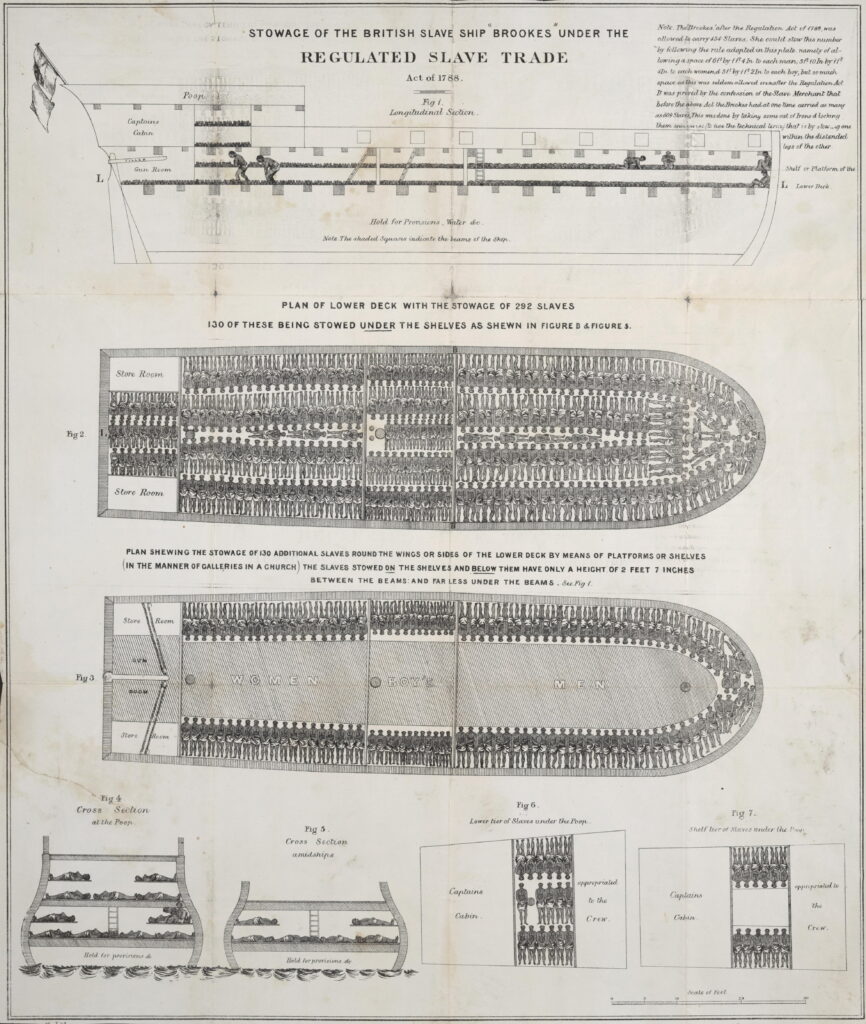
Conditions aboard slave ships were miserable. Disease was rampant and provisions were scarce; some were driven to suicide. Alexander Falconbridge, a slave ship surgeon, described the sufferings of enslaved Africans from shipboard infections and close quarters in the hold. Dysentery, known as “the bloody flux,” left captives lying in pools of excrement. Chained in small spaces in the hold, enslaved people could lose so much skin and flesh from chafing against metal and timber that their bones protruded. Other sources detailed rapes, whippings, and diseases like smallpox and conjunctivitis aboard slave ships.5
For most of the seventeenth century, however, England’s colonial labor force was composed primarily of English indentured servants. Economically dependent on tobacco production by the 1620s, Virginia planters drew on Elizabethan poor laws to create indentured servitude, whereby impoverished English people would labor for four or five years in America in exchange for passage across the Atlantic. On tobacco plantations, these workers prepared the land and planted seeds early in the year, usually around Christmas, and tended the seedbeds through early spring. The ground was tilled until the harvest in late summer or early fall, when tobacco leaves were cut and dried before being rolled and packed into hogsheads for sale.
Virginia planters began importing enslaved Africans in greater numbers after the mid-seventeenth century. In 1643, African women were made “tithable,” or taxable, which associated African women’s work with agricultural labor and therefore distinguished English from African women.6 The English cultural ideal was to have enough hired hands and servants working on a farm so that wives and daughters did not have to partake in field work. Instead, white women were expected to labor in dairy sheds, small gardens, and kitchens. Despite this ideal, white women did participate in agricultural labor in the colonies. Although English servants continued to labor on tobacco plantations, by the early 1700s, most workers in the Chesapeake were enslaved.
The transition to slave labor occurred far earlier in England’s Caribbean colonies. Colonists began experimenting with sugar production in the Caribbean in the 1640s, and within a few decades, sugar was England’s most profitable colonial commodity. While working in the tobacco fields of the Chesapeake was strenuous and oppressive, the labor regime on sugar plantations was even more brutal. The cultivation of sugarcane required a long growing season of between twelve and sixteen months, with long workdays of twelve hours or more. In the hot Caribbean sun, groups of enslaved men and women labored under the supervision of white overseers, with whipping and other physical punishments a constant threat.
Large plantations had their own sugar mill, boiling house, and curing house. In addition to requiring a highly skilled labor force, the work was extremely dangerous since cane had to be processed quickly—within three days—or the sugar would spoil. During harvest season, sugar mills operated without stopping, with work shifts lasting eighteen hours or longer. According to the Barbados planter Edward Littleton, “If a stiller slip into a rum-cistern, it is sudden death; for it stifles in a moment. If a mill-feeder be catched by the finger, his whole body is drawn in, and he is squeezed to pieces. If a boiler get any part into the scalding sugar, it sticks like glue, or birdlime, and ’tis hard to save either limb or life.”7

For planters, a major benefit of slavery over servant labor was that enslaved people were held for life. As early as 1636, less than a decade after its founding, the governor and council of Barbados announced that Indians and Africans arriving on the island would be held in bondage in perpetuity. A key turning point in the English slave system came in the 1660s, however, when legislatures in Barbados and Virginia established legal systems that made new racial categories central to legal status. The Barbados Slave Code of 1661, which characterized “Negroes” as similar to “other goods and Chattels,” was the first comprehensive slave code in America.8 In 1662, Virginia made the condition of slavery heritable from the mother, a response to questions over the status of the children of English men and African women. All children born to enslaved women would be enslaved for life, whether the father was white or Black, enslaved or free. These laws were soon copied by all of England’s American colonies, marking a crucial moment in the making of modern racial ideology.9
Slavers often landed in the British West Indies, where captive Africans were seasoned in places like Barbados. Charleston, South Carolina, became the leading entry point for the slave trade on the mainland. The founding of Charleston (“Charles Town” until the 1780s) in 1670 was viewed as a serious threat by the Spanish in neighboring Florida, who began construction of Castillo de San Marcos in St. Augustine in response. In 1693, the Spanish king issued the Decree of Sanctuary, which granted freedom to enslaved people fleeing the English colonies if they converted to Catholicism and swore an oath of loyalty to Spain.10 The presence of Africans who bore arms and served in the Spanish militia testifies to the different conceptions of race among the English and Spanish in America.
Despite extreme exploitation and oppression, enslaved people created families and communities that gave meaning to their lives. Though their marriages were not recognized in colonial law, Black men and women formed lasting relationships. Some enslaved men and women married “abroad”—that is, they married individuals who were not owned by the same enslaver and did not live on the same plantation. These husbands and wives had to travel miles at a time, typically only once a week on Sundays, to visit their spouses. Communal bonds were also forged on Sundays, when enslaved individuals gathered in festive celebration after spending time cultivating their own plots of land. Seasonal religious holidays were also important times of feasting, dancing, and music, which maintained African traditions while also contributing to the formation of distinctive African American cultures.
Enslaved people also devised ways to resist exploitation. In colonial cities, enslaved men and women “hired themselves out,” a process whereby they could earn wages from local employers when not laboring for slaveholders. This allowed many to establish a measure of economic independence, with some even able to purchase their freedom. On market days in cities like Charleston, enslaved people gathered, sold goods, exchanged information, and socialized. Laborers on tobacco, rice, and sugar plantations engaged in work slowdowns, feigned illness, broke tools, and even went on strike over poor working conditions. They also ran away, sometimes in collusion with European servants, and planned rebellions to overthrow the slave system. Authorities discovered servant and slave conspiracies regularly in Virginia and Barbados beginning in the 1640s, and plans for revolt continued through the eighteenth century.
The fusion of European and African practices created novel creole cultures in the Americas, especially in ethnically diverse regions like the Mid-Atlantic colonies of New York and Pennsylvania.11 Many foods associated with Africans, such as cassava, were originally imported to West Africa as part of the slave trade and were then adopted by African cooks before being brought to the Americas, where they are still consumed. West African rhythms and melodies live on in new forms today in music as varied as religious spirituals and synthesized drumbeats. African influences also appear in the basket making and language of the Gullah people on the Carolina coastal islands. The impact of African cultures in the early modern Americas was profound and remains evident today.
III. Turmoil in Britain
Sixteenth-century England was rife with religious conflict. While Spain plundered the New World and built an empire, Catholic and Protestant English monarchs vied for supremacy and attacked their opponents as heretics. While a religious settlement under Queen Elizabeth made Protestantism the official religion of the realm, “godly” Protestants (termed “Puritans” by their critics) believed the Church of England retained ceremonies and practices that were essentially Catholic. In the 1620s and 1630s large numbers of these dissenters traveled to the New World in the hopes of creating a truly godly community, though others continued the struggle in England. By the 1640s, political and economic conflicts between Parliament and the Crown merged with long-simmering religious tensions. The result was a series of bloody civil wars that encompassed England, Scotland, Wales, and Ireland. Colonists reacted in a variety of ways to these wars, but all were affected by these years of turmoil.
Following a series of battles between royalists and parliamentarians in 1642–1646 and 1648–1649, King Charles I was defeated and executed for treason. On May 19, 1649, Parliament declared England to be a republic, though in 1653 the Commonwealth of England became a protectorate under the military leader Oliver Cromwell. These changes redefined England’s relationship with its American colonies, as the new government under Cromwell attempted to consolidate its hold over its overseas territories.
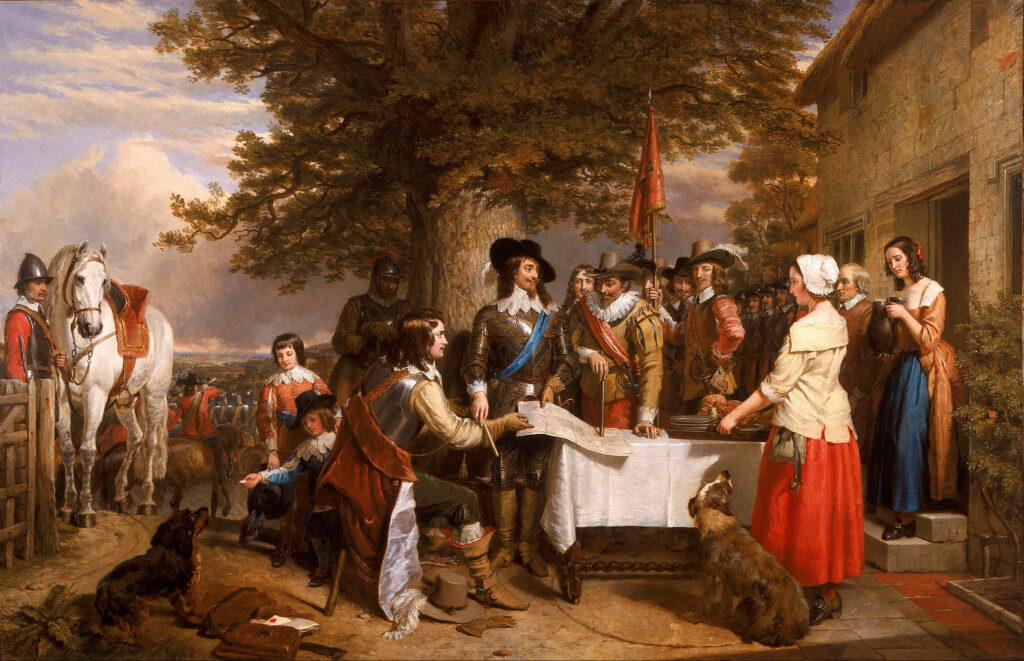
During the Civil Wars of the 1640s, the political and economic elite in the Chesapeake sympathized with the Crown, while religious dissenters in the New England colonies tended to favor Parliament. During the war, the colonies officially remained neutral; however, they feared that support for either side could involve them in war. Even Massachusetts Bay, which nurtured ties to radical Protestants in Parliament, maintained neutrality.
Charles’s execution challenged American neutrality. Six colonies, including Virginia and Barbados, declared allegiance to the dead monarch’s son, Charles II. Parliament responded with an act in 1650 that levied an economic embargo on the rebelling colonies, forcing them to accept Parliament’s authority. Parliament argued that America had been “planted at the Cost, and settled” by the English nation, and that it, as the embodiment of that commonwealth, possessed ultimate jurisdiction over the colonies.12 It followed the embargo with the Navigation Act of 1651, which compelled merchants in every colony to ship goods directly to England in English ships. Parliament sought to bind the colonies more closely to England and prevent other European nations, especially the Dutch, from interfering with its American possessions.
Continuing political turmoil, exacerbated by Cromwell’s death in 1658, led to the return of the monarchy under Charles II in 1660. The Restoration was followed by further attempts to integrate and profit from the empire. This included the granting of new “proprietary” colonies to royal favorites, the imposition of new Navigation Acts, and the establishment of a new executive council known as the Lords of Trade and Plantations.

Following Charles II’s death in 1685, his brother James, Duke of York, became king. James II imposed additional imperial reforms, including the creation of the Dominion of New England in 1686, which consolidated New York, New Jersey, and the New England colonies into one administrative unit. While this was ostensibly an attempt to counter the military threat from French Canada, English colonists greatly resented the loss of their autonomy. The Dominion’s governor, Sir Edmund Andros, did little to assuage fears of arbitrary power when he forced colonists into military service for a campaign against Native Americans in Maine in early 1687. For many colonists, impressment signified the imposition of arbitrary power on a free people.
James II’s Catholicism and admiration for absolutist rule in countries like France also generated suspicion and resentment in England. His push for toleration of Catholics and dissenters brought him into conflict with Parliament and the Anglican establishment, and in 1688, a bishop from the Anglican Church and six nobles offered the English throne to James’s Protestant daughter Mary and her Dutch husband, Prince William. When William landed in southwest England with a massive naval fleet, James fled to France. This coup was called the Glorious Revolution and was accomplished with little bloodshed in England but considerable violence in Ireland. After nearly half a century of social and political turbulence, the 1689 Bill of Rights established a constitutional monarchy that secured a Protestant succession, legislative supremacy for Parliament, and the individual rights of English subjects.

Though imperial authorities in the Americas attempted to keep the events of 1688 secret, colonists soon learned of developments in England. News of James’s deposition was followed by popular risings against colonial administrators in Boston, New York City, and Maryland. The rebellions were quickly suppressed, however, and colonial governments declared allegiance to William and Mary. For many free colonists, the Revolution of 1688 was indeed “glorious” as it united them in a Protestant empire that stood counter to Catholic tyranny and absolutism, a religion and form of government embodied by France. The political system established in England and its empire after 1688 would last until the revolutionary rupture of the 1770s.
IV. New Colonies
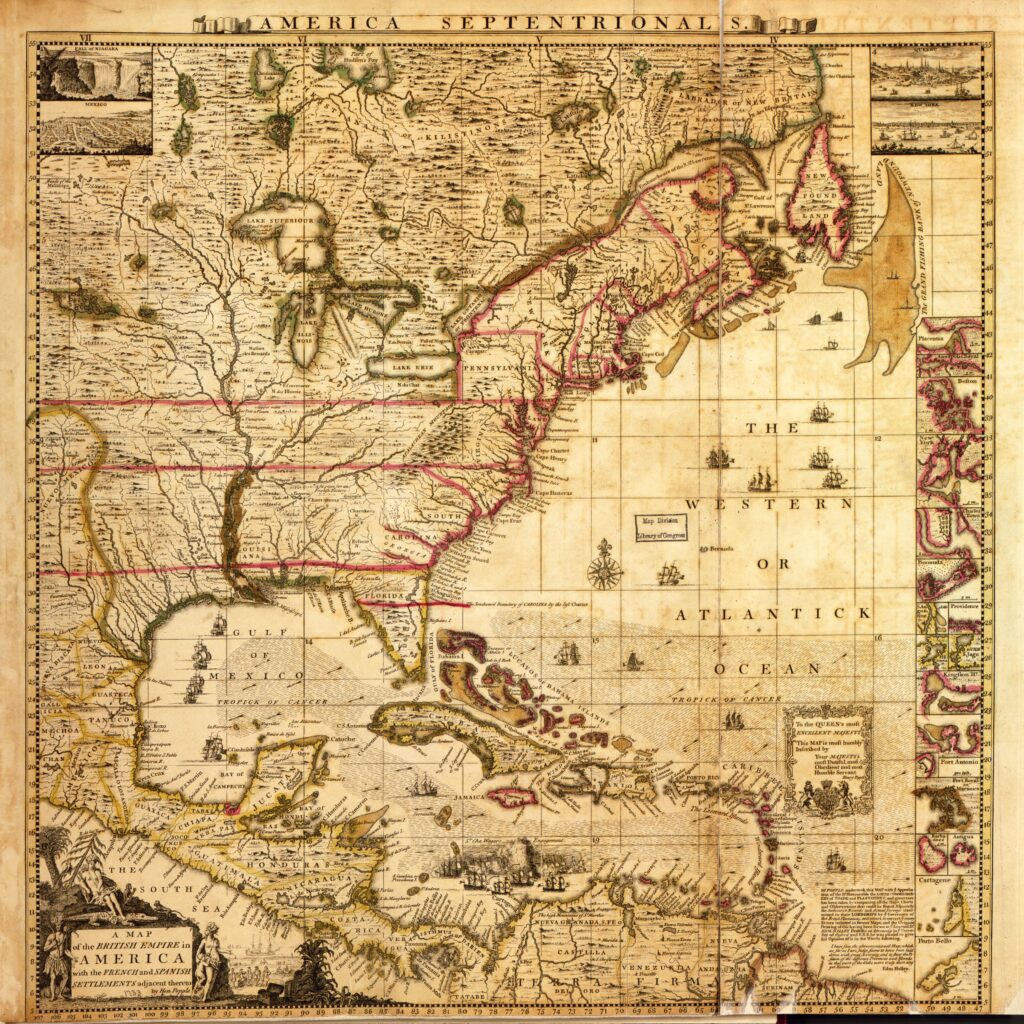
By the time of the Glorious Revolution, the English Empire in America had grown significantly from its fragile beginnings in the Chesapeake Bay in 1607. From New England in the north to the Carolinas in the south, England established a large, contiguous territorial presence along the Atlantic seaboard in addition to its colonies in the Caribbean.
A number of new colonies were established in the 1630s. In 1632, King Charles I granted a territory of about 12 million acres in the Chesapeake Bay to Cecilius Calvert, second Lord of Baltimore, a Catholic who named his colony Maryland after the king’s Catholic wife, Henrietta Maria of France. In addition to aiming to profit from overseas plantations, Calvert intended his colony to be a refuge for his fellow Catholics. Most early migrants to Maryland were Protestants, however, and most of these were dissenters from neighboring Virginia who resented authorities’ attempts to impose adherence to the Church of England. In 1650, Maryland Puritans revolted and set up a government that prohibited both Catholicism and Anglicanism. Though the Calvert family regained control in 1658, religious tensions in Maryland persisted. Two years after the Glorious Revolution, the Calverts lost control of the province, and Maryland became a royal colony.
In New England, the colonies of Connecticut, New Haven, and Rhode Island were also created in the 1630s. The increasingly populous area around Boston led Thomas Hooker and his congregation to leave Massachusetts and establish Connecticut in 1636. Two years later, John Davenport, Theophilus Eaton, and other Puritans settled in the Quinnipiac River Valley area of Connecticut and established New Haven, which was officially organized in 1643. New Haven would be absorbed into Connecticut in 1665, but its religious tradition endured with the creation of Yale College in 1701.
Religious radicals founded Rhode Island in 1636. After negotiating for the land with the local Narragansett sachems Canonicus and Miantonomi, Roger Williams and other colonists agreed on an egalitarian constitution that established religious and political freedom in the colony. The following year, Anne Hutchinson, expelled from Massachusetts for leading private religious meetings (“conventicles”) and challenging the authority of the colony’s clergymen, settled near Providence. Others soon arrived, and the colony was granted a charter by Parliament in 1644. Because of Rhode Island’s policy of toleration, it became a haven for Quakers, Jews, and other persecuted religious groups. In 1663, Charles II granted the colony a royal charter establishing the colony of Rhode Island and Providence Plantations.
Colonies were also established in New England’s south. The Mid-Atlantic region between New England and the Chesapeake Bay possessed significant natural advantages. The region’s climate was healthier than the Chesapeake and more temperate than New England, and had three highly navigable rivers: the Susquehanna, the Delaware, and the Hudson. In 1664, the English conquered the region claimed by New Netherland, which Charles then awarded to his brother James, Duke of York, creating the colony of New York.
Shortly after obtaining his new colony, James granted the territory between the Hudson and Delaware rivers to two English noblemen. These lands were split into two distinct colonies, East Jersey and West Jersey. East Jersey was settled by Dutch, English, and Scottish migrants; West Jersey was populated primarily by English Quakers. Proprietors of both Jerseys sought to have tenants cultivate the land and promised Protestants who came to the territory religious liberty and an elected assembly. While in 1702 the Crown reunited East and West Jersey and made the province a royal colony, social tensions originating in the founding decades would persist well into the revolutionary era.
Charles II issued charters for a number of other proprietary colonies after the Restoration. Carolina, situated between Virginia and Spanish Florida, was granted to eight Lords Proprietors in 1663. The Lords Proprietor offered incentives to potential settlers that included religious tolerance, political representation, exemption from fees, and large land grants. Significant numbers of former indentured servants and Quakers already inhabited the Albemarle Sound region, having fled Virginia in the 1650s. These groups’ desire for independence and successful resistance to the authority of the Lords Proprietor led to the creation of the separate province of North Carolina in 1691.13
English settlers also came to Carolina from Barbados. In 1670, three ships of migrants from Barbados arrived at the mouth of the Ashley River, where they founded Charles Town. Many of these settlers brought enslaved people to the colony, who cultivated rice and indigo on large plantations along Carolina’s coast. Though operating within an English commercial agricultural framework, the expansion of rice production in the 1690s integrated African, Native, and Latin American farming practices. The importance of African knowledge and labor to the economy is indicated by the fact that by the 1710s. South Carolina was the first province in North America to have a majority Black population.14
The last proprietary colony, Pennsylvania, was established by one of West Jersey’s proprietors, a man named William Penn. The son of an admiral in the Royal Navy, Penn became a Quaker in 1666 (by this time officially the Religious Society of Friends, or simply “Friends”). As repayment for his father’s support during the Restoration, in 1681, Charles II granted the younger Penn a vast province of about forty-five thousand square miles west of the Delaware River.
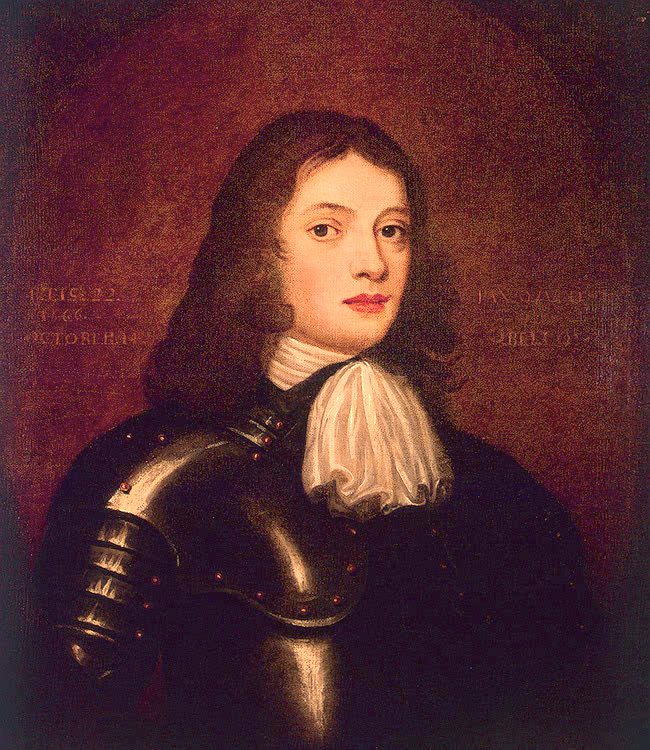
As a radical religious group founded during the Commonwealth of the 1650s, Quakers experienced waves of official persecution after the return of the monarchy in 1660. This experience led the founders of Pennsylvania to enact a constitution founded on principles of religious toleration. Quakers’ commitment to nonviolence also inspired a policy of peaceful relations with the region’s Native Americans, with land obtained through purchase rather than force. A combination of freedom of conscience, cheap land, representative government, and high wages fostered the colony’s rapid growth, with people from across Europe settling in the province. In 1685, Penn noted that the people of Pennsylvania “are a collection of diverse nations in Europe, as French, Dutch, Germans, Swedes, Danes, Finns, Scotch, and English; and of the last equal to all the rest.”15
While conditions were favorable for free immigrants of modest means, a general colonial demand for labor led Pennsylvanians to eagerly purchase enslaved people. In 1684, the Bristol vessel Isabella arrived in Philadelphia with 150 captive Africans on board, who were quickly purchased by colonists. While many wealthy Philadelphia Quakers, William Penn included, purchased enslaved Africans, a minority of Quakers opposed the institution. In 1688, Friends from Germantown, outside of Philadelphia, submitted the first formal antislavery petition in America. In 1693, the Quaker George Keith published An Exhortation & Caution to Friends Concerning Buying or Keeping of Negroes in Philadelphia, the first printed antislavery tract in English America.16
Though this small group of Pennsylvania Quakers inaugurated a tradition of antislavery activism in America, slavery would be crucial to the Mid-Atlantic economy. The wheat grown by farmers in the Delaware and Hudson River Valleys found its largest market in the West Indies, where it fed the islands’ enslaved workforce. And in the rapidly growing urban centers of Philadelphia and New York City, enslaved people constituted around 10 to 20 percent of the town populations, respectively. In British America, enslaved people labored in urban workshops, shipyards, and homes as well as on rice, tobacco, and sugar plantations.
V. Riot, Rebellion, and Revolt
Violence was endemic in seventeenth-century North America. Clashes from the northeastern New England colonies to the Spanish Empire in the southwest demonstrated how colonial expansion produced major conflict between Europeans and Native Americans, and within the colonies themselves.
In New England, the Pequot War of 1637 devastated Pequot communities and provided the New England colonies with security and space for expanded settlements. But in the face of colonial expansion, the Narragansetts and Mohegans, who had been allies of the English against the Pequots, chose to side with the Wampanoags when war with the English broke out again a generation later. This produced a more violent conflict in 1675 known as King Philip’s War, bringing a decisive end to Native American power in New England.
In the winter of 1675, the body of John Sassamon, a Harvard-educated Christian Wampanoag, was found under the ice of a nearby pond. A fellow Native American convert informed English authorities that three warriors under the local sachem named Metacom, known to the English as King Philip, had killed Sassamon, who had previously accused Metacom of planning an offensive against the English. The three alleged killers appeared before the Plymouth court in June 1675. They were found guilty of murder and executed. Several weeks later, a group of Wampanoags killed nine English colonists in the town of Swansea.
Like most other New England sachems, Metacom had entered into covenants of “submission” to various colonies, viewing the arrangements as relationships of protection and reciprocity rather than subjugation. Native Americans and the English lived, traded, worshipped, and arbitrated local disputes with each other before 1675, but the execution of three of Metacom’s men at the hands of Plymouth Colony epitomized what many Native Americans viewed as the growing inequality of that relationship. The Wampanoags who attacked Swansea may have sought to restore balance or to retaliate for the recent executions. Neither they nor anyone else sought to engulf all of New England in war, but that is what happened. Authorities in Plymouth sprang into action, enlisting help from the neighboring colonies of Connecticut and Massachusetts.
Metacom and his followers eluded colonial forces in the summer of 1675, striking at more Plymouth towns as they moved northwest. Some groups joined his forces, while others remained neutral or supported the English. The war badly divided some Indigenous communities. Metacom himself had little control over events as panic and violence spread throughout New England in the autumn of 1675. English mistrust of neutral Native Americans, sometimes accompanied by demands that they surrender their weapons, pushed many into the war. By the end of 1675, most of the Native Americans of present-day western and central Massachusetts had entered the war, laying waste to nearby English towns like Deerfield, Hadley, and Brookfield. Colonial forces, spurning the military assistance of allies such as the Mohegans, proved unable to locate the more mobile Native communities or intercept attacks.
The English compounded their problems by attacking the powerful and neutral Narragansetts of Rhode Island in December 1675. In an action called the Great Swamp Fight, a thousand Englishmen put the main Narragansett village to the torch, gunning down as many as a thousand Narragansett men, women, and children as they fled the maelstrom. The surviving Narragansetts joined those already fighting the English. Between February and April 1676, Native forces devastated a succession of English towns closer and closer to Boston.
The tide turned in the spring of 1676. The New England colonies took the advice of men like Benjamin Church, who urged the greater use of Native allies, including Pequots and Mohegans, to find and fight the mobile warriors. As the combatants were unable to plant crops and forced to live off the land, their will to continue the struggle waned as companies of English and Native allies pursued them. Growing numbers of fighters fled the region, switched sides, or surrendered in the spring and summer. Colonial forces finally caught up with Metacom in August 1676, and the sachem was slain by a Christian Native American fighting with the English.
The war permanently altered the political and demographic landscape of New England. Between 800 and 1,000 English and at least 3,000 Native Americans perished in the fourteen-month conflict. Thousands of others fled the region or were sold into slavery. In 1670, Native Americans comprised roughly 25 percent of New England’s population; a decade later, they made up perhaps 10 percent.17 The war’s brutality also encouraged a growing hatred of all Indigenous people among many New England colonists. Though the fighting ceased in 1676, the bitter legacy of King Philip’s War lived on.
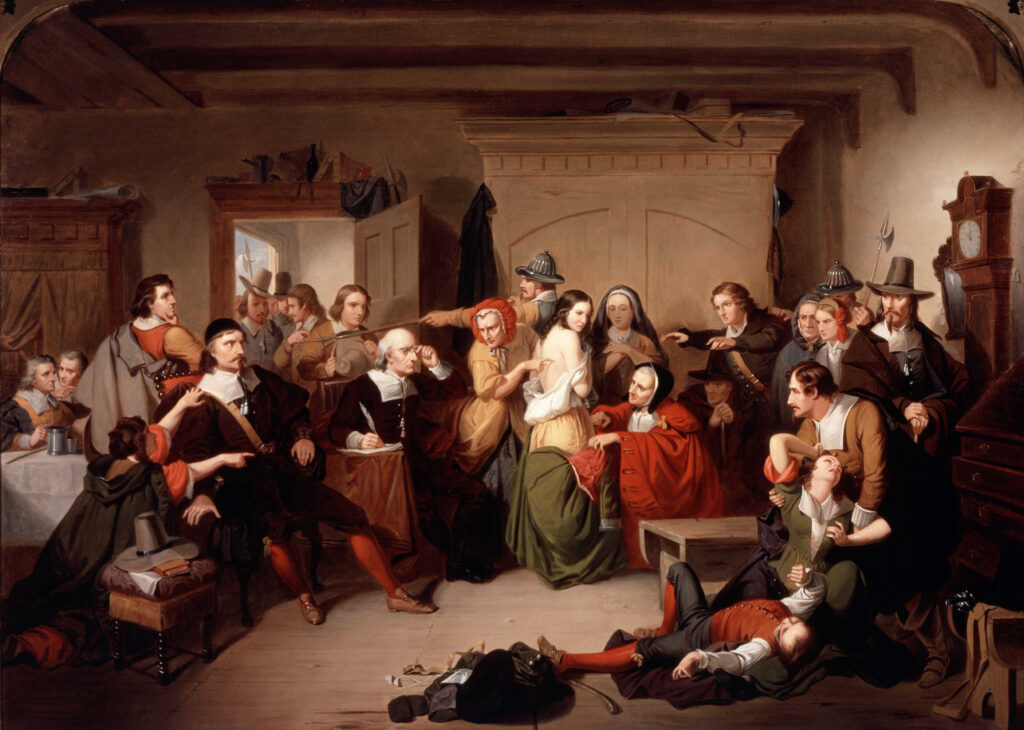
Sixteen years later, New England faced a new fear: the supernatural. Beginning in early 1692 and culminating in 1693, Salem Town, Salem Village, Ipswich, and Andover all tried women and men as witches. Paranoia swept through the region, and fourteen women and six men were executed. Five other individuals died in prison. The causes of the trials are numerous and include local rivalries, political turmoil, the enduring trauma of war, faulty legal procedure where accusing others became a method of self-defense, or perhaps even low-level environmental contamination. Enduring tensions with Native people framed the events, however, and a Native American or African woman named Tituba, enslaved by the local minister, was at the center of the tragedy.18
Native American communities in Virginia had already been decimated by wars in 1622 and 1644. But a new clash arose in Virginia the same year that New Englanders crushed Metacom’s forces. This conflict, known as Bacon’s Rebellion, grew out of tensions between Native Americans and English settlers as well as tensions between wealthy English landowners and poor settlers, many of them former indentured servants, who pushed west into territory controlled by Native Americans.
Bacon’s Rebellion began, appropriately enough, with an argument over a pig. In the summer of 1675, a group of Doeg people visited Thomas Mathew on his plantation in northern Virginia to collect a debt that he owed them. When Mathew refused to pay, they took some of his pigs to settle the debt. This “theft” sparked a series of raids and counterraids. The Susquehannock people were caught in the crossfire when the militia mistook them for Doegs, leaving fourteen dead. A similar pattern of escalating violence then repeated itself: the Susquehannocks retaliated by killing colonists in Virginia and Maryland, and the English marshaled their forces and laid siege to the Susquehannocks. The conflict became uglier after the militia executed a delegation of Susquehannock ambassadors under a flag of truce. A few parties of warriors intent on revenge launched raids along the frontier and killed dozens of English colonists.
The sudden and unpredictable violence of the Susquehannock War triggered a political crisis in Virginia. Panicked colonists fled en masse from the vulnerable frontiers, flooding into coastal communities and begging the government for help. But the cautious governor, Sir William Berkeley, did not send an army after the Susquehannocks. He worried that a full-scale war would inevitably drag other Native Americans into the conflict, turning allies into deadly enemies. Berkeley therefore insisted on a defensive strategy centered on a string of new fortifications to protect the frontier and strict instructions not to antagonize friendly Native people. The plan, however, only angered and terrified colonists. Building contracts for the forts went to Berkeley’s wealthy friends, who conveniently decided that their own plantations were the most strategically vital. Colonists denounced the government as a corrupt band of oligarchs more interested in lining their pockets than protecting the people.
By the spring of 1676, a group of frontier settlers took matters into their own hands. Naming the charismatic young Nathaniel Bacon as their leader, these self-styled “volunteers” proclaimed that they took up arms in defense of their homes and families. They took pains to assure Berkeley that they intended no disloyalty, but Berkeley feared a coup and branded the volunteers as traitors. Berkeley finally mobilized an army, not to pursue the Susquehannocks, but to crush the colonists’ rebellion. His drastic response catapulted a small band of angry settlers into full-fledged rebels whose survival necessitated bringing down the colonial government.
Bacon and the rebels stalked the Susquehannocks as well as friendly Native Americans like the Pamunkeys and the Occaneechi. The rebels became convinced that there was a massive Native conspiracy to destroy the English. Berkeley’s stubborn persistence in defending allied Native Americans and destroying the rebels led Bacon to accuse the governor of conspiring with a “powerful cabal” of elite planters and with “the protected and darling Indians” to slaughter his English enemies.19
In the early summer of 1676, Bacon’s neighbors elected him their burgess and sent him to Jamestown to confront Berkeley. Berkeley soon had Bacon arrested and forced the rebel leader into the humiliating position of publicly begging forgiveness for his treason. Bacon swallowed this indignity but turned the tables by gathering an army of followers and surrounding the State House, demanding that Berkeley name him the general of Virginia and bless his universal war against Native Americans. Instead, the seventy-year-old governor stepped onto the field in front of the crowd of angry men, unafraid, and called Bacon a traitor to his face. Then he tore open his shirt and dared Bacon to shoot him in the heart if he was so intent on overthrowing his government. “Here!” he shouted before the crowd, “shoot me, before God, it is a fair mark. Shoot!” When Bacon hesitated, Berkeley drew his sword and challenged the young man to a duel, knowing that Bacon could neither back down from a challenge without looking like a coward nor kill him without making himself into a villain. Instead, Bacon resorted to bluster and blasphemy. Threatening to slaughter the entire assembly, if necessary, he cursed, “God damn my blood, I came for a commission, and a commission I will have before I go.”20 Berkeley stood defiant, but the cowed burgesses finally prevailed upon him to grant Bacon’s request. Virginia had its general, and Bacon had his war.
After this dramatic showdown in Jamestown, Bacon’s Rebellion quickly spiraled out of control. Berkeley slowly rebuilt his loyalist army, forcing Bacon to divert his attention to the coasts and away from Native Americans. But most rebels were more interested in defending their homes and families than in fighting other Englishmen, and they deserted in droves at every rumor of Native activity. In many places, the “rebellion” was less an organized military campaign than a collection of local grievances and personal rivalries. Both rebels and loyalists smelled the opportunities for plunder, seizing their rivals’ estates and confiscating their property.
For a small but vocal minority of rebels, however, the rebellion became an ideological revolution. Sarah Drummond, wife of rebel leader William Drummond, advocated independence from England and the formation of a Virginian Republic, declaring, “I fear the power of England no more than a broken straw.”21 Others struggled for a different kind of independence: white servants and enslaved Black people fought side by side in both armies after Bacon’s faction promised freedom for military service.
The rebels steadily lost ground and ultimately suffered a crushing defeat. Bacon died of typhus in the autumn of 1676, and his successors surrendered to Berkeley in January 1677. Berkeley summarily tried and executed the rebel leadership in a succession of kangaroo courts-martial. Before long, however, the royal fleet arrived, bearing over a thousand red-coated troops and a royal commission of investigation charged with restoring order to the colony. The commissioners replaced the governor and dispatched Berkeley to London, where he died in disgrace.
But the conclusion of Bacon’s Rebellion was uncertain, and the maintenance of order remained precarious for years afterward. The garrison of royal troops discouraged both incursion by Native Americans and insurrection by discontented colonists, allowing the king to continue profiting from tobacco revenues. The end of armed resistance did not mean a resolution to the underlying tensions destabilizing colonial society. Native Americans inside Virginia remained an embattled minority, and those outside Virginia remained a threat. Elite planters continued to grow rich by exploiting indentured servants and enslaved people while marginalizing small farmers. Virginia legislators did recognize the extent of popular hostility toward colonial rule, however, and improved the social and political conditions of poor white Virginians in the years after the rebellion. During the same period, the increasing availability of enslaved workers through the Atlantic slave trade contributed to planters’ large-scale adoption of slave labor in the Chesapeake.
Just a few years after Bacon’s Rebellion, the Spanish experienced their own tumult in the area of contemporary New Mexico. The Spanish had maintained control in the region in part by suppressing Native American beliefs. Friars aggressively enforced Catholic practice, burning native idols and masks and other sacred objects, and banishing traditional spiritual practices. In 1680, the Puebloan religious leader Popé, who had been arrested and whipped for “sorcery” five years earlier, led various Puebloan groups in rebellion. Several thousand Puebloan warriors razed the Spanish countryside and besieged Santa Fe. They killed 400 in the town, including 21 Franciscan priests, and allowed 2,000 other Spaniards and Christian Puebloans to flee. It was perhaps the greatest act of Indigenous resistance in North American history.
The Puebloans in New Mexico eradicated all traces of Spanish rule. They destroyed churches and threw themselves into rivers to wash away their Christian baptisms. “The God of the Christians is dead,” Popé proclaimed, and the Puebloans resumed traditional spiritual practices.22 The Spanish were exiled for twelve years. They returned in 1692, weakened, to reconquer New Mexico.

The late seventeenth century was a time of great violence and turmoil. Bacon’s Rebellion turned white Virginians against one another, King Philip’s War shattered Native American resistance in New England, and the Pueblo Revolt struck a major blow to Spanish power. It would take several more decades before similar patterns erupted in Carolina and Pennsylvania, but the constant advance of European settlements provoked conflict in these areas as well.
In 1715, the Yamasee, Carolina’s closest allies and most lucrative trading partners, turned against the colony and nearly destroyed it entirely. Writing from Carolina to London, the settler George Rodd believed the Yamasee wanted nothing less than “the whole continent and to kill us or chase us all out.”23 The Yamasee would eventually advance within miles of Charles Town.
The Yamasee War’s first victims were traders. The governor had dispatched two of the colony’s most prominent men to visit and pacify a Yamasee council following rumors of native unrest. The Yamasee quickly proved the fears well founded by killing the emissaries and every English trader they could corral.
The Yamasee, like many other Native Americans, had come to depend on English courts as much as the flintlock rifles and ammunition that traders offered them for enslaved laborers and animal skins. Feuds between English agents had crippled the court of trade and shut down all diplomacy, provoking the violent Yamasee reprisal. Most villages in the southeast sent at least a few warriors to join what quickly became a struggle against the colony that united various Native American peoples.
Yet Charles Town ultimately survived the onslaught by preserving one crucial alliance, with the Cherokee. By 1717, the conflict had largely died out, and the only remaining threat was roaming Yamasee bands operating from Spanish Florida. Most Native American villages returned to terms with Carolina and resumed trading. The lucrative trade in enslaved Native Americans, however, which had consumed fifty thousand souls in five decades, largely dwindled after the war. The danger was too high for traders, and the colonies discovered even greater profits by importing Africans to work new rice plantations. Herein lies the birth of the Old South, that expanse of plantations that created untold wealth and misery. Native Americans retained the strongest militaries in the region, but they never again threatened the survival of English colonies.
If a colony existed where peace with Indigenous people might continue, it would be Pennsylvania. While William Penn and other early settlers never doubted that the English would appropriate Native lands, he demanded that his colonists obtain these territories through purchase rather than violence. Though Pennsylvanians maintained relatively peaceful relations with Native Americans, immigration and land speculation increased the demand for land. Coercive and fraudulent methods of negotiation became increasingly prominent. The Walking Purchase of 1737 was emblematic of both colonists’ desire for cheap land and the changing relationship between Pennsylvanians and their Native neighbors.
Through treaty negotiation in 1737, Native Delaware leaders agreed to sell Pennsylvania all of the land that a man could walk in a day and a half, a common measurement used by Delawares in evaluating distances. John and Thomas Penn, joined by the land speculator and longtime friend of the Penns, James Logan, hired a team of skilled runners to complete the “walk” on a prepared trail. The runners traveled from Wrightstown to the present-day town of Jim Thorpe, and proprietary officials then drew the new boundary line perpendicular to the runners’ route, extending northeast to the Delaware River. The colonial government thus measured out a tract much larger than the Delaware had originally intended to sell, roughly 1,200 square miles. As a result, Delaware-proprietary relations suffered. Many Delaware left the lands in question and migrated westward to join Shawnee and other Delaware already living in the Ohio Valley. There they established diplomatic and trade relationships with the French. Memories of the suspect purchase endured into the 1750s and became a chief point of contention between the Pennsylvania government and the Delaware people during the upcoming Seven Years’ War.24
VI. Conclusion
The century after the founding of Jamestown saw the establishment and maturation of a distinctive English imperial system. From tiny outposts on the periphery of the Atlantic World, by the early eighteenth century, the American colonies were large territories in a powerful British Empire. War, Native expropriation, slavery, and social conflict were central to the creation of a prosperous colonial society that helped make England a global power. The settlement of 1689 established a political system ideologically premised on liberty and property, with which British American colonists strongly identified. At the same time, religious and ethnic diversity, along with novel systems of unfree labor, laid the foundation for an American society that was very different from England.
VII. Primary Sources
1. Olaudah Equiano describes the Middle Passage, 1789
2. Recruiting settlers to Carolina, 1666
4. Song about life in Virginia
5. Accusations of witchcraft, 1692 and 1706
6. Haudenosaunee thanksgiving address
7. Rose Davis is sentenced to a life of slavery, 1715
8. Print of the Slave Ship Brookes
9. Map of British North America, 1733
VIII. Reference Material
This chapter was edited by Daniel Johnson, with content contributions by Gregory Ablavsky, James Ambuske, Carolyn Arena, L. D. Burnett, Lori Daggar, Max Flomen, Hendrick Isom, D. Andrew Johnson, Daniel Johnson, Matthew Kruer, Brenda Lakhani, Joseph Locke, Samantha Miller, Melissa Morris, Bryan Rindfleisch, Emily Romeo, John Saillant, Ian Saxine, Marie Stango, Luke Willert, Ben Wright, Caroline Wright, and Miller Shores Wright.
Recommended Reading
• Blackburn, Robin. The Making of New World Slavery: From the Baroque to the Modern, 1492–1800. Verso, 1997.
• Braddick, Michael. God’s Fury, England’s Fire: A New History of the English Civil Wars. Penguin, 2008.
• Brown, Kathleen M. Good Wives, Nasty Wenches, Anxious Patriarchs: Gender, Race, and Power in Colonial Virginia. University of North Carolina Press, 1996.
• Chaplin, Joyce. Subject Matter: Technology, the Body, and Science on the Anglo-American Frontier, 1500–1676. Harvard University Press, 2001.
• Donoghue, John. Fire Under the Ashes: An Atlantic History of the English Revolution. University of Chicago Press, 2013.
• Gallay, Alan. The Indian Slave Trade: The Rise of the English Empire in the American South, 1670–1717. Yale University Press, 2003.
• Goodfriend, Joyce D. Before the Melting Pot: Society and Culture in Colonial New York City, 1664–1730. Princeton University Press, 1992.
• Gruesz, Kirsten Silva. Cotton Mather’s Spanish Lessons: A Story of Language, Race, and Belonging in the Early Americas. Harvard University Press, 2022.
• Heywood, Linda M., and John K. Thornton. Central Africans, Atlantic Creoles, and the Foundation of the Americas, 1585–1660. Cambridge University Press, 2007.
• Landsman, Ned C. Crossroads of Empire: The Middle Colonies in British North America. Johns Hopkins University Press, 2010.
• Lepore, Jill. The Name of War: King Philip’s War and the Origins of American Identity. Knopf Doubleday, 2009.
• Mustakeem, Sowande’ M. Slavery at Sea: Terror, Sex, and Sickness in the Middle Passage. University of Illinois Press, 2016.
• O’Malley, Gregory E. Final Passages: The Intercolonial Slave Trade of British America, 1619–1807. University of North Carolina Press, 2014.
• Parent, Anthony S. Foul Means: The Formation of a Slave Society in Virginia, 1660–1740. University of North Carolina Press, 2003.
• Parrish, Susan Scott. American Curiosity: Cultures of Natural History in the Colonial British Atlantic World. University of North Carolina Press, 2006.
• Pestana, Carla Gardina. The English Atlantic in an Age of Revolution, 1640–1661. Harvard University Press, 2004.
• Pulsipher, Jenny Hale. Subjects unto the Same King: Indians, English, and the Contest for Authority in Colonial New England. University of Pennsylvania Press, 2005.
• Ramsey, William L. The Yamasee War: A Study of Culture, Economy, and Conflict in the Colonial South. University of Nebraska Press, 2008.
• Roney, Jessica Choppin. Governed by a Spirit of Opposition: The Origins of American Political Practice in Colonial Philadelphia. Johns Hopkins University Press, 2014.
• Smallwood, Stephanie E. Saltwater Slavery: A Middle Passage from Africa to American Diaspora. Harvard University Press, 2008.
• Stanwood, Owen. The Empire Reformed: English America in the Age of the Glorious Revolution. University of Pennsylvania Press, 2011.
• Strang, Cameron B. Frontiers of Science: Imperialism and Natural Knowledge in the Gulf South Borderlands, 1500–1850. University of North Carolina Press, 2018.
• Taylor, Alan. American Colonies: The Settling of North America. Penguin, 2002.
• Tomlins, Christopher. Freedom Bound: Law, Labor, and Civic Identity in Colonizing English America, 1580–1865. Cambridge University Press, 2010.
• Wood, Peter H. Black Majority: Negroes in Colonial South Carolina from 1670 through the Stono Rebellion. Norton, 1975.
Notes
- National Humanities Center, “The Colonies, 1690–1715,” https://nationalhumanitiescenter.org/pds/becomingamer/growth/text1/text1read.htm.[↩]
- Alan Gallay, The Indian Slave Trade: The Rise of the English Empire in the American South 1670–1717 (Yale University Press, 2002), 299.[↩]
- Philip D. Morgan, “Virginia Slavery in Atlantic Context, 1550 to 1650,” in Virginia 1619: Slavery and Freedom in the Making of English America, ed. Paul Musselwhite, Peter C. Mancall, and James Horn (University of North Carolina Press, 2019), 88, 96.[↩]
- Phillip Curtin estimated that 9 million Africans were carried across the Atlantic. Joseph E. Inikori estimated 15 million, and Patrick Manning estimated 12 million transported with 10.5 million surviving the voyage. See Phillip D. Curtin, The Atlantic Slave Trade: A Census (University of Wisconsin Press, 1969); Joseph E. Inikori, “Measuring the Atlantic Slave Trade: An Assessment of Curtin and Anstey,” Journal of Africa 17 (1976): 197–223, https://doi.org/10.1017/S0021853700001298; Patrick Manning, “Historical Datasets on Africa and the African Atlantic,” Journal of Comparative Economics 40, no. 4 (2012): 604–7, https://doi.org/10.1016/j.jce.2012.06.001.[↩]
- Alexander Falconbridge, An Account of the Slave Trade on the Coast of Africa (London, 1788).[↩]
- Stephanie M. H. Camp, Closer to Freedom: Enslaved Women and Everyday Resistance in the Plantation South (University of North Carolina Press, 2004), 63–64.[↩]
- Susan Dwyer Amussen, Caribbean Exchanges: Slavery and the Transformation of English Society, 1640–1700 (University of North Carolina Press, 2007), 98.[↩]
- “Barbados Slave Code (1661–1667),” Slavery, Law, and Power, https://slaverylawpower.org/nhprc-sample-documents/barbados-slave-code/.[↩]
- Christopher Tomlins, Freedom Bound: Law, Labor, and Civic Identity in Colonizing English America, 1580–1865 (Cambridge University Press, 2010).[↩]
- Jane Landers, “Slavery in the Lower South,” OAH Magazine of History 17, no. 3 (2003): 23–27, https://doi.org/10.1093/maghis/17.3.23.[↩]
- Daniel Johnson, “‘Profane Language, Horrid Oaths and Imprecations’: Order and the Colonial Soundscape in the American Mid-Atlantic, 1650–1750,” Social History 46, no. 3 (August 2021): 255–77, https://doi.org/10.1080/03071022.2021.1932286.[↩]
- John H. Elliott, Empires of the Atlantic World: Britain and Spain in America, 1492–1830 (Yale University Press, 2006), 148–49.[↩]
- Noeleen McIlvenna, A Very Mutinous People: The Struggle for North Carolina, 1660–1713 (University of North Carolina Press, 2009).[↩]
- Peter H. Wood, Black Majority: Negroes in South Carolina from 1670 Through the Stono Rebellion (W. W. Norton, 1974); S. Max Edelson, Plantation Enterprise in Colonial South Carolina (Harvard University Press), 2006.[↩]
- Albert Cook Myers, ed., Narratives of Early Pennsylvania, West New Jersey, and Delaware, 1630–1707 (Scribner, 1912), 260.[↩]
- It is likely the Germantown Quakers influenced Keith’s pamphlet. See Katharine Gerbner, “Antislavery in Print: The Germantown Protest, the ‘Exhortation,’ and the Seventeenth-Century Quaker Debate on Slavery,” Early American Studies 9, no. 3 (Fall 2011): 552–75, https://doi.org/10.1353/eam.2011.0025.[↩]
- James David Drake, King Philip’s War: Civil War in New England, 1675–1676 (University of Massachusetts Press, 1999).[↩]
- Paul Boyer and Stephen Nissenbaum, Salem Possessed: The Social Origins of Witchcraft (Harvard University Press, 1993). For more on Tituba, see Elaine G. Breslaw, Tituba, Reluctant Witch of Salem: Devilish Indians and Puritan Fantasies (New York University Press, 1996).[↩]
- Nathaniel Bacon, “Manifesto (1676),” in The English Literatures of America: 1500–1800, ed. Myra Jehlen and Michael Warner (Routledge, 1996), 226.[↩]
- Mary Newton Stanard, The Story of Bacon’s Rebellion (Neale, 1907), 77–78.[↩]
- Kathleen Brown, Good Wives, Nasty Wenches, and Anxious Patriarchs: Gender, Race, and Power in Colonial Virginia (University of North Carolina Press, 1996), 166.[↩]
- Robert Silverberg, The Pueblo Revolt (University of Nebraska Press, 1994), 131.[↩]
- Calendar of State Papers, Colonial Series, America and West Indies, August 1714–December 1715 (Kraus Reprint, 1928), 168–69.[↩]
- Steven Craig Harper, Promised Land: Penn’s Holy Experiment, The Walking Purchase, and the Dispossession of Delawares, 1600–1763 (Lehigh University Press, 2006).[↩]